
Can I install an EV charger if my parking space is away from my house?
Yes, an EV charger can often serve a parking space away from the house. We assess the cable route, available electrical capacity and any permissions needed before confirming the safest, most practical installation.
Yes. A charger can often be installed at a detached garage, on a post beside a driveway, or at another parking point away from the house. The distance itself is not usually the deciding factor. The route, the condition of the existing electrical installation and who controls the land all affect what is practical.
A detached garage is often the simplest arrangement. We may run a dedicated cable from the main consumer unit to the garage, then mount the charger on the building. The garage supply must be suitable for EV charging rather than treated as an ordinary socket circuit. If the existing cable is too small, damaged or shared with other equipment, we may need to replace it or install a separate supply.
A parking space in the garden usually needs a buried cable. We plan the route around paths, driveways, planting and drainage, then specify suitable protection for the ground and surface above it. The finished installation should not leave a loose cable across a walkway or create a trip hazard. Where a wall is unavailable, a dedicated charging post can provide a secure mounting point at the edge of the parking area.
Longer cable routes can affect the installation in several ways:
- Cable size: a longer run can require a larger cable to limit voltage drop and keep the charger working correctly.
- Groundwork: hardstanding, concrete, paving and private roads take different methods of access and repair.
- Protection: the cable needs suitable mechanical protection where vehicles, gardening equipment or future building work could damage it.
- Equipment position: placing the charger nearer to the property may reduce the cable run, while placing it nearer to the car may make everyday use easier.
- Cost: excavation, reinstatement and extra cable can make a remote parking point more expensive than a charger mounted directly on the house.
The electrical supply needs checking before we choose the charger location. We inspect the consumer unit, earthing arrangement, incoming supply and the circuits already serving the property. An EV charger adds a substantial continuous load, so an older installation may need protective devices, consumer unit work or other upgrades before charging can begin safely.
Load management can help where the house has limited spare capacity. It allows the charging current to be adjusted when other large loads are running, rather than assuming that the property can draw the charger’s full output at all times. We explain when this is appropriate and when the supply needs a more fundamental upgrade. If the proposed demand requires network approval, we deal with that as part of planning the installation rather than leaving it until the work is under way.
Earthing also matters at a detached building or garden post. Depending on the supply arrangement, the charger may need specific protection against faults on the incoming network, along with the correct residual-current protection. We select and test the protective equipment for the installation rather than relying on the garage’s existing electrical board.
Shared access creates a separate issue. A cable cannot simply cross a neighbour’s land, a communal driveway or a public route without permission and suitable protection. If the parking space belongs to a flat, rented property or managed development, the freeholder, landlord or managing agent may also need to approve the route. We can identify those requirements during the site assessment, but the landowner’s permission remains important.
Planning rules are not usually the main obstacle for a standard domestic charger, but the position can change for a listed building, a conservation area, a property with unusual restrictions or a charger visible from a public route. A detached outbuilding may also have its own planning history. We flag the need to check this before fixing equipment or starting groundworks.
Outdoor equipment needs protection from rain, impact and accidental damage. We choose a suitable position, route the cable neatly and keep the charger clear of places where vehicles could strike it. A post should be stable and placed so the charging lead reaches the car without stretching across a pedestrian route. The final position also needs to work with the car’s charge socket, not just with the nearest electrical route.
During the assessment, we normally establish:
- where the car is parked and whether that position is permanent;
- the distance and surface between the charger and the consumer unit;
- whether the route crosses land shared with other people;
- the condition and capacity of the existing electrical installation;
- how vehicles, pedestrians and future landscaping could affect the cable;
- whether a wall-mounted charger, garage installation or charging post is most suitable.
We then provide a written quotation describing the proposed route, equipment position, electrical work and any excavation or reinstatement. That gives you a clear choice between options, such as a shorter route with a less convenient charger position or a longer route to place the charger beside the parking space.
Alderminster Group carries out the electrical work with NICEIC and ECA-registered expertise. We test the completed circuit, provide the installation paperwork and explain how to use the charger safely. If the parking arrangement changes later, the charger should be reassessed rather than extended with a domestic extension lead or an improvised outdoor connection.
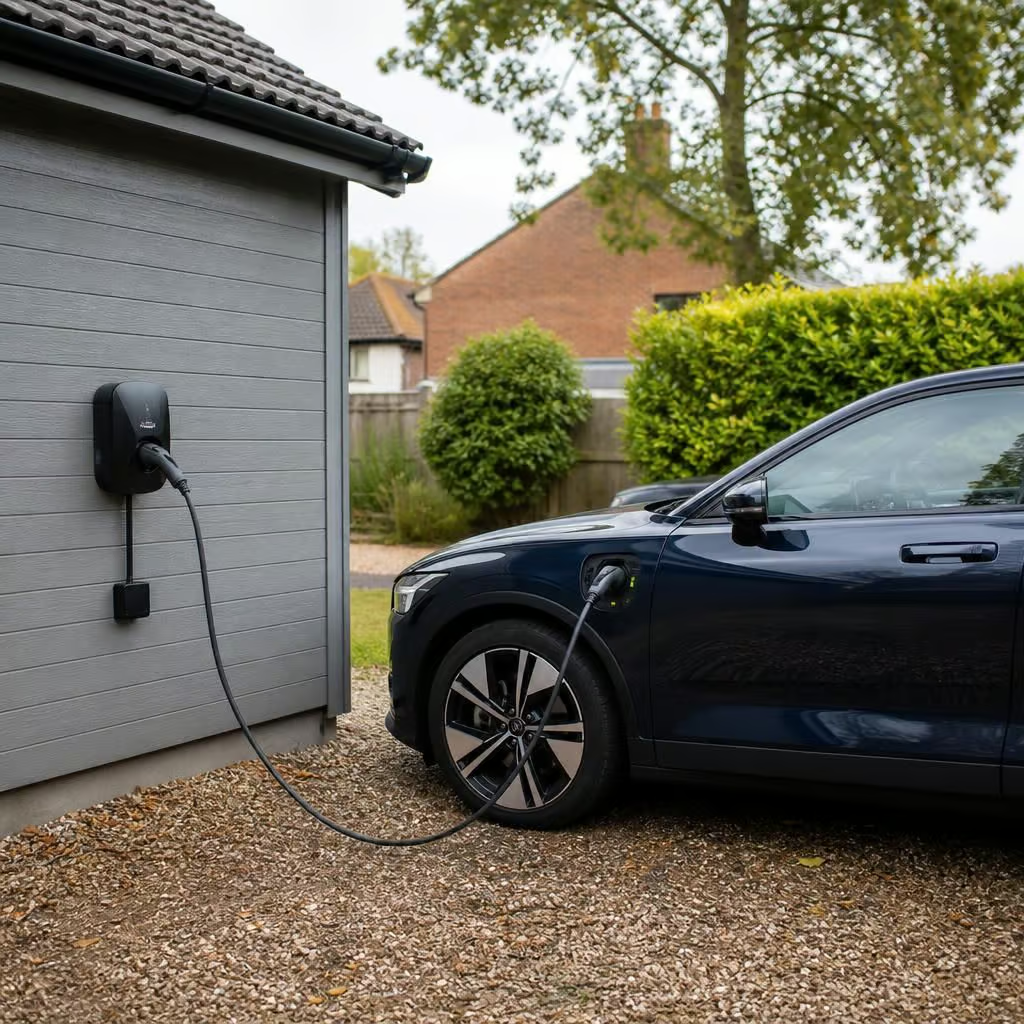
A remote parking space does not automatically mean the charger should go at the end of the longest possible cable. We compare the route with how you approach the space, where the car’s charge socket sits and whether another vehicle may use it later.
That assessment helps us choose a position that remains practical in everyday use. You should be able to connect the car without stretching the lead across a walking route, blocking access or relying on temporary extension cables.