
How are smart EV charger controls tested after installation?
After installation, we test the charger’s connection, controls and communication with the vehicle or app. We also check load management and protective devices, then confirm that charging starts, stops and adjusts safely under normal household use.
Smart EV charger controls are tested in stages: first the electrical installation, then the control settings, and finally the charger’s response during a real charging session. We record the results and explain what the controls will do in normal use.
Your charger must be safe before its smart functions are useful. We check the cable terminations, protective devices, earthing and the operation of the charger’s built-in fault protection. We also confirm that the circuit is suitable for the charger’s configured output and that the isolation point can be reached safely.
If the installation includes dynamic load management, we test how the charger reacts when other electrical loads are switched on. For example, we can run a high-load appliance while the car is charging and check that the charger adjusts its output rather than placing excessive demand on the supply. When the household load falls again, we check that charging can increase as intended.
Your control settings need to match the way you plan to charge. We check the configured maximum current, charging permissions and any scheduled periods. If the charger uses information from an app or online account, we confirm that the settings shown there match the settings held by the charger.
A charging schedule can appear correct in an app but still be unsuitable if the vehicle has its own schedule enabled. We therefore check the interaction between the charger and the vehicle’s charging settings. This helps identify situations where either system could delay charging or prevent it from starting.
Where solar charging or another energy-management function is included, we check the control response against the available household generation and demand. The aim is to confirm that the charger follows the selected operating mode, rather than assuming that all generated electricity will always be available for the car.
We then carry out a controlled charging session. We check that the session starts under the permitted conditions, that the current changes when the control system instructs it to, and that charging stops correctly when a limit or schedule requires it to stop. We also check that the charger reports the session accurately in its control interface.
If the home has a weak wireless signal or an unreliable broadband connection near the charger, we investigate that during commissioning. The charger’s electrical safety must not depend on a working phone signal or app connection. We explain which functions require connectivity and which local controls remain available if the connection is interrupted.
Any fault indication is investigated rather than simply cleared. We check whether it relates to the vehicle, the electrical supply, the charger settings or the communications connection. If a setting needs changing, we make the change and repeat the relevant test so the final record reflects the working configuration.
Before we leave, we explain the controls in practical terms: how to start and stop a charge, change a schedule, check the charging status and recognise a genuine fault. We also provide the commissioning information and test results needed for future servicing or fault diagnosis.
That testing leaves you with more than a charger that powers the car. It confirms that the electrical protection, control settings and charging behaviour work together for the way your home uses electricity.
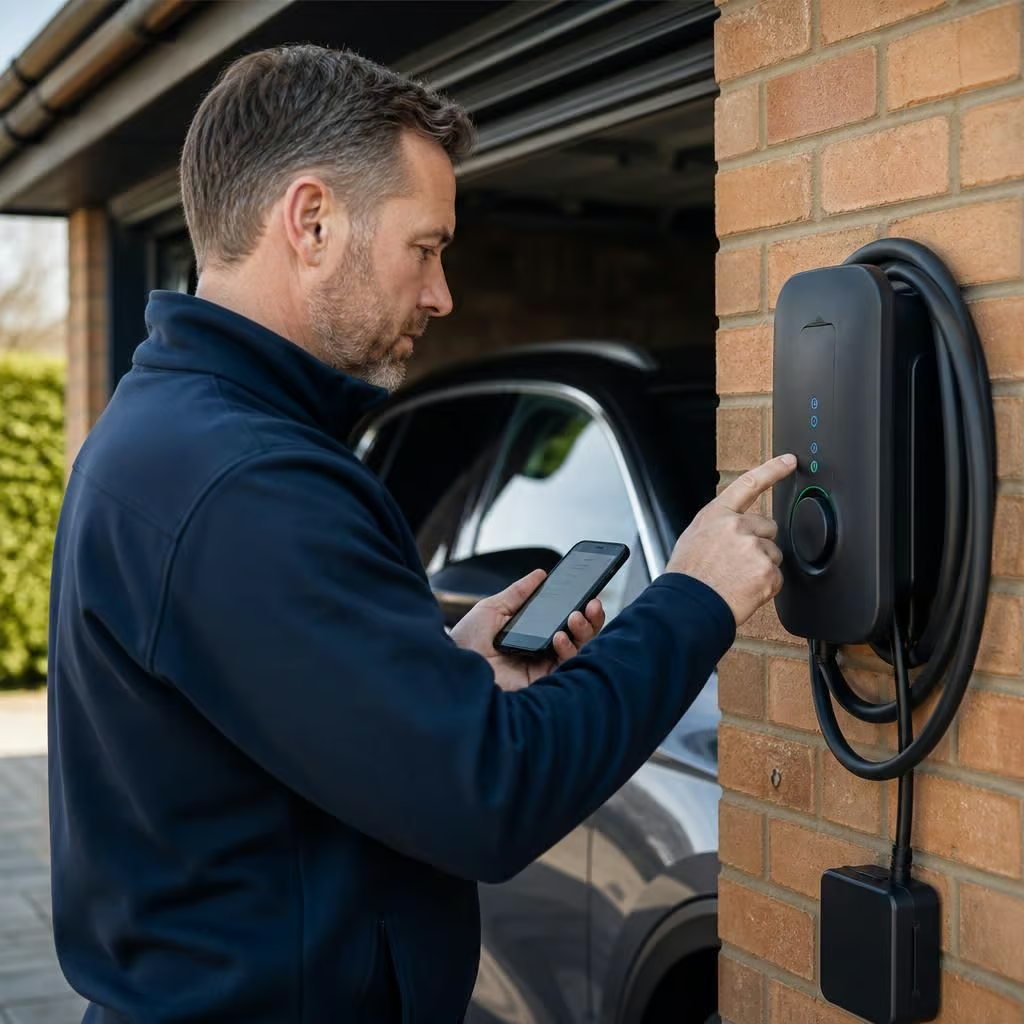
Dynamic load management depends on accurate readings from the home’s electricity supply. Where the system uses a current sensor, we check that it recognises electricity being imported and not exported. We then compare its response with the household load so the charger is working from the right information.
This matters in homes with solar panels, batteries or several large electrical appliances. A control system that reads the supply incorrectly can reduce charging unnecessarily or allow too much demand. Testing the readings as part of commissioning helps ensure the charger responds to the actual flow of electricity at the property.