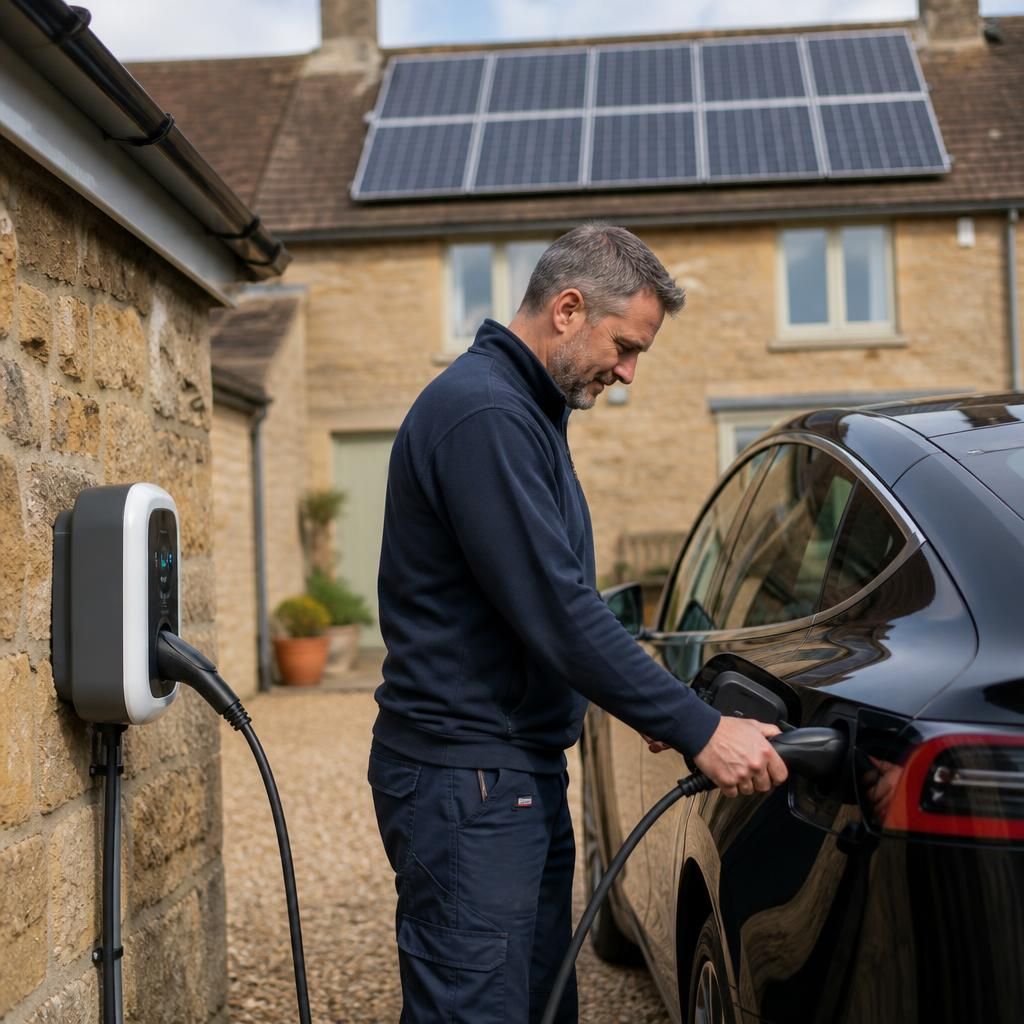
Will a smart EV charger work with my existing solar panels?
Usually, yes. A smart EV charger can use surplus electricity from existing solar panels, but compatibility depends on the inverter, meter and charger controls. We check the existing system and recommend a charger that can coordinate with it before installation.
Your solar panels can usually supply an EV charger, but the result depends on how the existing system measures surplus electricity and how the charger controls it. The panels do not connect directly to the car. Solar electricity passes through the inverter and your home’s electrical system before the charger uses it.
The key requirement is surplus monitoring. Your charger needs to know when the home is exporting electricity rather than importing it. Some systems share data with the inverter. Others use a separate current sensor, often fitted near the electricity meter. That sensor measures the flow of electricity in real time and allows the charger to adjust its output.
If the system cannot exchange the necessary information, the charger may still work, but it will charge from the grid rather than reliably following solar generation. We check the inverter, meter arrangement, consumer unit and proposed charger together before recommending an operating mode.
Solar-only charging is not the same as ordinary charging. Your panels produce different amounts of electricity throughout the day. Cloud cover, shading, roof orientation and the time of year all affect the available surplus. At some points there may be enough power for the car; at others, the home may need all the electricity being generated.
A solar-aware charger can respond to those changes. Depending on the equipment, it may pause when the available surplus falls, resume when generation increases, or take some electricity from the grid to maintain charging. The settings matter here. A solar-only mode aims to avoid grid electricity, while a mixed mode can be useful when you need the car ready by a particular time.
Your household demand also affects the result. An electric oven, immersion heater, kettle, heat pump or washing machine can use the solar power that would otherwise go to the car. We take those loads into account when checking the proposed installation. This gives you a more realistic view of how the charger will behave, rather than assuming every unit generated by the panels is available for charging.
An existing home battery needs separate consideration. Your battery may be set to store surplus solar before the car can use it. Alternatively, the charger may be given priority during certain periods. Neither approach is automatically right. We review the battery controls, export settings and charging preferences so the system does not work against itself.
Some older solar installations have limited monitoring or an inverter that cannot communicate with newer charging equipment. That does not automatically rule out an EV charger. A compatible meter sensor or a different control method may provide the information needed. If the existing inverter, cabling or consumer unit is unsuitable, we explain what would need changing before any work starts.
The electrical condition of the property is part of the assessment. We check the available capacity, earthing, protective devices, cable route and consumer unit. Older homes may need an upgrade before a charger can be installed safely. We also consider other high-demand equipment, including batteries, electric heating and workshop machinery, so the charger does not create an avoidable load problem.
Solar charging normally works best when the car is at home during the hours when the panels generate electricity. If the car is away during the day, a scheduled grid charge may be more practical. We can explain the difference between solar-only, solar-and-grid and timed charging based on how you use the vehicle.
Before installation, we review the solar system details, inverter model, meter position, battery controls if fitted, and the charger’s location. A clear photograph of the inverter, consumer unit and meter can help us identify the starting point, although we may still need a site visit. We then provide a written quotation for any required electrical changes before work begins.
Our NICEIC-registered electricians carry out the electrical installation and test the charger and associated protection when the work is complete. You are shown how to select the charging mode, check solar generation and change the settings when your routine changes. If your panels cannot provide the required control signal, the charger can still be assessed for normal charging, but we will make that limitation clear rather than presenting it as a solar charging system.
An older solar installation doesn’t automatically need replacing before you add an EV charger. The important detail is how the inverter and meter report electricity flows. We check that arrangement first, then explain whether the existing system can support solar-led charging or needs an additional sensor.
This assessment can prevent unnecessary changes to working panels. You receive a clear recommendation for the charger settings and any electrical work required, with the limitations explained before installation.