How long does an energy supplier EV charger installation take?
The installation timetable runs from an initial home survey to an agreed fitting date. Once the electrical supply and cable route are suitable, we can usually complete the charger installation during one planned visit; extra work can extend the process.
Most energy supplier EV charger installations are arranged over a short sequence: an initial assessment, any required approvals, delivery of the equipment, and the installation itself. The fitting date can be straightforward when the consumer unit, cable route and electricity supply are suitable. Extra electrical work or a network approval can extend the overall timescale.
What happens before the installation
The supplier or installer first needs to establish whether the proposed charger can be fitted safely at your home. We look at the consumer unit, meter position, main fuse, earthing arrangement and the route between the electrical equipment and the parking space.
The cable route is important. A charger close to the consumer unit may need less preparation than one at the far side of a house, garage or outbuilding. We also discuss how the cable will be protected, where the charger will sit and whether any visible trunking or underground ducting is needed.
An older property may need more investigation. Older consumer units, long cable runs and outbuildings can affect the design. We explain any required work before the installation date, rather than treating it as an unexpected addition when the engineer arrives.
Approvals and electrical upgrades
Some installations need notification or approval from the local electricity network operator. This depends on the charger, the home’s incoming supply and the electrical load already present. The process may need to happen before the charger can be connected.
Your consumer unit may also need upgrading if it does not provide the protection required for an EV charge point. We may need to install additional protective equipment, improve the earthing arrangement or replace an outdated board. These tasks add work before the charger can be commissioned, but they deal with the condition of the electrical installation rather than delaying the charger for an unknown reason.
If the supply cannot support the proposed charging load without further changes, we explain the available options. These might include a different charger setting, load management equipment or a supply upgrade. The right choice depends on the property and the way the vehicle will be charged.
What happens on installation day
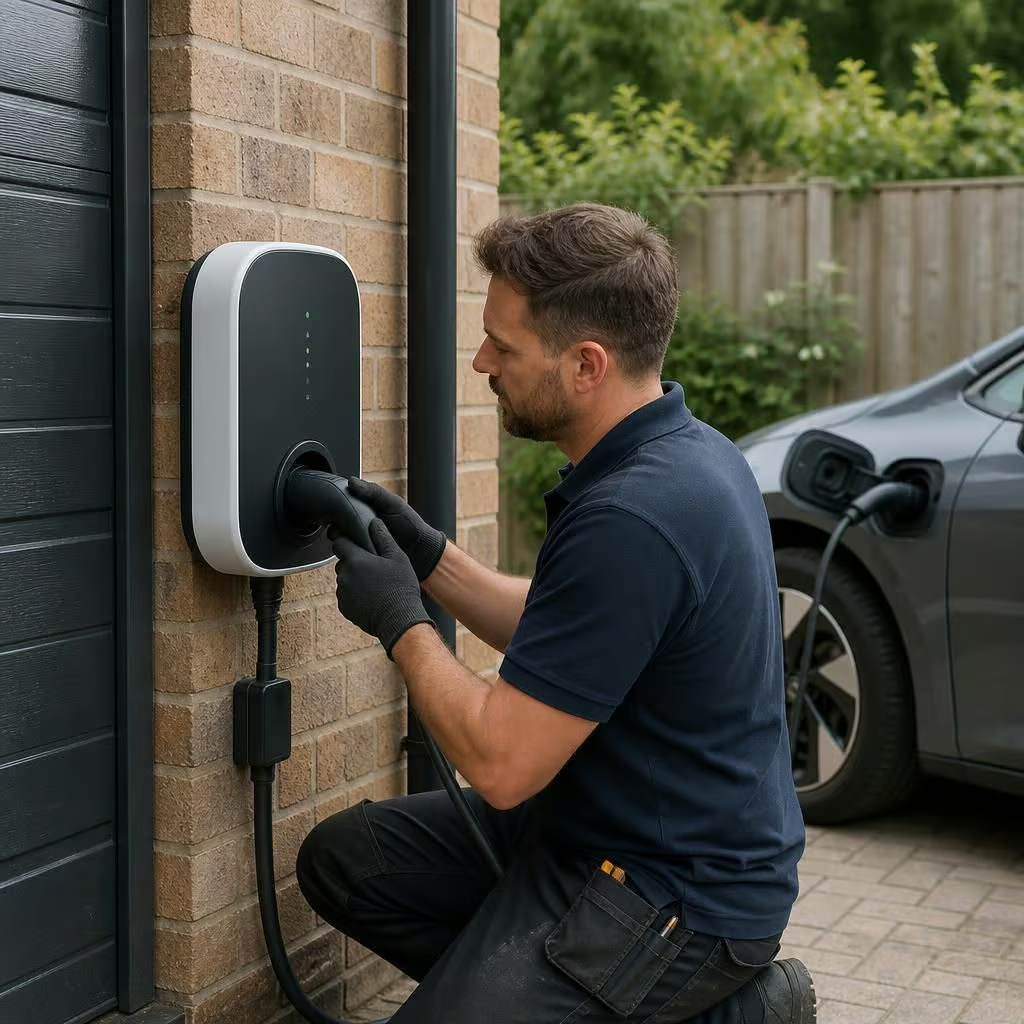
We protect the working area, install the charger and run the supply cable along the agreed route. The amount of disruption depends mainly on the construction of the building and the distance to the parking space.
A surface-mounted cable route is usually less disruptive than chasing cables into walls. Drilling may be needed to pass through an external wall. A garage or detached parking space may require additional protection, ducting or excavation. We agree the practical approach with you before work starts.
After the charger is connected, we test the circuit and the charger controls. We check that the protective devices operate correctly and confirm that the unit communicates with any required app or supplier service. We then explain the basic controls, scheduling and indicators before leaving the installation area tidy.
The work may take longer if the agreed cable route changes, access to the consumer unit is restricted, hidden construction is encountered or remedial electrical work is needed. If the installation cannot safely proceed as planned, we explain why and set out what needs to happen next.
How to avoid unnecessary delays
- Make sure the installer has accurate details of the property, parking space and preferred charger position.
- Keep access clear to the meter, consumer unit and proposed cable route.
- Tell us about solar panels, battery storage, an electric heating system or other high-load equipment.
- Provide information about any previous electrical alterations, especially work in a garage or outbuilding.
- Check whether the energy supplier has separate requirements for its charger package, app or electricity tariff.
Solar panels and battery storage do not automatically prevent an energy supplier charger from being installed, but they should be included in the assessment. The charger, inverter, battery and household demand may need to work together so that the system does not exceed the home’s available electrical capacity.
A written quotation should set out the included installation work and identify any assumptions about the cable route or consumer unit. Our NICEIC-registered electrical team tests the completed circuit and provides the relevant installation paperwork, so you know what has been fitted and what the electrical work covers.
The date you can start charging depends on more than the time spent at the property. A survey may show that fitting is straightforward, but the supplier still needs to release the charger and arrange delivery. Any network approval must also be completed before connection. We set out these stages in the quotation, so you can see whether a proposed date covers the fitting visit or the full process.
If the charger forms part of an energy tariff or app service, check that your supplier account is ready before installation. The unit may be physically fitted while the supplier service still needs to be activated.