
What affects the cost of installing a home EV charger?
The cost of installing a home EV charger depends on the charger you choose, the cable route, the distance from your consumer unit and whether the electrical supply needs upgrading. We assess those points at your property and provide a written quotation before work starts.
The charger itself is only part of the cost. The final price depends on the unit’s features, the electrical capacity available at the property, the distance and construction of the cable route, and any work needed to make the installation safe and compliant.
The charger specification affects the starting price. A basic home unit may have fewer controls than one with app monitoring, solar integration, scheduled charging or user access settings. Tethered chargers include a permanently attached cable, while untethered models use a separate charging lead. The right choice depends on how you park, how you charge and whether you want to coordinate charging with solar generation.
Smart functions can add value, but they are not automatically useful for every home. If the car is normally parked overnight and the household has no solar system, simple scheduled charging may be enough. If charging needs to follow solar generation or avoid high-demand periods, we check that the charger, electricity meter and wider electrical system can work together.
The property’s electrical supply can change the cost. A charger adds a substantial load when it is operating. We check the supply, earthing arrangement, consumer unit and protective devices before deciding how the circuit should be installed. Older installations may need remedial work before a charger can be connected safely.
That work could involve improving protection, replacing unsuitable equipment or arranging further checks with the distribution network operator. It is not sensible to ignore those issues to keep the installation price down. A charger connected to an unsuitable installation can create safety risks and may not meet the required electrical standards.
Load management may avoid a larger supply upgrade. If the home already uses electric heating, an immersion heater, an induction hob or other high-demand appliances, the combined load matters. A load-management system can reduce or pause charging when the property is using more electricity elsewhere, then resume charging when capacity becomes available. We assess whether that approach suits the home rather than assuming the charger can run at full power at all times.
The route from the consumer unit to the parking space is often the largest installation variable. A short route through an accessible wall is usually simpler than a cable running around the outside of the house, through several rooms or to a detached garage. The price can increase when the work involves:
- long external cable runs;
- drilling through thick or solid walls;
- protective conduit or trunking in exposed locations;
- routing around extensions, outbuildings or other obstacles;
- excavating a driveway, garden or path;
- installing ducting beneath the ground; or
- making good surfaces after the cable has been installed.
Rural and older properties can need more planning here. A detached garage, barn or parking area may be some distance from the house, while solid walls and listed features can limit where cables can pass. We look for a route that protects the cable, avoids unnecessary damage and leaves the installation tidy.
The parking arrangement also matters. A charger on the house may be straightforward when the car sits beside the front or side wall. A property with shared parking, a communal accessway or no dedicated off-street space may need different arrangements. Landlords and leaseholders may also need permission before work starts. Those permissions are separate from the electrical installation and can affect the practical timescale and total project cost.
Solar and battery systems can add installation requirements. If a charger is intended to use surplus solar generation, we may need to connect monitoring equipment and configure the charger around the existing generation system. A battery, export control or other energy-management equipment can affect how the components communicate and how charging is controlled. The aim is to make the system operate as intended, not simply to add another high-load appliance.
There may also be ongoing costs to consider. A smart charger can use a communications service or app, and electricity tariffs vary according to the agreement with the energy supplier. Charging at home is generally billed through the property’s electricity supply, but the eventual cost of each charge depends on the vehicle, the energy used and the tariff. We can explain the installation implications without presenting a headline saving that may not apply to your driving pattern.
A proper cost comparison should separate the charger from the installation work. Check whether the price includes the charging unit, cable, protective equipment, mounting materials, testing, certification and connection to the existing electrical system. A low advertised price may assume a short, uncomplicated route and no work on the existing installation.
We identify the equipment and work needed for the particular home, including any changes required for safe operation. That gives you a clearer basis for comparing quotations and deciding whether the chosen charger is worth its additional features.
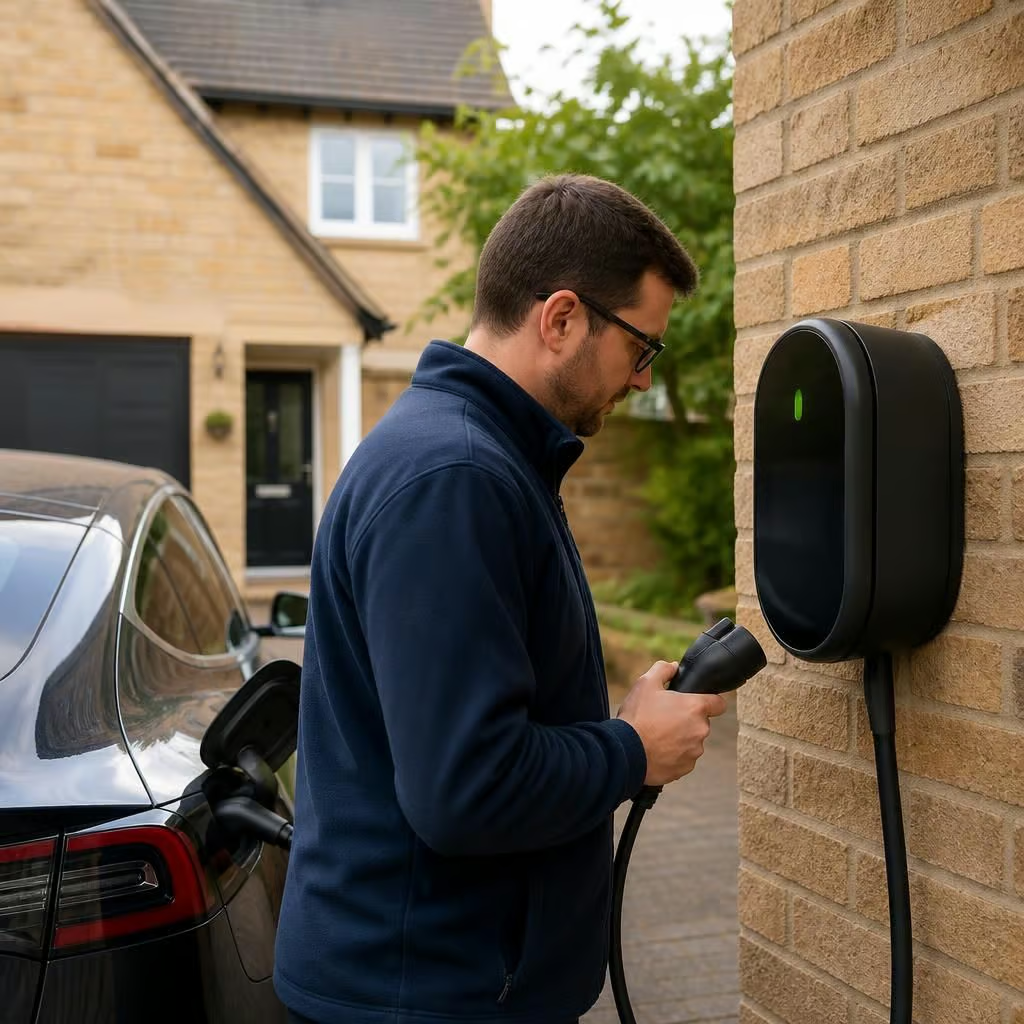
A charger price only becomes meaningful when it is matched to the way the car will be parked and charged. We separate the cost of the unit from the installation, testing and any electrical work needed at the property.
That makes it easier to compare quotations fairly. You can see which features are included, which work is essential for safe operation and where a simpler charger may meet your needs.