
Will rewiring bring my house up to current electrical standards?
A properly planned full rewire can bring your home’s fixed electrical installation up to current wiring standards, provided the necessary work is included. We assess the existing circuits, earthing, consumer unit and cable routes, then test and certify the completed installation.
Usually, yes. A properly designed full rewire can bring the fixed electrical installation in line with the requirements that apply when the work is carried out. It does not make every electrical item in the house automatically compliant, and it cannot guarantee compliance with standards that may change in future.
Electrical standards cover more than replacing old cables. They deal with how circuits are designed, protected, installed and tested. The finished installation should be suitable for the way the house is used, including the number and type of appliances connected to it.
A full rewire normally addresses:
- the cables supplying sockets, lighting and fixed appliances;
- circuit design and separation, so one fault does not unnecessarily affect the whole house;
- protection against electric shock, overloads and short circuits;
- the consumer unit and the protective devices fitted inside it;
- earthing and bonding arrangements;
- the position and number of sockets, switches and connection points; and
- the testing needed to confirm that the completed installation works safely.
That scope matters in an older property. A house may have a modern-looking consumer unit but still contain deteriorated cables, unsuitable connections or circuits that were designed for a much smaller electrical load. Replacing only the consumer unit would not correct those underlying issues.
Current standards do not mean that every older house must be rewired. Electrical installations are not generally required to be brought up to the latest edition simply because the regulations have changed. An installation can remain acceptable if it was safe when installed and has not developed a dangerous defect. An inspection may identify observations that need attention without making a complete rewire necessary.
A rewire becomes more likely when cables have damaged insulation, the installation lacks effective earthing, protective devices are unsuitable, or alterations have left a mixture of old and new work. Repeated faults, overheating, discolouration around accessories and a lack of reliable test records also warrant investigation. An EICR can help separate an immediate safety issue from a recommendation for planned improvement.
The final result depends on what the project includes. If we replace the accessible fixed wiring throughout the house and install the agreed accessories and protective equipment, the new work can be designed and tested to current requirements. If some old wiring remains because it is outside the agreed area or cannot be accessed without further building work, that limitation should be recorded. A partial rewire may improve safety, but it should not be described as a complete renewal of the installation.
Rewiring also does not bring portable appliances, extension leads or homeowner alterations up to standard. An old cooker, damaged socket faceplate or incorrectly wired outbuilding may need separate attention. We identify those points during the inspection so the finished certificate describes the work accurately.
Older and unusual buildings need a practical plan. Solid walls, exposed beams, plasterwork, listed features and barn-conversion layouts can make cable routes difficult. We discuss where cables can run, which surfaces need opening and how the work can be phased. Existing routes may be reused where they are suitable, but we do not retain unsafe wiring simply to reduce making-good.
Most rewires involve lifting floorboards, accessing loft spaces and opening parts of walls or ceilings. The amount of disruption depends on the construction, the number of circuits and whether the house is occupied. Sockets, lighting points and switches may be repositioned at the same time, which avoids paying to disturb finished surfaces again later. We agree the layout before work starts, rather than treating accessory positions as an afterthought.
Once the installation is complete, we carry out the required tests on the circuits and protective arrangements. The results show whether the new work performs as designed and provide a record for future maintenance, alteration or sale. Where the work falls within the relevant building regulations, the electrical installation should also be notified through the appropriate process.
A written quotation should make clear whether it includes the consumer unit, accessories, mains and bonding work, testing, certification, notification and making good. It should also state what happens to wiring in inaccessible areas and whether decoration is included. Those details make it easier to compare quotations based on the same scope, rather than assuming that every firm means the same thing by “full rewire”.
We can assess the age and condition of the existing installation, discuss the level of renewal that is justified and set out the work before it begins. If a full rewire is not necessary, we explain what can safely remain and which improvements should take priority.
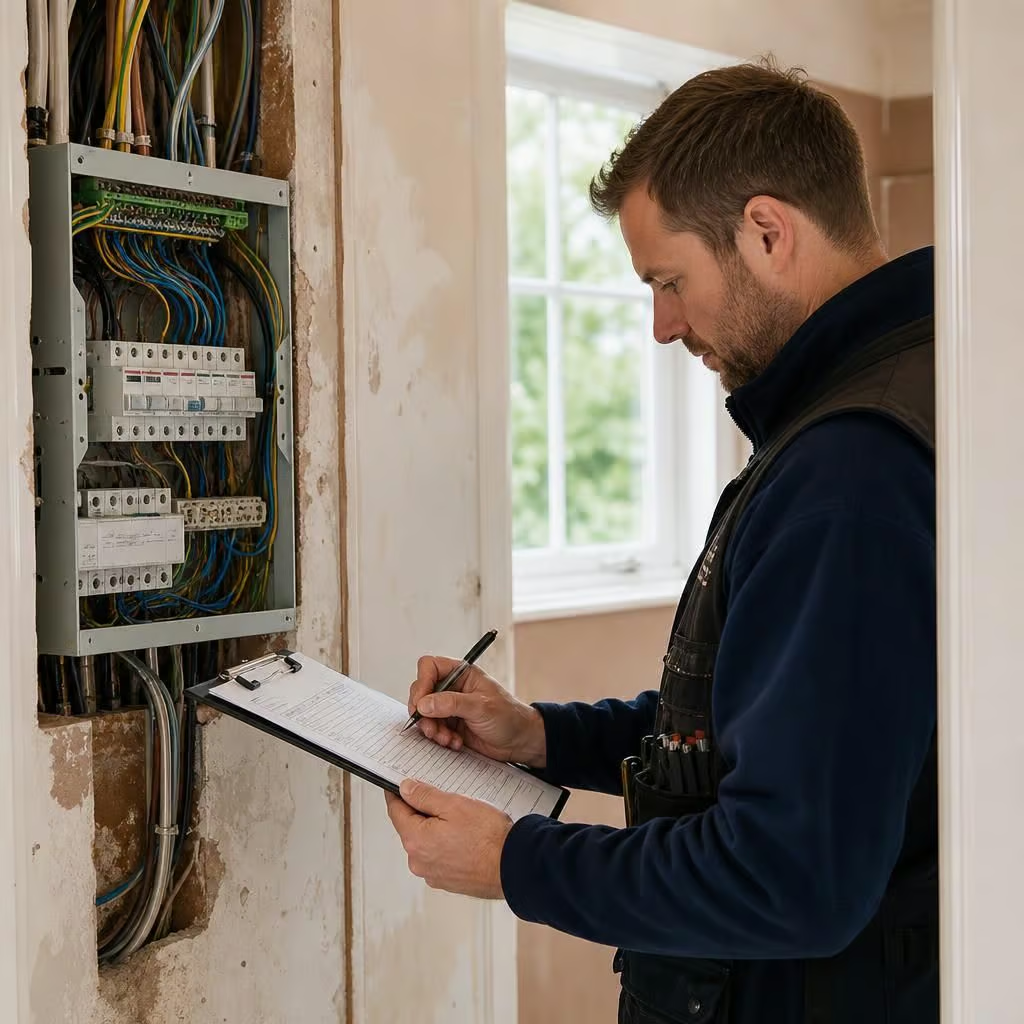
An inspection report and a rewire certificate serve different purposes. An EICR records the condition of the existing installation at the time of inspection. An Electrical Installation Certificate records the design, testing and results for new wiring we install.
That distinction matters when you’re planning work before a sale, renovation or major change to the house. The paperwork should show which circuits were renewed, what was tested and any parts that remained outside the agreed scope. It gives the next electrician a reliable starting point instead of leaving them to guess what is behind the walls.