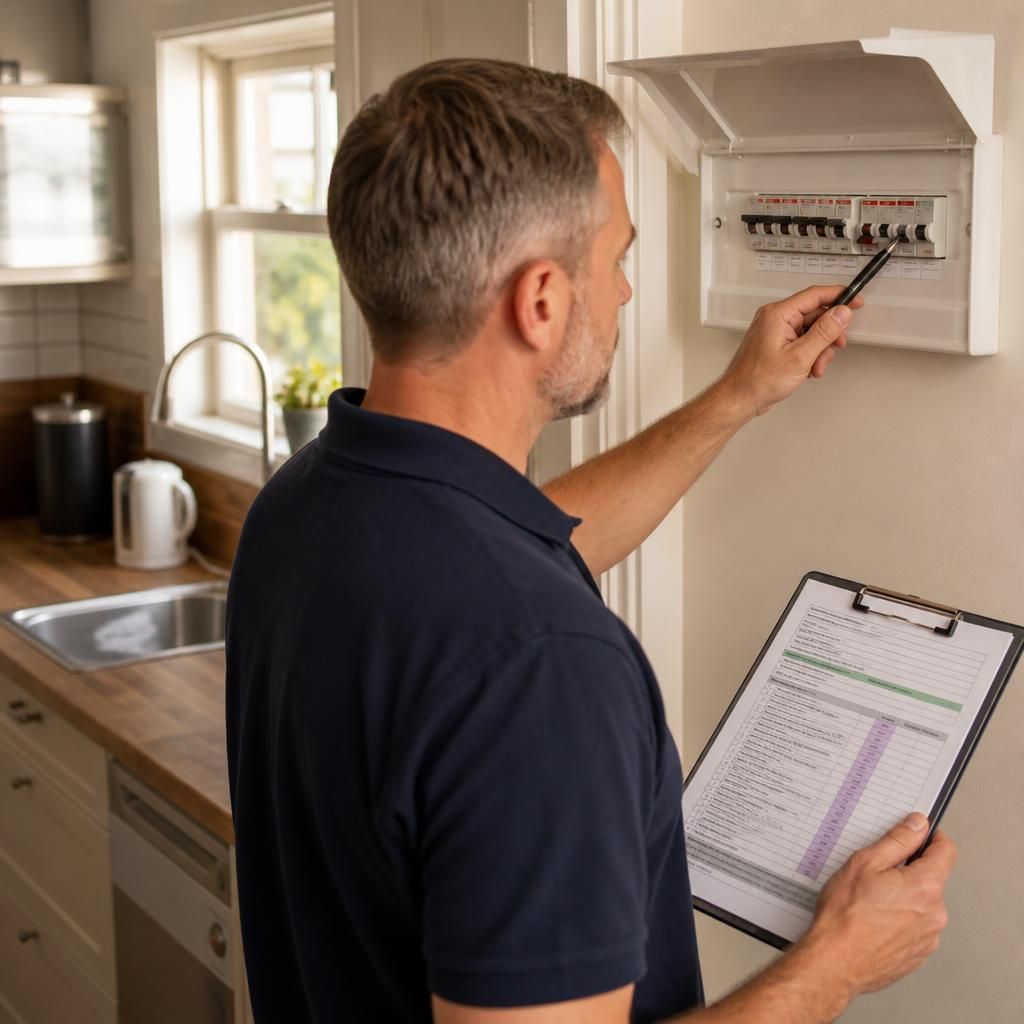
How often should a domestic EICR be repeated?
For an owner-occupied home, we generally recommend repeating a domestic EICR every 10 years; rented properties must be inspected at least every five years. Book an inspection sooner after major electrical work, a change of occupancy, or signs such as damaged sockets, burning smells or repeated tripping.
For an owner-occupied home, the recommended interval is a safety guide rather than a general legal deadline. The right date depends on the age, condition and use of the installation. Private landlords have a statutory inspection cycle, so they must follow the date set by the applicable regulations and the report.
An EICR should be repeated sooner when something changes that could affect electrical safety. Arrange an earlier inspection if:
- the property has had a rewire, extension, loft conversion or other major alteration;
- water has entered the consumer unit, sockets or other electrical equipment;
- you notice burning smells, scorch marks, buzzing, crackling or repeated tripping;
- sockets, switches or light fittings are damaged, loose or unusually warm;
- the home has been bought with incomplete electrical records or an unknown installation history;
- the property is changing from a private home to a rental, holiday let or other use; or
- the installation is exposed to harsher conditions, such as in an outbuilding, workshop or agricultural setting.
A failed appliance can sometimes cause a protective device to trip, so an EICR is not automatically needed after every isolated fault. Repeated tripping, visible damage or uncertainty about the cause does need investigation. We identify whether the problem is limited to an appliance or points to a wider issue with the fixed wiring.
Older properties deserve particular care when setting the next inspection date. An older installation may still be serviceable, but it may have limited earthing, outdated protective devices, deteriorated cable insulation or alterations completed at different times. Solid-wall houses, barn conversions and buildings with several extensions can contain wiring from more than one period. We use the inspection findings, not the age of the building alone, to decide whether an earlier review is sensible.
For landlords, the inspection report records the condition of the fixed electrical installation and states the date by which the next inspection must take place. The landlord must keep the report and provide copies to the relevant people within the required timescales. If the report records C1, C2 or FI observations, the landlord must deal with those findings in line with the electrical safety regulations. The next inspection date does not replace the need to act on a dangerous or potentially dangerous observation.
A satisfactory report does not mean the installation will remain safe for the whole recommended period. Tenants and homeowners should still report faults, damage and changes in behaviour, such as lights flickering or breakers tripping. An EICR is a periodic assessment, not continuous monitoring.
After remedial work or an alteration, the paperwork may not need to be a complete replacement EICR. Depending on what changed, the appropriate record could be an Electrical Installation Certificate, a Minor Works Certificate or an EICR covering the wider installation. We explain which document matches the work and keep the inspection record clear for the next owner, landlord or electrician.
We carry out domestic EICRs as NICEIC-registered electricians, checking the fixed wiring, protective devices, earthing and bonding, and visible accessories. You receive a written report showing the observations found and any action needed. That gives you a practical basis for choosing the next inspection date rather than relying only on the age of the property.
If you are unsure when the last inspection took place, check the EICR, Electrical Installation Certificate or other electrical paperwork first. Where no reliable record exists, an inspection establishes the current condition and provides a documented starting point for future checks.
For an owner-occupied home, count the recommended interval from the inspection date, not from the date you moved in. Keep the report with the property’s other records and set a reminder before the next review is due.
If an insurer, mortgage provider or letting arrangement sets a shorter interval, follow that requirement instead. The EICR gives you the electrical condition at the time of inspection; it does not replace checks after damage, alterations or changes in how the property is used.