
How long is an EICR certificate valid?
An EICR has no universal legal expiry date, but most domestic reports recommend a new inspection within five years or sooner if the report says so. Landlords must arrange inspections at least every five years, while homeowners and businesses should follow the interval recommended for the property.
An EICR is not a permanent pass certificate. It records the condition of the electrical installation on the inspection date, so its practical validity depends on the report’s recommended interval and whether the installation or property changes afterwards.
Read the recommendations on the report first. The inspecting electrician records when the next inspection should take place and explains any limitations. That date is the best guide for a homeowner, landlord or business manager. A certificate that is still within its recommended period does not confirm that the installation remains safe after damage, alterations or deterioration.
The report also has a defined scope. An EICR checks the fixed electrical installation, including items such as the consumer unit, wiring, sockets, switches and fixed equipment connections. It does not provide an ongoing check of portable appliances, extension leads or changes made after the inspection.
An earlier inspection may be needed if:
- the installation has been altered, extended or damaged;
- water has entered the property, including after flooding or a significant leak;
- there is repeated tripping, overheating, burning smells, damaged accessories or visible deterioration;
- the property changes use, such as becoming a rental, workshop, agricultural building or commercial premises;
- new equipment places a different demand on the installation, such as an EV charger, heat pump, solar system or battery;
- an older installation has not been inspected since substantial electrical work took place.
New equipment does not automatically make the whole EICR invalid. However, the electrician needs to assess the relevant circuits, protective devices, earthing and bonding before connecting it. We issue the appropriate installation or minor works documentation for work completed, while a periodic report continues to describe the wider installation.
The result matters as much as the date. A report marked satisfactory means no dangerous or potentially dangerous defects were identified within its scope at that inspection. It does not mean every part of the property will remain defect-free until the next suggested inspection.
An unsatisfactory report needs attention rather than simply a new date in the diary. Codes such as C1, C2 or FI identify safety concerns or further investigation. A C3 records an improvement recommendation, which is different from a dangerous defect. We explain what each observation means and what evidence is needed after remedial work.
Where we carry out repairs, we test the affected work and provide the relevant electrical certification. If the original report called for further investigation, that investigation must be completed before anyone treats the installation as satisfactory. Keeping the original report with the repair certificates gives the next electrician a clear record of what changed.
Keep the report with the property records. Homeowners may need it when planning alterations, selling a property or investigating recurring faults. Landlords need an accessible record for their property paperwork and should retain evidence of any remedial work. A commercial premises may also need inspection records for its maintenance system, insurer or other responsible person.
For commercial properties, the appropriate interval reflects the building, the electrical environment, the equipment in use and the consequences of failure. A dry office, a workshop, a farm building and a public building may not need the same inspection approach. We use the installation’s condition and use to inform the recommendation rather than applying one date to every property.
If the report is missing, unclear or several years old, we can inspect the fixed installation and provide a current condition report. If there is an immediate fault, damage or smell of burning, switch off the affected circuit if it is safe to do so and arrange an electrical inspection rather than relying on an existing EICR.
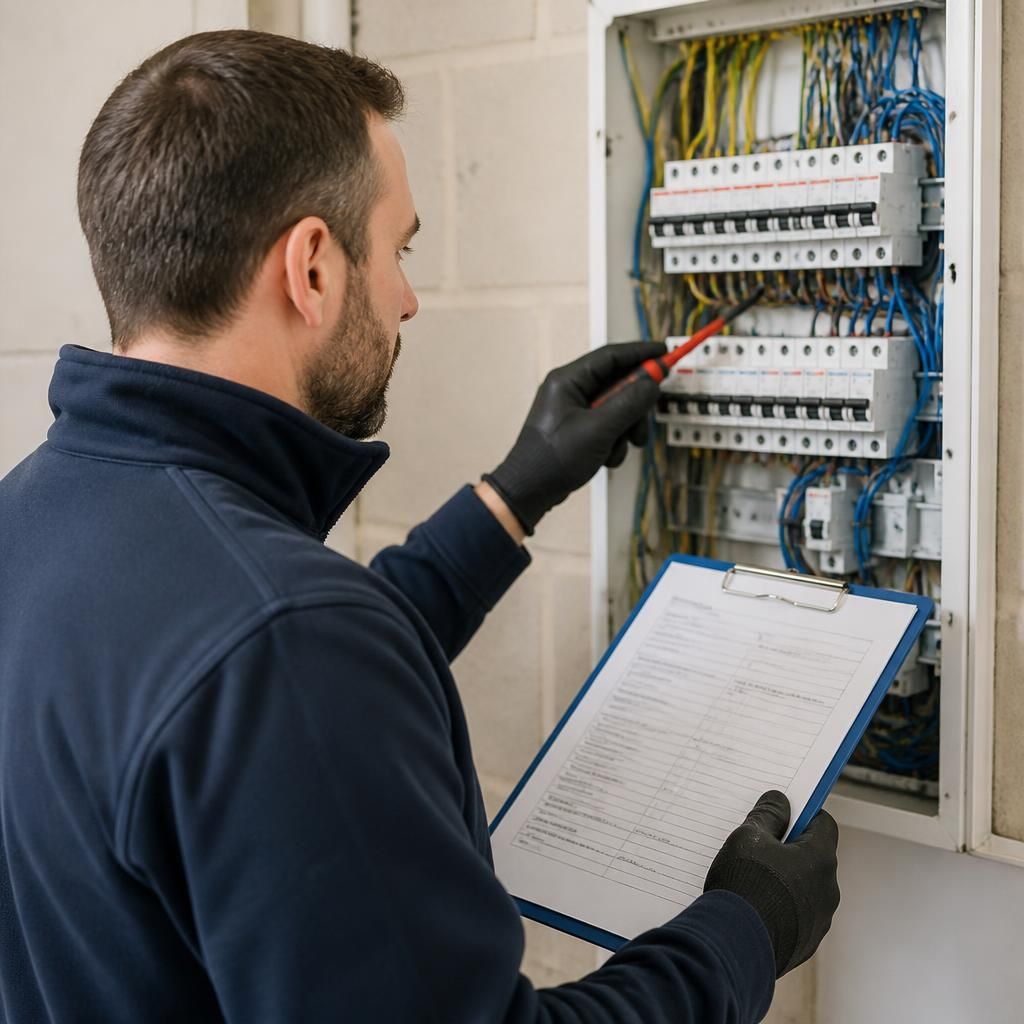
If you’re relying on an EICR during a property sale, purchase or tenancy, check more than the inspection date. Read the limitations, observations and recommended interval, then ask for certificates covering any electrical work completed since the inspection.
That gives you a clearer picture of what the report still covers. An older EICR may remain relevant for the installation it inspected, but it cannot confirm the safety of later alterations, new circuits or equipment added afterwards.