
Is my home suitable for solar battery storage installation?
Many homes are suitable for solar battery storage, including older properties, but the right system depends on available space, your electrical installation, solar generation and how you use energy. We assess those points before recommending a battery, so you can see whether installation is practical for your home.
Most homes can accommodate a solar battery, but suitability depends on the battery location, the condition of the electrical installation and the way you use electricity. A battery can work with new or existing solar panels, and it may still be useful in a home without solar PV. We assess the whole installation before recommending a system.
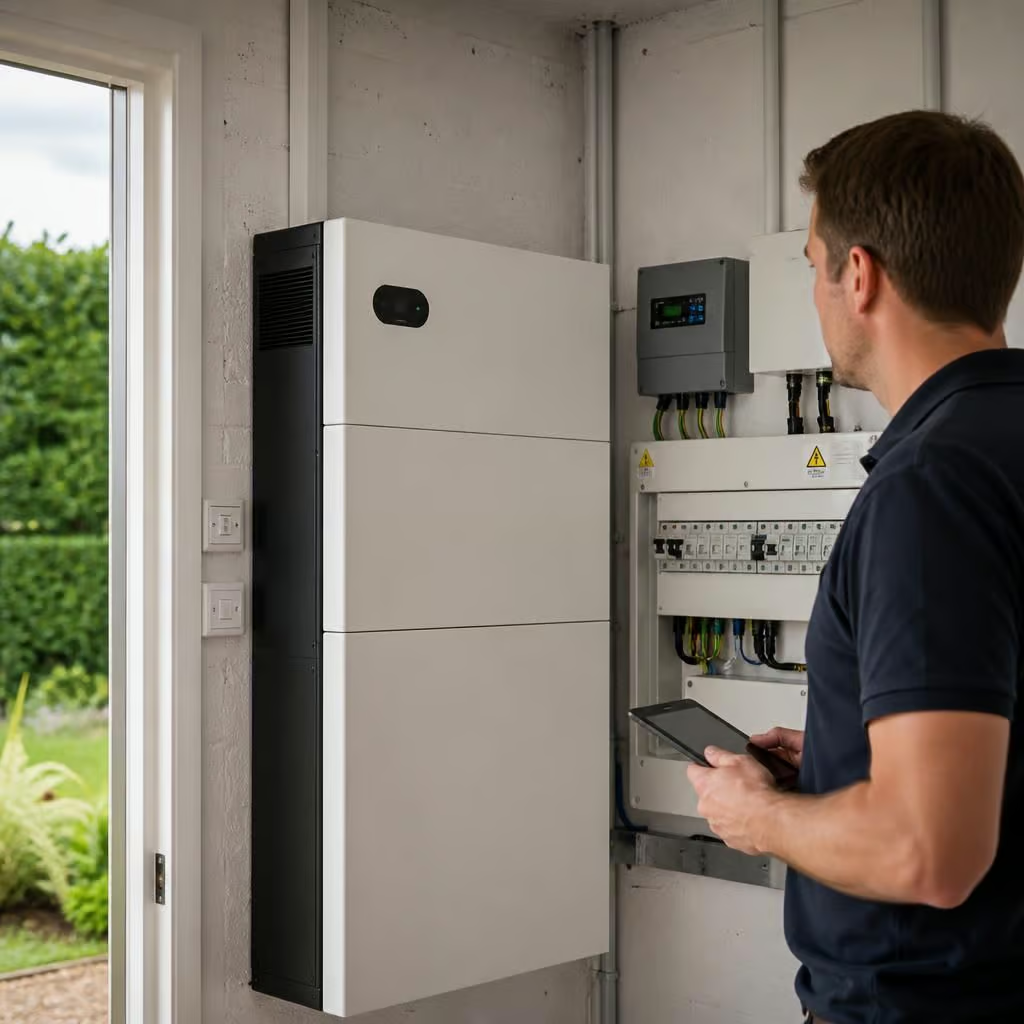
Available space matters. A battery needs a suitable position that is dry, protected from impact and accessible for inspection. The location also needs the clearances and ventilation specified by the manufacturer. Common positions include a garage, utility area, plant room or suitable external wall, but every property is different. An unsuitable location can rule out a particular battery or require a different layout.
Older homes are not automatically unsuitable. Solid-wall houses, barn conversions and properties with older electrical systems can often have battery storage, provided the installation can safely support it. We look at the consumer unit, cabling, earthing, protection devices and available capacity. If any part of the electrical installation needs attention, we explain why before including it in the quotation.
Your electricity use affects the right battery size. Someone who uses power during the evening may benefit from storing daytime solar generation for later. A home with low evening demand may need a smaller system, or may not gain enough from a battery to justify the cost. We use your household’s pattern of generation and consumption rather than choosing the largest battery available.
Heating, hot water, cooking, laundry and electric vehicle charging can all change that pattern. A battery can help shift stored electricity into periods when you need it, but it cannot remove the need to buy electricity in every circumstance. We discuss how the battery would operate alongside your existing appliances and any planned changes to the home.
Existing solar panels do not automatically prevent battery installation. We check the panels, inverter, generation meter, cabling and protection equipment. Some systems can accept a compatible battery through the existing inverter. Others need an additional battery inverter or replacement equipment. The age and condition of the solar installation matter just as much as the panel specification.
Homes without solar panels can also be considered. A battery may charge from the grid and discharge at another time, depending on the equipment and electricity tariff. We explain the available operating options and work out whether the expected use justifies installing storage without solar generation.
The grid connection must be suitable. We check the incoming supply and the design of the proposed system, then deal with any required notification or approval before the installation is completed. A battery that provides backup power needs separate design work. Standard battery storage does not keep every circuit running during a power cut, so we identify which circuits, if any, could be supported and what additional equipment that would require.
Planning and building considerations can affect the position, particularly on a listed property, a barn conversion or a home in a sensitive area. We consider the proposed location and cable routes during the survey. If the preferred position is not practical, we explain the alternatives rather than assuming the battery can go anywhere.
Safety is part of the suitability decision. We consider fire separation, access, protection from water and impact, cable routes and the manufacturer’s installation requirements. The work also needs to integrate correctly with the consumer unit, solar equipment and any monitoring system. A battery should not be fitted simply because there is an empty wall or garage corner.
Our survey covers the property, electrical installation, solar equipment if present, energy use and proposed battery location. We then set out what the system would do, what work is needed around it and where its limits are. You receive a written quotation before work starts, so any consumer unit changes, inverter work or additional protection are clear from the beginning.
Our renewable energy installations are carried out by MCS-certified engineers. That certification supports an eligible installation’s access to the Smart Export Guarantee, where the relevant requirements are met. We also make clear when a property, location or usage pattern does not make battery storage a sensible choice.
A home is usually a good candidate when it has a safe and suitable battery location, an electrical installation that can support the equipment, and enough useful energy demand to make storage worthwhile. The survey gives you the practical answer for your property, rather than relying on the age of the house or the presence of solar panels alone.
A roof that cannot take solar panels does not automatically rule out battery storage. We can assess the battery as a separate electrical installation, then check whether charging from the grid fits the way the household uses electricity.
That distinction matters in older homes where roof space, shading or planning restrictions limit solar options. The survey separates what is physically possible from what is likely to be worthwhile, so the recommendation reflects the property and its daily energy use.