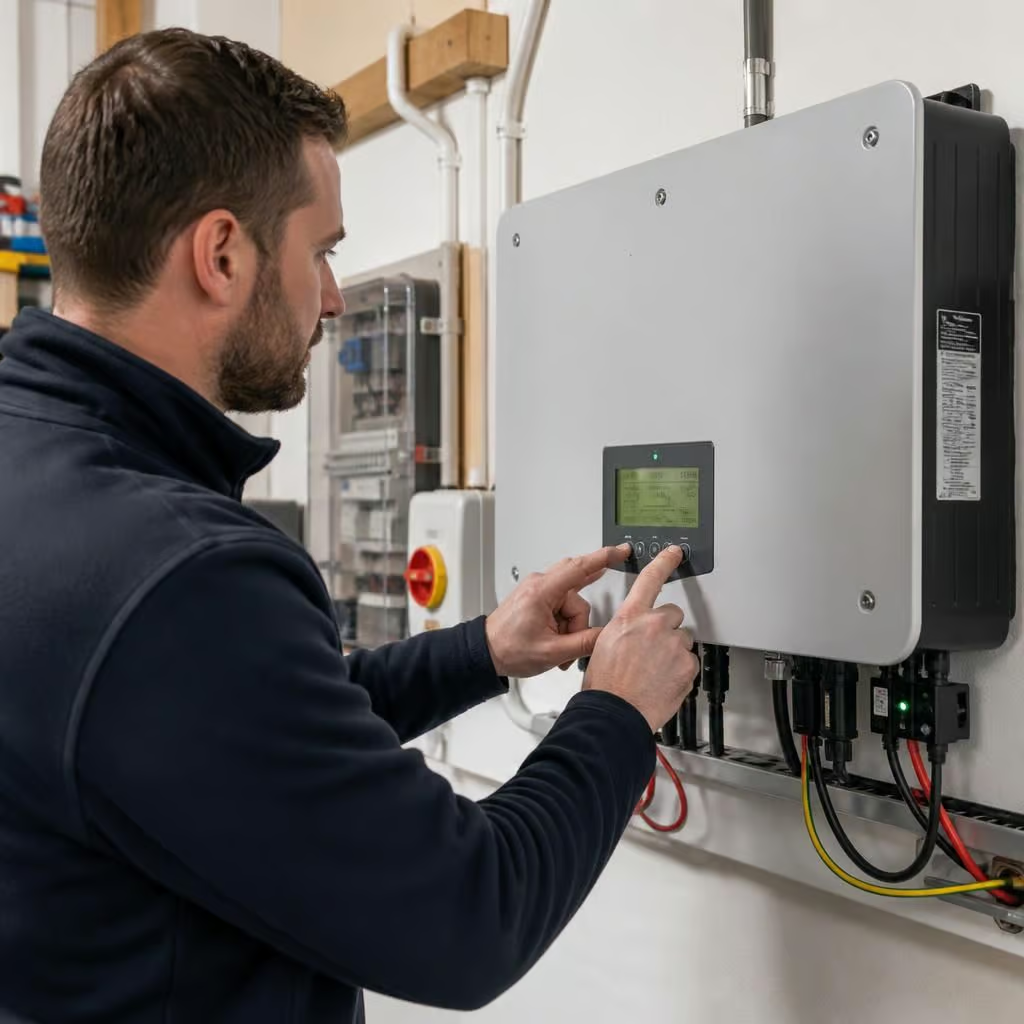
Will you need roof access to diagnose a solar inverter fault?
No. We can often diagnose a solar inverter fault from the inverter display, monitoring system and accessible electrical equipment before considering roof access. Roof access may be needed if the inverter is roof-mounted or tests point to a panel or rooftop cable fault.
Roof access is only needed when the evidence points to a problem on the roof itself. We first establish whether the inverter is receiving the expected electrical supply and whether the fault sits on the array side, the building wiring or the grid connection.
A solar inverter fault can come from several points in the system. The inverter may be reporting a genuine panel or string problem, or it may be reacting to a failed isolator, damaged cable, earth fault or supply issue elsewhere. A fault message alone does not always identify the failed component.
We work through the system in a controlled order. That usually includes:
- checking the inverter’s recorded fault history and operating condition;
- checking the AC and DC isolation equipment for signs of damage or overheating;
- testing the electrical supplies and cable connections that can be reached safely;
- comparing the system’s behaviour with its monitoring records, where monitoring is available;
- checking whether the problem affects the whole array or only one string or section; and
- looking for signs that the inverter has shut down because of an external grid or building-supply issue.
This process can often narrow the fault down without disturbing the panels. It also avoids sending someone onto the roof when the failed part is inside the property or next to the inverter.
Roof access becomes more likely when the tests point to the array. Examples include a persistent low-voltage reading from one string, evidence of a break in rooftop cabling, a suspected failed connector or visible damage to a panel. We may also need access if the inverter’s readings show that one part of the array is behaving differently from the rest.
Some checks can be made from ground level, but they have limits. We may be able to see displaced panels, damaged conduit or loose-looking cable from outside, yet a visual inspection cannot confirm the condition of connectors beneath a panel or test every rooftop connection. A roof inspection may therefore confirm the fault after the initial electrical tests, rather than being the starting point.
Loft access can sometimes help us trace the route of cables or inspect equipment installed inside the roof space. It does not replace a roof inspection where the suspected fault is beneath the panels. We will tell you which part of the system still needs checking and why.
Safety affects how access is arranged. We assess the roof construction, pitch, coverings, fragile areas and the position of the panels before deciding how the inspection should be carried out. We do not treat a roof as safe to walk on simply because the panels are easy to see. If suitable access equipment or another contractor is needed, that is explained before additional work begins.
A diagnosis may be possible without roof access even when a later repair is not. For example, testing can show that a rooftop cable or panel string has failed, but replacing that component may still require safe access to the panels. We separate the diagnostic findings from the repair work so you know what has been established and what remains to be done.
If the system is producing a fault message, avoid repeatedly switching the inverter on and off or opening covers. Note the message, leave the equipment in its normal safe state and tell us what the system has been doing. We can then decide whether the first visit needs only accessible electrical testing or whether roof access should be planned from the outset.
Where a repair needs work on the array, we explain the access requirement and provide a quotation before that work starts. The aim is to identify the failed part accurately, limit unnecessary roof work and leave you with a clear route to restoring the system.
A clear photo of the inverter display and any fault code can help us decide where to start. Monitoring graphs, if available, show when the output changed and whether the whole array or one section is affected.
Please also mention any recent electrical work, power cuts, building work or visible damage near the panels. These details can point us towards an accessible test and reduce the chance of arranging roof access unnecessarily.