
What safety standards should an energy storage system meet?
An energy storage system should meet the relevant UK electrical and battery-storage standards, with suitable isolation, protection, clearances and fire-risk controls. We check the battery, inverter, cabling and installation location together so the finished system is safe to operate and maintain.
A safe energy storage system must meet the current requirements for electrical design, battery products, fire safety, grid connection and commissioning. The installer should be able to explain which rules apply to your battery, where it will sit, how it will disconnect, and what information you will receive when the work is complete.
Electrical design and installation
Your battery becomes part of the property’s electrical installation, so the design must account for the consumer unit, cables, protective devices, inverter, solar array and any other generation equipment. We design and test the system to the current edition of BS 7671, the IET Wiring Regulations, and use the relevant IET guidance for electrical energy storage systems.
The protective devices must suit the battery and inverter, rather than simply being added to an existing circuit. We check fault protection, earthing, cable capacity, isolation points and the way power can flow in both directions. This matters particularly in older homes, where the consumer unit, earthing arrangement or supply cable may need work before storage can be connected safely.
Storage can also change the way an installation behaves during a power cut. A system that provides backup power needs separate protection so that it cannot feed electricity back into the wider network. The backup circuits must also be clearly identified, with equipment capable of isolating them safely.
Battery product requirements
The battery, inverter and associated equipment should be approved for the intended use in the UK and installed exactly as the manufacturer specifies. That includes the permitted temperature range, clearances, orientation, charging limits and compatible components. The product documentation should include conformity information and instructions for installation, operation and emergency isolation.
A battery management system should monitor conditions such as cell voltage, temperature and state of charge. It should limit charging or shut the system down if it detects an unsafe condition. We check that the battery, inverter and monitoring controls are compatible, rather than treating them as separate items.
Do not rely on a product label alone. Ask to see the installation and safety information for the exact model being proposed. The documents should explain fault codes, isolation, fire response and any restrictions on location.
Location and fire protection
The safest position depends on the battery type, the building and the manufacturer’s instructions. A suitable location is normally dry, protected from impact, accessible for inspection and away from materials that could easily catch fire. A battery should not obstruct a door, stairway, escape route or access to electrical isolation equipment.
A loft, bedroom, hallway or enclosed cupboard may create additional risks from heat, access or escape. That does not make every such location automatically prohibited, but it does mean the installer must justify it against the product instructions and relevant fire-safety guidance. We consider the construction of the room, ventilation, separation from living areas and how firefighters could reach the equipment.
Combustible storage should not be placed around the battery. If the proposed position is near stored fuel, paint, cardboard, timber or other flammable materials, moving the battery may be safer than trying to screen it with an improvised enclosure. The mounting surface must also support the equipment and remain suitable for its weight over time.
Some batteries require ventilation or specific clearance around the enclosure. Others use sealed equipment with different requirements. We follow the instructions for the installed system rather than applying one rule to every battery.
Grid connection and export controls
If the battery can import from or export to the electricity network, the connection must meet the distribution network operator’s requirements. Depending on the system’s capacity and configuration, the network operator may need notification or approval before commissioning. Export limits must be set correctly where they apply.
This protects the property’s wiring and helps prevent the system from affecting the local network. We check the proposed operating mode, the supply capacity and the required connection paperwork before the system goes live.
Isolation, labelling and emergency information
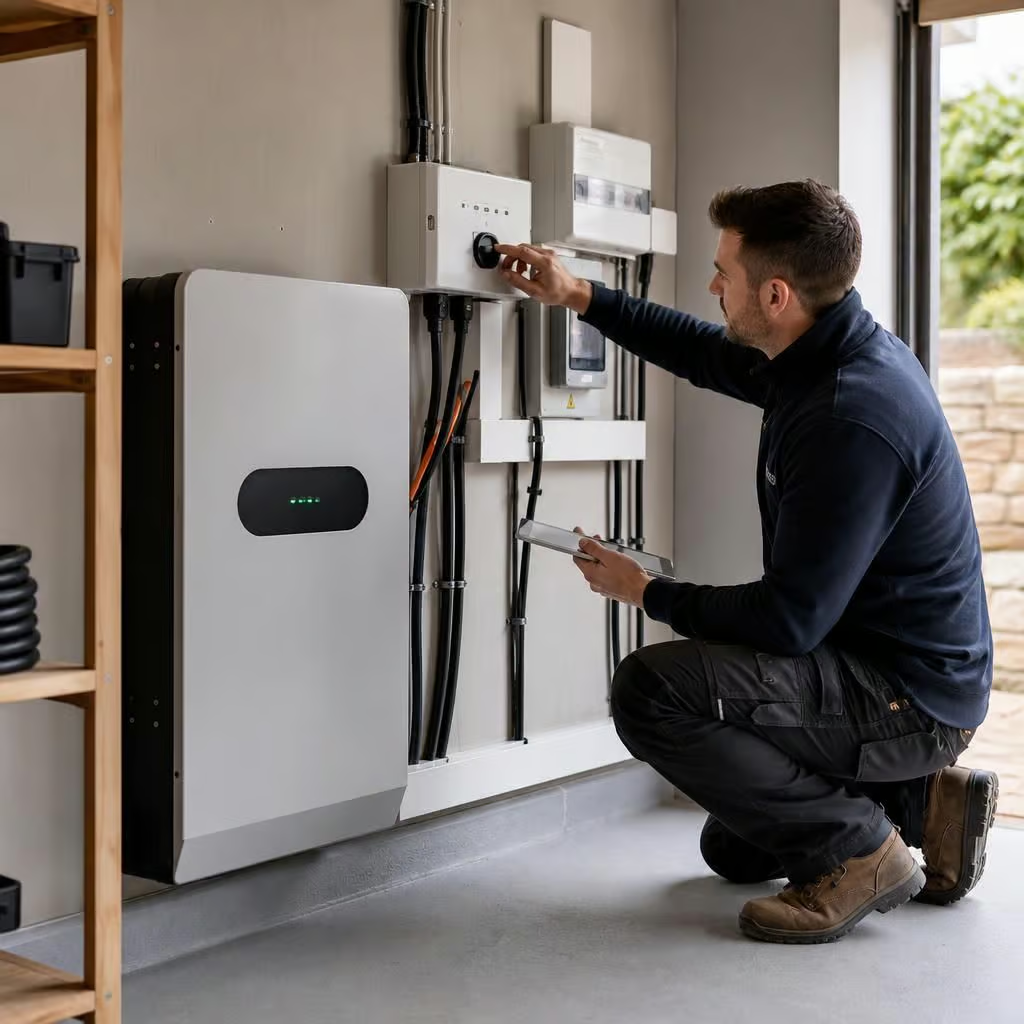
Your system should have accessible isolation points for the battery, inverter, solar generation and grid connection where applicable. Labels should show what each switch controls and warn that more than one source of electricity may be present. A single switch at the consumer unit may not isolate every part of a storage system.
Clear instructions matter if there is smoke, unusual heat, damage, water ingress or a persistent fault. We provide the information needed to shut the system down safely and explain when the property should be evacuated and the emergency services contacted. A damaged battery should not be opened, moved or restarted by the householder.
Emergency responders may need to know that a battery is installed and where it is located. Keep the system details, isolation instructions and any emergency information in an accessible place. Do not put them inside the battery enclosure or in a room that may be inaccessible during an incident.
Testing and commissioning
Commissioning is more than checking that the battery starts charging. We verify the protective devices, isolation, operating settings, communications, charge and discharge functions, backup changeover where fitted, and any export limit. We also check that alarms and fault reporting work as intended.
The completed installation should have test results, commissioning records, product information and operating instructions. The paperwork should identify the equipment installed and record any limitations, such as circuits that are not backed up or an agreed export restriction.
We use the relevant electrical certification for the work and explain the controls before leaving. If the battery is connected to solar generation, the documents should cover the interaction between the panels, inverter, battery and property supply rather than describing only one part of the system.
Maintenance and changes to the property
Battery safety continues after installation. Keep vents and access areas clear, watch for warning messages, and do not cover the enclosure or alter its wiring. If the battery is installed in a garage or outbuilding, changes to storage, insulation or heating can affect the conditions around it.
Contact the installer if the battery is damaged, repeatedly reports a fault, becomes unusually hot, develops a smell or makes an unfamiliar noise. Do not attempt repairs yourself. An engineer can decide whether the system needs isolation, inspection or manufacturer support.
When comparing quotations, ask for the proposed location, applicable electrical standard, product conformity information, fire-safety reasoning, grid-connection arrangements, isolation method, commissioning tests and handover documents. Those details show how the installer has considered the whole property, not just the battery’s capacity.
We assess the existing electrical installation and the proposed battery position before recommending equipment. For solar and battery work, our MCS certification also supports the relevant certification and export arrangements, while our NICEIC registration reflects the electrical competence needed for the installation and testing.
Electrical compliance is not the only approval to consider. An external battery enclosure, a garage installation or work on a listed property may involve planning or building-control requirements. We identify these constraints during the survey and explain which notifications are needed before installation begins.
That check prevents a technically compliant system from creating unresolved paperwork later. Ask for confirmation of the approvals considered, not just a product datasheet or an electrical test certificate.