
Can you repair my boiler if replacement parts are unavailable?
Sometimes, but not always. We assess the boiler and the fault first; if no safe, suitable part is available, we’ll explain why repair isn’t practical and discuss replacement options.
Yes, sometimes — but only when the boiler can be left safe and reliable. A missing part does not automatically mean the boiler must be replaced. We first identify why the part is unavailable, then assess the boiler’s condition and the risks of using another route.
“Unavailable” can mean several different things. The manufacturer may have discontinued the component, a supplier may have no stock, or the part may no longer be supported for an older boiler. A short-term supply problem is different from a boiler for which no suitable parts remain. That distinction affects what we can responsibly recommend.
Your boiler may still be repairable if the fault lies in a component that can be tested, cleaned, refurbished or repaired without compromising safety. That might apply to some electrical connections, wiring faults, sensors or mechanical components. We do not repair a part simply because a replacement cannot be found. The repair must be technically sound and appropriate for the appliance.
If an alternative part is considered, we check more than whether it will physically fit. It must be suitable for the boiler’s model and installation, work correctly with the controls and safety systems, and be supported by reliable technical information. A component that makes the boiler run but affects combustion, pressure control or overheating protection is not an acceptable repair.
Gas appliances need particular care. Our Gas Safe-registered engineers assess whether any proposed work can be completed legally and safely, including the combustion, flue and safety controls. For an oil-fired boiler, OFTEC registration matters because the appliance, burner and oil system must be assessed as a complete installation rather than treated as interchangeable parts.
We will explain the limit of the repair. If a failed heat exchanger, control board, fan, burner or safety component has no suitable replacement, we look at the rest of the boiler before advising you. The age of the appliance, its previous repair history, corrosion, flue arrangement and general condition all affect whether further work is sensible.
An older boiler can sometimes be kept running after a carefully assessed repair. In other cases, spending money on one unavailable part only delays another failure. We will set out the likely risk rather than describe a temporary workaround as a dependable repair.
Before work starts, you will know what we have found, what part or repair route is being considered, and what the work is expected to cost. If we cannot make the boiler safe or reliable with the available options, we will explain that clearly. You can then compare the repair cost and remaining risk with replacing the appliance.
Finding a replacement part may also take investigation. We may need the boiler make, model and serial details, photographs of the appliance and its controls, or information from an earlier service. If the part is obsolete, those details help establish whether a technically suitable alternative exists rather than relying on a generic internet listing.
A repair involving a non-standard part can have consequences for future servicing and warranty support. We explain those consequences before you agree to the work. We also record what was fitted or repaired so the next engineer has accurate information about the boiler.
If replacement becomes the safer choice, the existing heating system still needs to be considered. Radiators, controls, pipework, flue routes and condensate arrangements can affect the work involved. This is particularly important in an older house or a property heated by oil or LPG, where the new appliance may not be a direct like-for-like installation.
After a repair, we test the boiler and its safety functions before leaving it in use. You receive the relevant paperwork for the work completed, along with any advice about future servicing or parts that may become difficult to obtain. If you have already been told that a part is discontinued, keep the part number, boiler model and any engineer’s report available when you contact us.
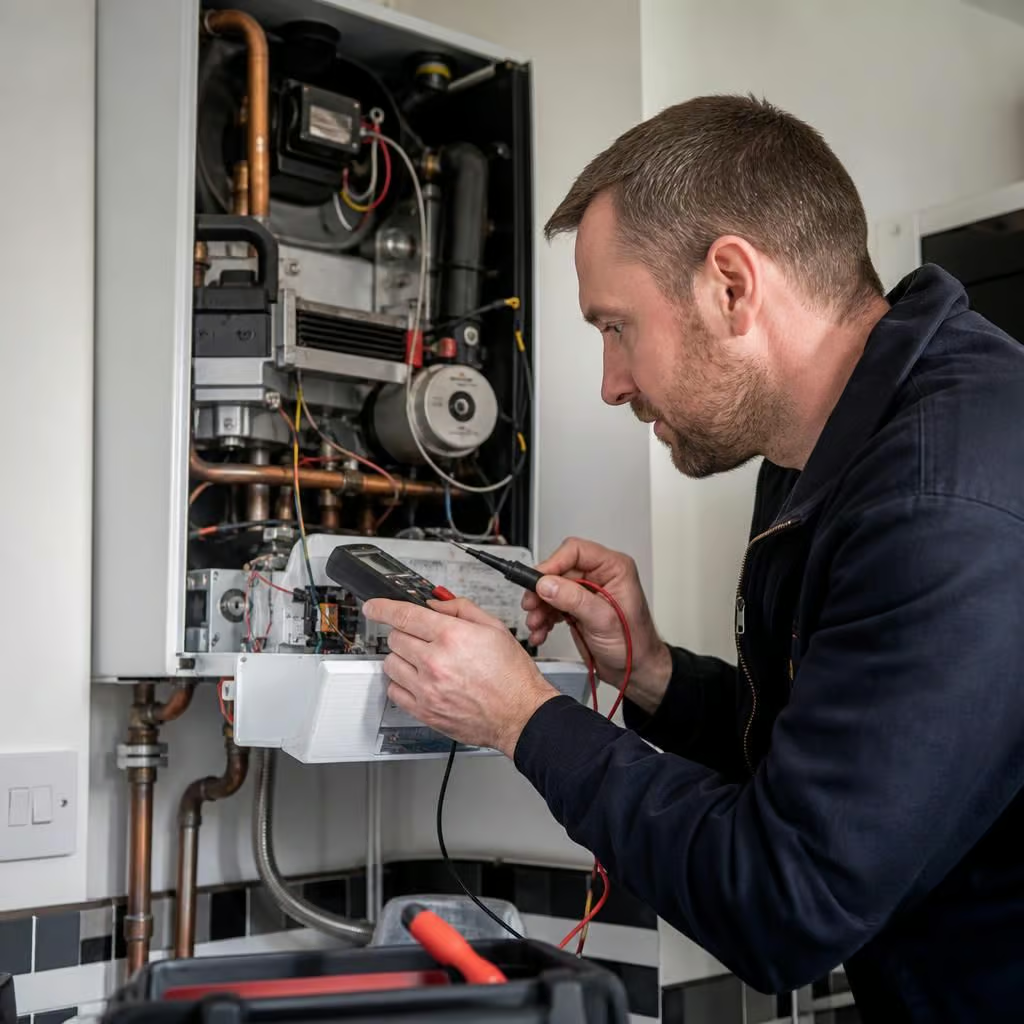
If the original part cannot be sourced, we also look for what caused it to fail. A replacement control board will not solve an underlying electrical fault, and a new pump may not cure a restriction elsewhere in the system. Checking the surrounding components helps avoid fitting a scarce part only for the boiler to fail again.
We test the repair under normal operating conditions and check the related safety controls before deciding that the boiler can remain in use. That gives you a clearer choice: keep the existing appliance with a properly assessed repair, or plan its replacement because the wider system is no longer dependable.