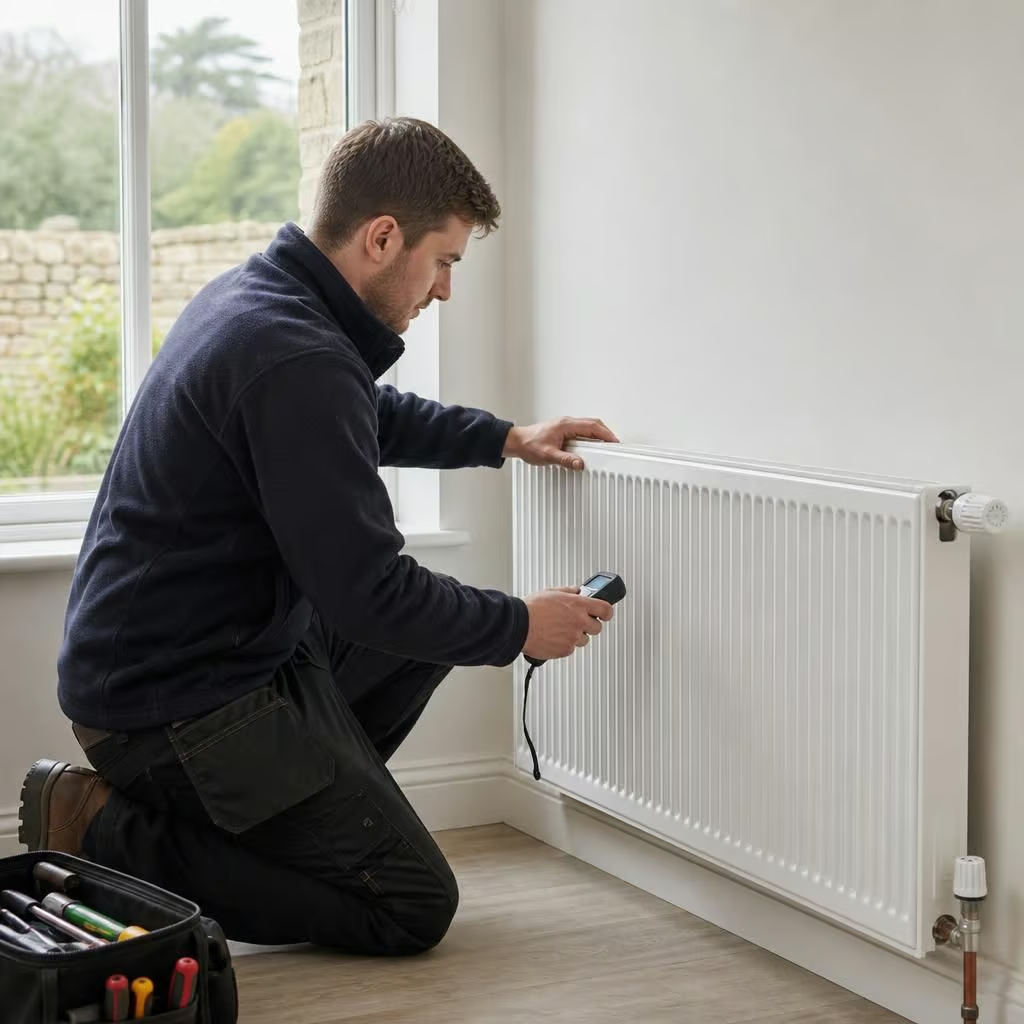
Will I need to upgrade my radiators for an air source heat pump?
Not always. We calculate each room’s heat requirement and check how your radiators perform at the lower flow temperatures an air source heat pump uses, replacing only those that are too small to heat the room comfortably.
An air source heat pump does not automatically require new radiators. The important difference is that it usually heats water to a lower temperature than a conventional boiler, so each radiator must be able to release enough heat at that temperature.
A boiler may send water to the radiators at a high temperature for short periods. A heat pump works more efficiently when it runs steadily at a lower temperature. That gives the radiators less heat to release, even though the room still needs the same amount of warmth. A radiator that is adequate with a boiler may therefore be too small for a heat pump.
The decision depends on the heat needed in each room, the size and type of the existing radiator, the insulation, and the temperature at which the heat pump will operate. A large radiator in a well-insulated room may work perfectly well. A small radiator in a draughty room may need replacing.
How we assess the radiators
During the design survey, we calculate the heat loss for each room rather than judging the system from the boiler output or the number of radiators. The calculation considers the room dimensions, windows, external walls, roof or floor above and below, insulation, and the local design temperature.
We then compare that heat loss with the output of each existing radiator at the intended heat pump flow temperature. Radiator manufacturers often quote outputs at higher temperatures than a heat pump uses, so a rating taken from the side of a radiator can give a misleading impression. We make the comparison on the conditions the new system will actually use.
This produces a room-by-room schedule. It shows which radiators can stay, which need a larger output, and whether any pipework or controls need attention. It also helps prevent unnecessary replacement. Keeping suitable radiators can reduce disruption and leave more of the existing system intact.
What an upgrade may involve
- A larger panel radiator: A longer, taller or deeper radiator can provide more heat from the same lower-temperature water. The available wall space and furniture layout affect what will fit.
- A different radiator type: A model with more panels and convector fins can provide a higher output without always needing a much larger wall area.
- An additional radiator: Some rooms have limited space on one wall. Adding another emitter can spread the required output around the room and improve comfort.
- Low-temperature or fan-assisted emitters: These can provide useful output where a conventional radiator would be too large, although they need suitable electrical connections and careful positioning.
- Underfloor heating: This works well with lower water temperatures, but installing it throughout an existing house usually involves more floor and decorating work than changing radiators. It may be more practical during an extension or major renovation.
Radiator changes do not always mean removing every radiator in the property. A living room, kitchen or north-facing bedroom may need more output, while other rooms may already have enough capacity. The survey identifies the difference.
Older and rural homes
Older properties need a particularly careful assessment. Solid walls, exposed floors, large sash windows and barn-conversion layouts can increase heat loss. Listed buildings may also restrict changes to windows, walls or floors. That does not rule out a heat pump, but it can affect radiator sizes and the temperature needed on the coldest days.
Improving draught control, loft insulation or other practical areas may reduce the heat needed from the radiators. We consider those factors in the design rather than compensating for every heat-loss problem with larger equipment. The aim is to produce a system that heats the rooms properly without requiring an unnecessarily high flow temperature.
Properties currently heated by oil or LPG often have radiator systems that were designed for higher-temperature boiler operation. Some radiators may need replacing, but the existing pipework and emitters are not assumed to be unsuitable simply because the property is off the gas grid.
Will larger radiators make rooms uncomfortable?
A larger radiator does not make a room excessively hot when the system is designed and controlled correctly. The heat pump controls regulate the water temperature and output according to the conditions outside. Thermostatic radiator valves then allow individual rooms to be adjusted.
Heat pumps generally work best when they maintain a steady indoor temperature rather than repeatedly switching between very hot and completely cold. We explain how the controls should be used, because setting the system like a conventional boiler can lead to poor comfort and higher running costs.
What happens if the existing radiators are too small?
We set out the required changes before installation begins. The quotation can show the radiator work alongside the heat pump installation, so the likely cost and disruption are clear before a decision is made. We do not rely on a high flow temperature to hide inadequate radiator output, because that can reduce the efficiency of the system.
Radiator replacement is usually less disruptive than changing floors or major pipe routes. We protect the work area, drain and refill the relevant heating circuit, fit the new emitters, and balance the system afterwards. Any wall repairs or redecorating needed because of a different radiator size should be discussed before work starts.
The final design should leave each room with enough heat on a cold day while allowing the heat pump to operate at an efficient temperature. If the assessment shows that the required changes are extensive or unsuitable for the property, we explain that before installation rather than treating radiator upgrades as an afterthought.
A radiator that only just meets the calculated heat loss can leave little margin on the coldest days. We may therefore specify a little more output where the room layout allows it, so the heat pump does not need to raise its flow temperature unnecessarily.
That extra capacity does not mean the room will overheat. The controls can run cooler water when outdoor conditions are mild, while the radiator still has enough output when temperatures fall. You end up with steadier room temperatures and fewer compromises in the system design.