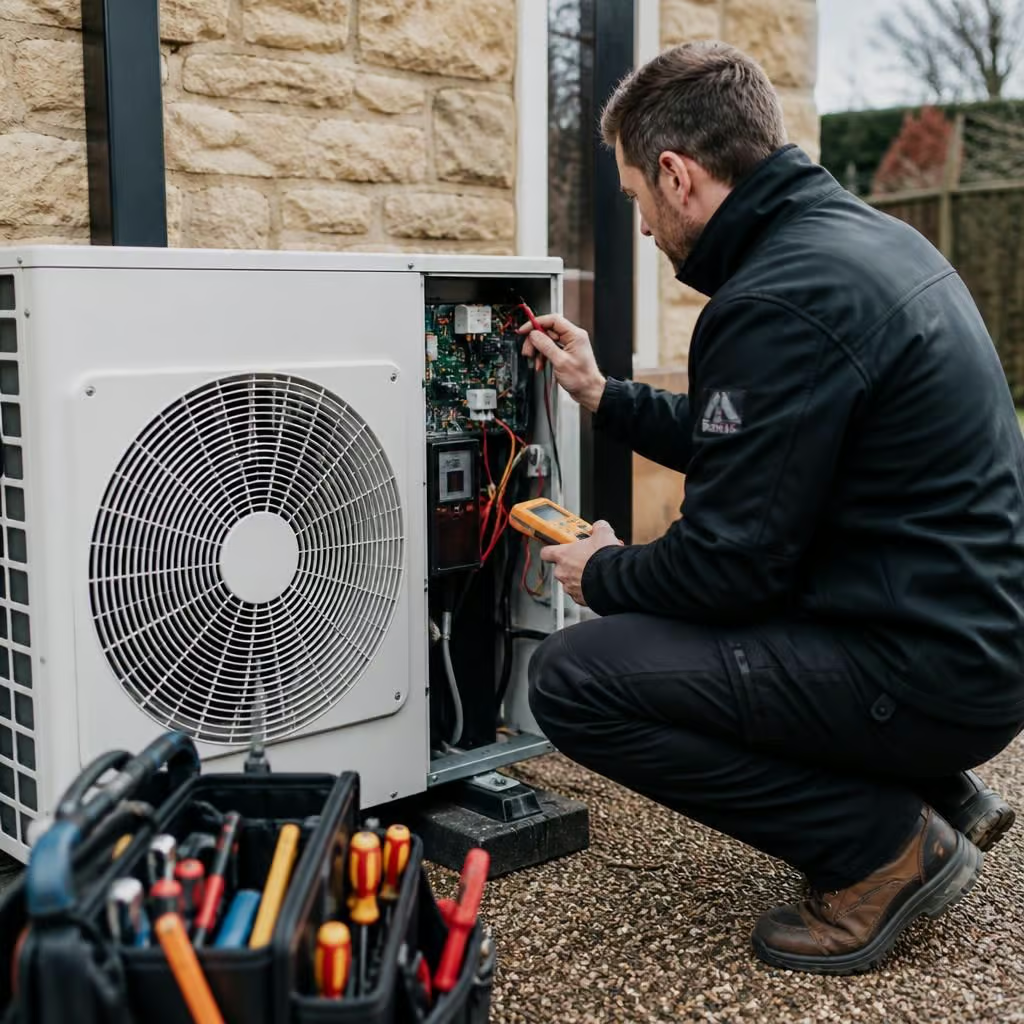
Can you repair a heat pump fault without replacing the whole system?
Yes. Many heat pump faults come from a failed sensor, electrical component, control setting or circulation problem, so we diagnose the cause before recommending any replacement. If the compressor or refrigerant circuit has failed, we assess the system’s age, condition and repair cost to decide whether repair remains sensible.
A heat pump fault does not automatically mean replacing the outdoor unit, cylinder, radiators or controls. The repair decision depends on which part has failed, why it failed and whether the remaining system is in sound condition.
Some faults are contained to one component. A failed temperature sensor, circulation pump, motorised valve, actuator, control, wiring connection or expansion vessel can usually be dealt with without disturbing the rest of the installation. A blocked filter or low system pressure may need correcting rather than replacing. If a sensor is giving a false reading, fitting the correct replacement can restore normal operation without changing the heat pump itself.
Your heat pump may also stop because of a refrigerant, airflow or water-side problem. We look for the underlying cause rather than simply clearing the fault code. A refrigerant leak, for example, needs the leak locating and repairing before the system is recharged. A dirty heat exchanger, restricted filter or air trapped in the heating circuit can place unnecessary strain on the equipment. Resetting the controls without finding that cause can make the same fault return.
The first stage is a complete fault assessment. We review the fault history, check the electrical supply and controls, test the sensors, inspect the hydraulic circuit and examine the outdoor unit. We also look at operating pressures, flow temperatures, pumps, valves and defrost behaviour where those checks apply to the system. This separates a failed part from a fault caused by installation, settings or another component.
If the system has stopped during cold weather, the symptoms can be misleading. Ice on the outdoor coil may be part of a normal defrost cycle, but persistent icing can point to restricted airflow, a sensor fault, fan trouble or a refrigerant problem. Poor heating may come from low flow, incorrect controls or undersized radiators rather than a failed heat pump. Testing the whole circuit helps avoid replacing an expensive part unnecessarily.
Older systems can still be repairable. Age alone is not enough to justify a full replacement. We consider the condition of the outdoor unit, cylinder, controls, pipework and emitters separately. If one section is sound and parts remain available, repairing or upgrading the failed section may be the more sensible route. That can leave the existing radiators and pipework in place when they are suitable.
A property can also have more than one issue. For example, a heat pump may have a failed pump and a poorly balanced heating circuit. Replacing the pump alone may get the unit running, but it may not correct uneven room temperatures or repeated flow faults. We explain which work is essential, which work is recommended and what may happen if a related issue is left unresolved.
A full replacement becomes more likely when the main equipment is beyond economic repair. This may apply where the compressor, heat exchanger or main control board has failed, where the unit has serious corrosion or where essential parts are no longer available. Repeated failures can also change the calculation if repair bills are accumulating without making the system dependable. We assess the likely repair cost against the condition and expected serviceability of the complete installation.
A replacement may also be appropriate when the system no longer suits the property. Changes to the building, heating demand, controls or hot-water requirements can affect performance. In an older home, we check the heat emitters, pipe sizes, insulation and control arrangement before recommending a new unit. Replacing the outdoor equipment without checking those parts could leave the underlying problem in place.
Replacement does not always mean starting from scratch. Depending on the fault and the condition of the installation, parts of the system may be reusable. The cylinder, radiators, pipework or electrical supply might remain suitable, while the outdoor unit or controls are changed. We identify what can safely stay and explain any compatibility work before pricing the job.
You should note any displayed fault code, unusual noise, water leak, loss of pressure or change in room temperature before the assessment. If the system has tripped an electrical protective device, smells overheated or is leaking significantly, leave it switched off and do not remove covers. Information about when the fault started and what the system was doing beforehand can help us narrow the cause.
Once we know the cause, we set out the repair, the parts involved and any associated work in writing before starting. If replacement is the better option, the quotation explains which equipment is changing, what remains usable and why. That gives you a clear choice between repairing the existing system and investing in a new installation, rather than treating every fault as a reason to replace everything.
Repeatedly resetting a heat pump can hide the original fault rather than fix it. If the same warning returns, note the code and any change in noise, pressure or heating performance, then stop resetting it and arrange an assessment.
We use that information alongside our tests to decide whether the fault needs a component repair, further investigation or a wider review of the installation. That avoids treating a temporary reset as a repair and helps you choose work that addresses the cause.