
Does appliance type affect landlord gas safety certificate cost?
Yes. A landlord gas safety certificate can cost more when an appliance takes longer to access or test, so boilers, gas fires and cookers may be priced differently.
Yes, appliance type can affect the price, because each appliance needs a different set of safety checks. A boiler, gas fire and cooker do not take the same time to inspect. The final cost also depends on how many appliances are included, how accessible they are and whether the engineer finds a fault.
Boilers often involve more checks than a cooker. We examine the boiler’s operation, controls, ventilation, flue and visible gas connections. A concealed or difficult-to-access flue can make the inspection more involved. Boilers in older properties may also need closer attention if the installation has been altered over time.
A boiler safety check is not the same as a full service. We record the safety inspection needed for the landlord gas safety record. A detailed service, cleaning, adjustment or repair may need to be quoted separately if you request it or if the appliance needs further work.
Gas fires can change the cost because the flue route and ventilation arrangements need careful consideration. An open-fronted fire, for example, relies on the room and flue working correctly together. We check the appliance, visible connections, ventilation and flue performance as far as the inspection allows. Access to the chimney or flue terminal may affect the time required.
Older fireplaces can need more investigation than a modern, easily accessible appliance. Decorative fronts, fixed surrounds or an unclear flue route can make it harder to inspect the installation properly. If we cannot establish that the appliance is safe to use, we explain what further inspection or remedial work is needed.
Gas cookers and hobs are often simpler to inspect when the connection and isolation point are accessible. We check the appliance operation, visible pipework or flexible connection, stability, ventilation and the condition of the isolation arrangement. A built-in appliance, cramped kitchen unit or inaccessible connection can add time.
A cooker may therefore cost less to inspect than a boiler or gas fire, but that is not guaranteed. A straightforward appliance in an accessible room is different from one that has to be moved, partly dismantled or inspected in a confined space.
Where a property has several appliance types, we price the inspection around the complete list rather than treating every appliance as identical. For example, a boiler, gas fire and cooker each bring different checks. We need the appliance locations and access arrangements before confirming the cost.
- Number of appliances: each gas appliance must be identified and inspected for the record.
- Appliance type: boilers, fires, cookers and hobs have different safety considerations.
- Flue arrangements: concealed, shared or difficult-to-access flues may require additional investigation.
- Access: locked cupboards, fixed panels and appliances behind units can increase the inspection time.
- Property layout: several floors, outbuildings or separate heating systems can make the visit more involved.
- Condition: corrosion, damaged connections, poor ventilation or signs of unsafe operation need to be recorded and explained.
The certificate itself does not automatically include repairs or replacement parts. If we find a fault, we explain whether the appliance can remain in use, what action is needed and whether that work is separate from the inspection price. We do not add remedial work without discussing it first.
For a rented property, the record needs to cover the gas appliances and flues that fall within the landlord’s responsibility. A tenant’s own appliance may be treated differently, so it helps to confirm the appliance list before booking. We can then provide a written quotation that reflects the actual inspection rather than an unclear price based only on the property type.
All gas safety work is carried out by a Gas Safe registered engineer. That matters because the inspection concerns the safe operation of gas appliances, their connections and associated flues, not simply whether the appliance turns on.
When you ask us for a price, tell us which appliances are installed, where they are located and whether any are built in or difficult to reach. A photograph of the boiler, fire or cooker can also help us understand the installation. We will confirm what the quoted cost includes before the inspection begins.
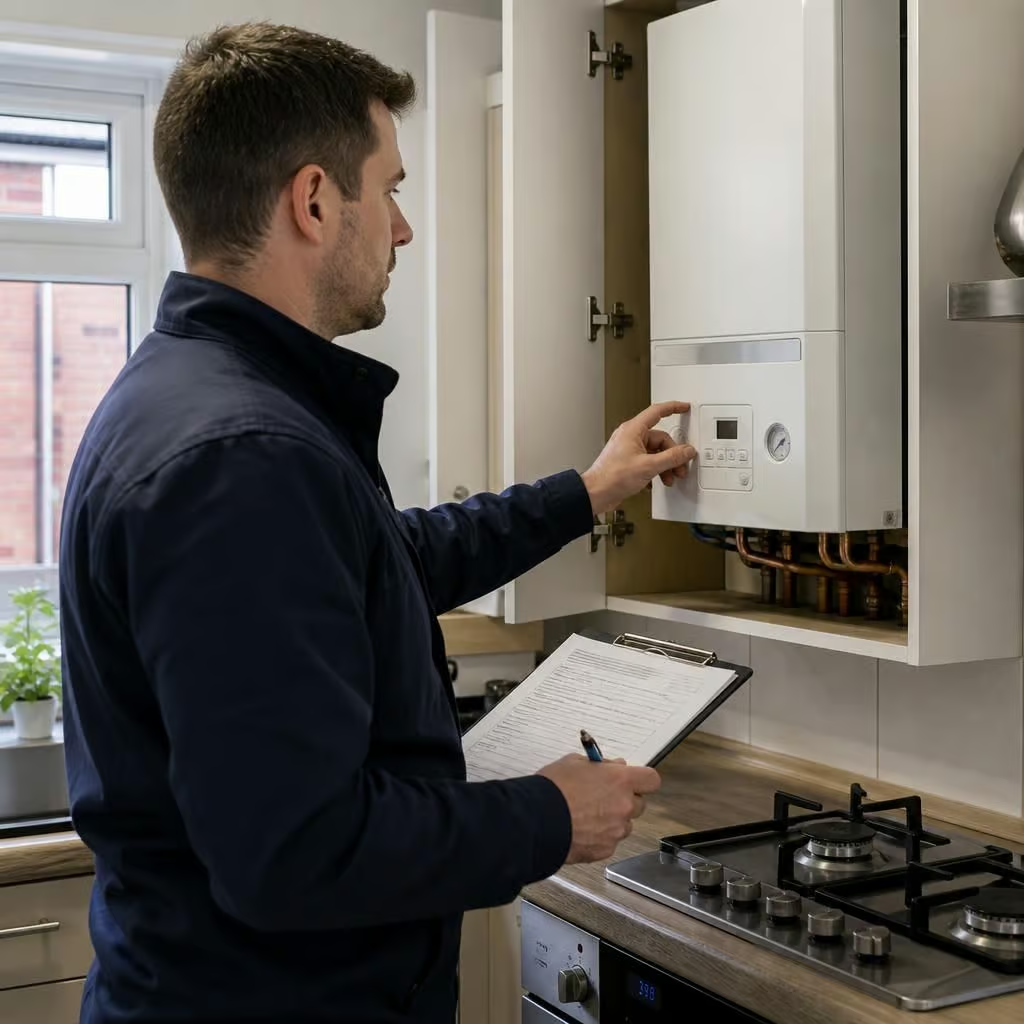
Appliance type gives us the starting point for the inspection, but the installation determines how straightforward the visit is. A boiler in an open, accessible cupboard is easier to assess than the same type of appliance behind fixed panels or with a concealed flue.
That distinction helps landlords budget accurately. The inspection price covers the safety checks and record, while any repair, part or further investigation is discussed separately if needed. You receive a clear explanation of what has been checked and what requires attention.