How much maintenance does underfloor heating need?
Underfloor heating usually needs very little maintenance because the floor circuits have no moving parts. We check the manifold, controls and heat source as part of the heating system’s normal service, while electric systems need checks of the thermostat and electrical connections.
Most underfloor heating maintenance is preventive rather than routine repair. The main aim is to keep each zone receiving the right heat, protect the heat source and identify small faults before they affect a whole room.
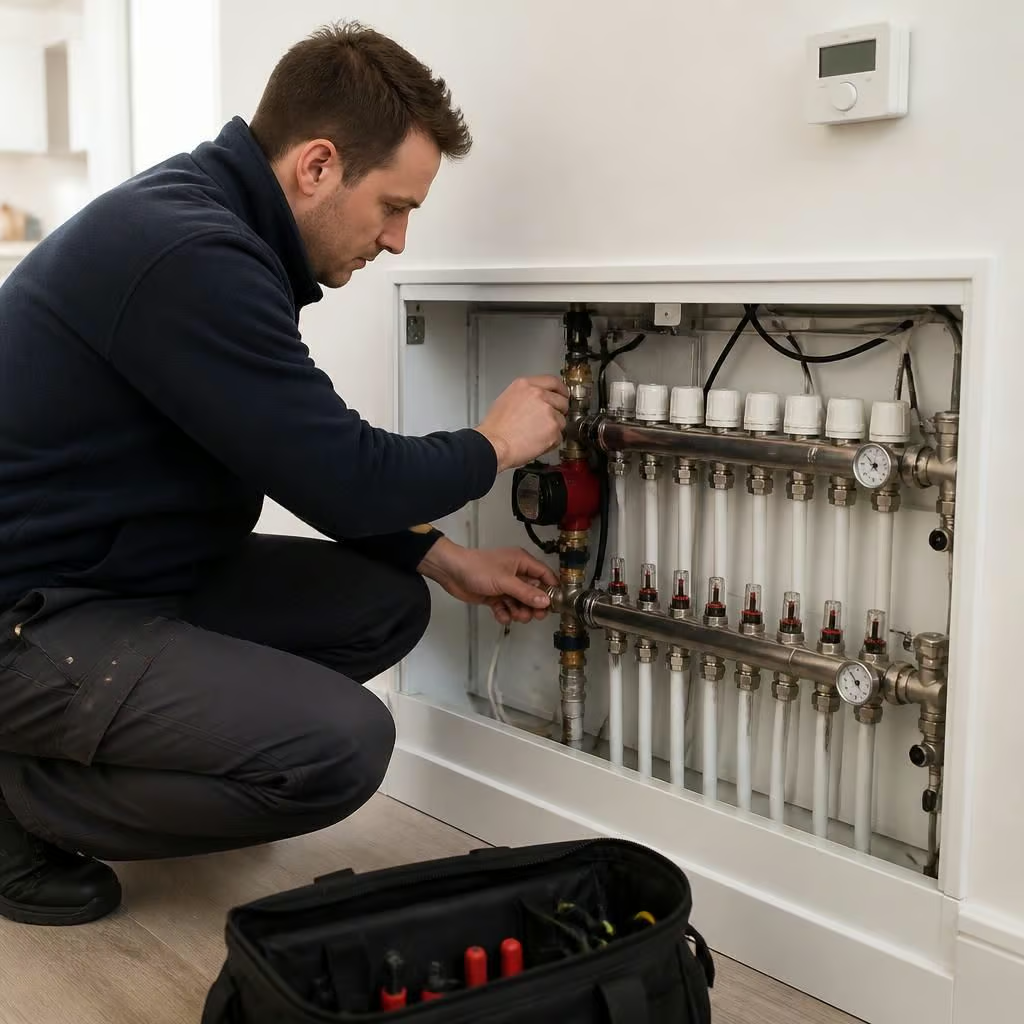
Wet underfloor heating has more components to inspect than an electric system. The pipework beneath the floor normally stays in place, but the accessible parts still need attention. We check that the manifold’s flow meters and actuators respond to each room thermostat, then look for sticking valves, loose connections, signs of leakage and trapped air. If one zone stays cold while others work, this is often where the fault lies.
The circulating pump and blending arrangement also need to work correctly. A pump that runs poorly can leave distant rooms cool, while incorrect flow temperatures can make the floor slow to respond or waste energy. We check the system’s settings against the heat source and the way the rooms are being used. If the water has become dirty or the system has lost its protective inhibitor, we explain what cleaning or treatment is justified rather than recommending unnecessary work.
The boiler or heat pump still needs its own service. Underfloor heating does not replace the checks required for the appliance producing the heat. A gas boiler must be worked on by a Gas Safe engineer, while an oil-fired boiler needs an OFTEC-registered engineer. Where a heat pump supplies the floor system, its hydraulic and electrical performance also needs reviewing as part of the wider installation.
Electric underfloor heating has no water, pump or manifold, so there is less mechanical equipment to maintain. We can test the heating cable or mat, thermostat, floor sensor, isolator and protective electrical devices. A resistance test can help show whether the cable is intact. If a sensor fails, the floor may remain cold, overheat or show an error at the thermostat. Access is usually limited to the thermostat and sensor, so avoid lifting tiles or flooring until the fault has been properly diagnosed.
There are a few sensible checks at home. Keep furniture and thick rugs from blocking the room’s temperature sensor. Check that thermostats have power and that their schedules have not been changed accidentally. If a wet system has a visible manifold, look for dampness around its connections, but do not adjust balancing valves without knowing their original settings. Keep the manifold accessible for future inspection and do not drill into a floor where heating cables or pipes may be present.
Gradual heating is normal. Underfloor heating warms a floor and the room above it, rather than producing the immediate blast of heat associated with a radiator. A longer warm-up is not automatically a maintenance fault. A sudden change is more significant: one room becoming cold, a thermostat losing communication, a pump becoming noisy, repeated pressure loss or a damp patch near the manifold all justify investigation.
Flooring changes can affect performance. Replacing a thin floor finish with thicker timber, carpet or underlay can slow heat transfer. Before changing the covering, check its suitability for underfloor heating and confirm that the system’s temperature limits will still be respected. This matters particularly in older homes, where flooring may have been altered several times and heating zones are not always documented clearly.
Maintenance can usually be carried out through the thermostat, electrical controls and manifold without disturbing the finished floor. We only recommend lifting flooring when testing points to a concealed cable, sensor or pipework fault. If a repair does require access below the surface, we identify the likely location first, so the work is more targeted than removing the whole floor.
Keep the installation information, zone layout and thermostat instructions with the property records. That makes future fault-finding easier, especially if a room has been remodelled or the heating source has changed. When we inspect an existing system, we can also record what is fitted and explain which maintenance is genuinely needed next.
If a room’s use has changed, the original heating schedule may no longer suit it. We review thermostat settings, zone timings and flow temperatures during maintenance, then explain any adjustments before changing them.
Keeping the manifold, thermostats and control wiring accessible makes future checks simpler. It also helps us identify a control or balancing issue before anyone considers disturbing the floor.