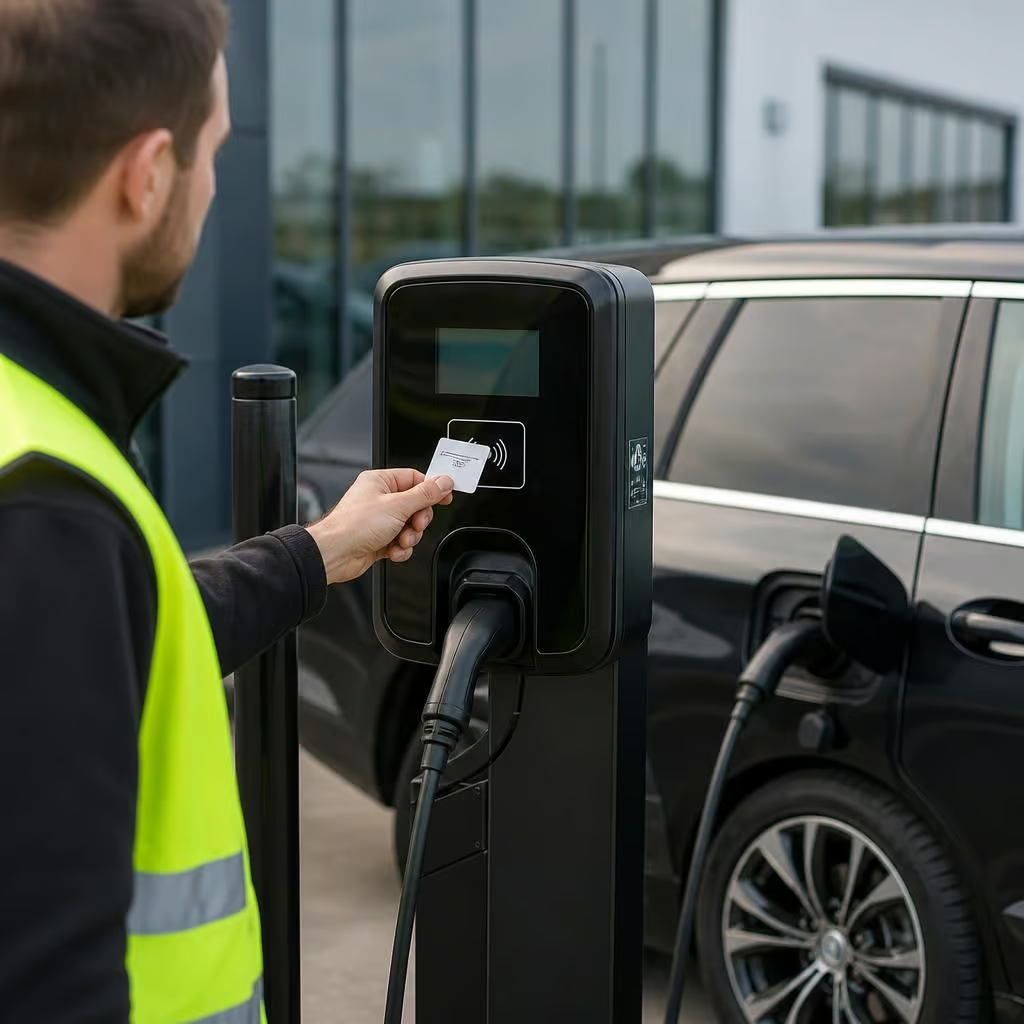
Can we control who uses our commercial EV chargers?
Yes. We can specify and configure commercial EV chargers with user access controls, session records and payment or billing options, so approved drivers can charge while unauthorised use is restricted.
Access control depends on the charger, the management platform and the way the site is used. We start by agreeing who should charge, who should pay and what records the business needs. That determines the access method rather than leaving the charger open to anyone with a vehicle.
A workplace charger might allow charging only for named employees. A depot may need access limited to fleet drivers and company vehicles. A hotel, farm shop or visitor attraction may want guests to charge after registering or making a payment. Each arrangement needs a different mix of user permissions, pricing and reporting.
- Staff access: approved employees can be added to the charging platform and removed when they leave.
- Fleet access: drivers or vehicles can be assigned to a group, so the business can separate fleet use from private charging.
- Visitor access: guests can be given temporary access without adding them as permanent users, where the chosen platform supports it.
- Public access: the charger can be made available to wider users, with payment and tariff settings handled through the relevant network or platform.
- Restricted access: the charger can remain private, with only authorised cards, accounts or approved devices accepted.
Physical access matters as well as software access. A charger behind a security gate is already more restricted than one beside a public car park. We can discuss the location of the charge points, bay markings, signs, gates and cable arrangements alongside the digital controls. Software cannot prevent someone from parking in a marked bay, so the site layout needs to support the policy.
The management platform usually has an administrator account. That account can add or remove users, change permissions, review sessions and adjust tariffs. We make sure the nominated person understands those controls before handover. If several people manage the site, we can help define who should have full administrative access and who only needs to view charging records.
For staff charging, the business may want to provide free electricity but still record each session. That can help separate business use from private use without asking drivers to make a payment. Other sites may charge employees, visitors or members of the public. The charging platform, payment provider and electricity arrangements all affect how that is set up, so we confirm the ongoing charges and responsibilities before installation.
Access settings should also account for people who are allowed to charge but do not have a permanent account. Some systems support temporary credentials or guest access. Others require a driver to use an app or contact the site administrator. We explain those differences before you choose the equipment, because a control method that works well for employees may create unnecessary friction for visitors.
Network connectivity is part of the decision. A cloud-managed charger normally needs a reliable connection for account changes, live monitoring and payment processing. Some equipment can apply stored permissions when the connection is interrupted, while other functions may depend on the platform being available. We check the proposed communications route and identify what users should expect if the site temporarily loses connectivity.
Existing chargers cannot always accept the same controls as new equipment. Their manufacturer, firmware, communications protocol and management platform may limit what we can add. We assess the existing installation before recommending an upgrade, replacement or separate management arrangement. That avoids promising a level of control that the hardware cannot deliver.
Usage records need careful handling. A report may show the user, vehicle, charging time, energy used and cost, depending on the system. If the business links those records to named employees, it should decide who can view them and how long they need to be kept. We can explain the information the platform records so the business can set its internal data policy and tell users what to expect.
During the installation, we configure the agreed access structure, test authorised and unauthorised use, and check that the charger behaves correctly after a user is added or removed. We also test the practical operation at the bay, including cable reach, vehicle position and any local isolation equipment. The result should match the site’s agreed rules rather than simply proving that the charger can deliver power.
Access requirements often change after installation. A business may add more staff, introduce pool cars, open a car park to visitors or decide to recover electricity costs. We can review the charger and platform before those changes are made, so the electrical installation, user permissions and payment arrangements continue to work together.
Before we quote, we clarify who may use each charger, whether charging is free or chargeable, who manages the user list and what records the business needs. The quotation identifies the equipment and any platform or payment arrangements involved, so you can compare the initial installation with the ongoing administration.
Access control should stop unauthorised charging without making legitimate use awkward. Regular staff and fleet drivers may find an RFID card simplest, while occasional visitors may need a signposted app or guest process.
We match the starting method to the people using each bay, then check it from the driver’s side during commissioning. That includes the instructions on the charger, the sign, the app or card reader, and what happens when access is refused. Clear instructions reduce calls to whoever manages the site and make the charging policy easier to follow.