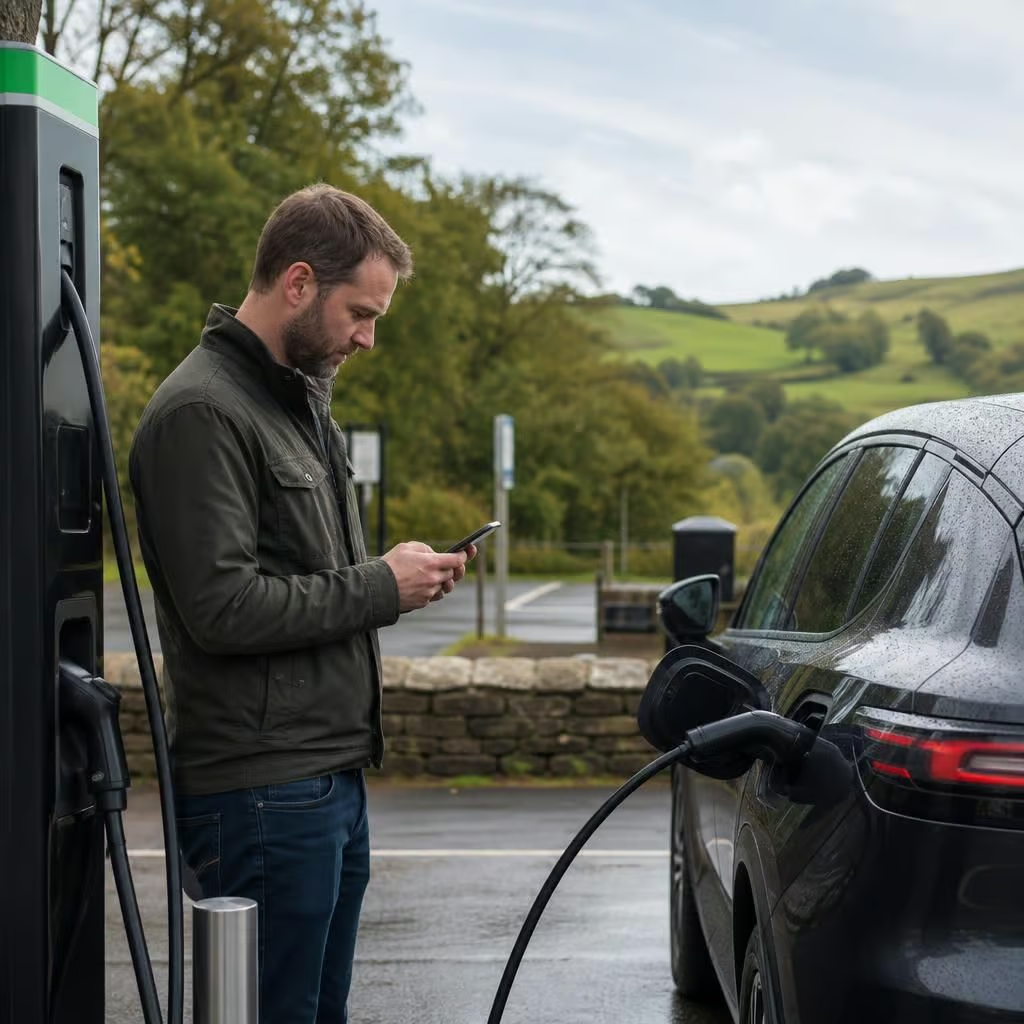
Does an EV charging network cover the routes you use?
Most major EV charging networks cover the main routes between towns and cities, but coverage can vary on rural roads and at your regular destinations. Check the network’s map or app for chargers along each journey, then confirm their live status and payment requirements before you rely on them.
A network covers your regular routes properly only when its chargers are usable where you need them, not simply shown on a map. Check each journey for suitable locations, compatible connectors, charging speed, access restrictions and a realistic alternative if the first charger is busy or unavailable.
Start with the full journey rather than the network’s headline coverage. Mark the places where you normally stop, including motorway services, supermarkets, car parks and destination charging. A charger several miles from your route may add more time than expected, especially on rural roads or when a diversion takes you away from the main road.
- Check the route in both directions. A charger that works outbound may be on the wrong side of a divided road for the return journey.
- Look at the gaps between chargers. This matters more on unfamiliar roads, in winter and when towing, carrying a heavy load or driving at motorway speeds.
- Check the location itself. Some chargers sit behind barriers, inside car parks or on private land. Confirm opening arrangements, parking rules and any access restrictions.
- Check the connector and speed. The charger must match your car, and its advertised output must suit the charging rate your car can accept.
- Check payment arrangements. Some chargers use an app, while others accept contactless payment or require an account. Do not assume every location uses the same method.
Live availability helps, but it is not a guarantee that a charger will be free when you arrive. A charger can be occupied, out of service or reserved by another driver after the status was last updated. Treat live information as a guide and identify another location before you set off.
For longer trips, choose a primary stop and a backup. The alternative should be far enough along the route to remain useful, but close enough that you can reach it if the first site is full. Several chargers at one location can reduce the risk of waiting, although a busy site may still have queues at popular times.
Network boundaries can also create awkward gaps. A single network may cover the first part of a journey well and then offer little useful coverage beyond a county boundary or on less-travelled roads. Check whether the network gives you access to partner or roaming chargers, and confirm the price and payment process for those sites before relying on them.
Coverage is not only about motorway travel. Rural routes often depend on destination chargers at hotels, pubs, visitor attractions, workplaces and public car parks. These can be useful when you plan to stay for a while, but they may have different access rules from rapid chargers beside a main road.
Your charging plan should also reflect how much range you normally keep in reserve. If you prefer not to arrive with a low battery, a network with fewer but better-placed chargers may suit you less than one with more frequent alternatives. The right choice depends on your car, driving pattern and tolerance for detours or waiting.
We can discuss how your home charger fits into that pattern when you are choosing an EV charging setup. Regular home charging reduces how often you need public chargers, while a suitable public network gives you options for work, longer journeys and days when home charging is not practical.
Before choosing a network, test several real journeys at different times and inspect the individual charger entries rather than relying on a coverage label. If the routes show usable stops, workable alternatives and payment methods you are comfortable with, the network is more likely to support the way you actually drive.
A destination charger can cover a route differently from a rapid charger. If you normally stop at a workplace, hotel, farm shop or visitor attraction, check how long you’ll be parked there and whether charging continues for the whole stay. Some sites limit access to customers, residents or permit holders, so the charger may not be available for every visit.
We can look at that pattern when discussing your home charging setup. If most journeys begin and end at home, reliable overnight charging may reduce the public network coverage you need. The network then needs to support the occasional longer journey, rather than every mile you drive.