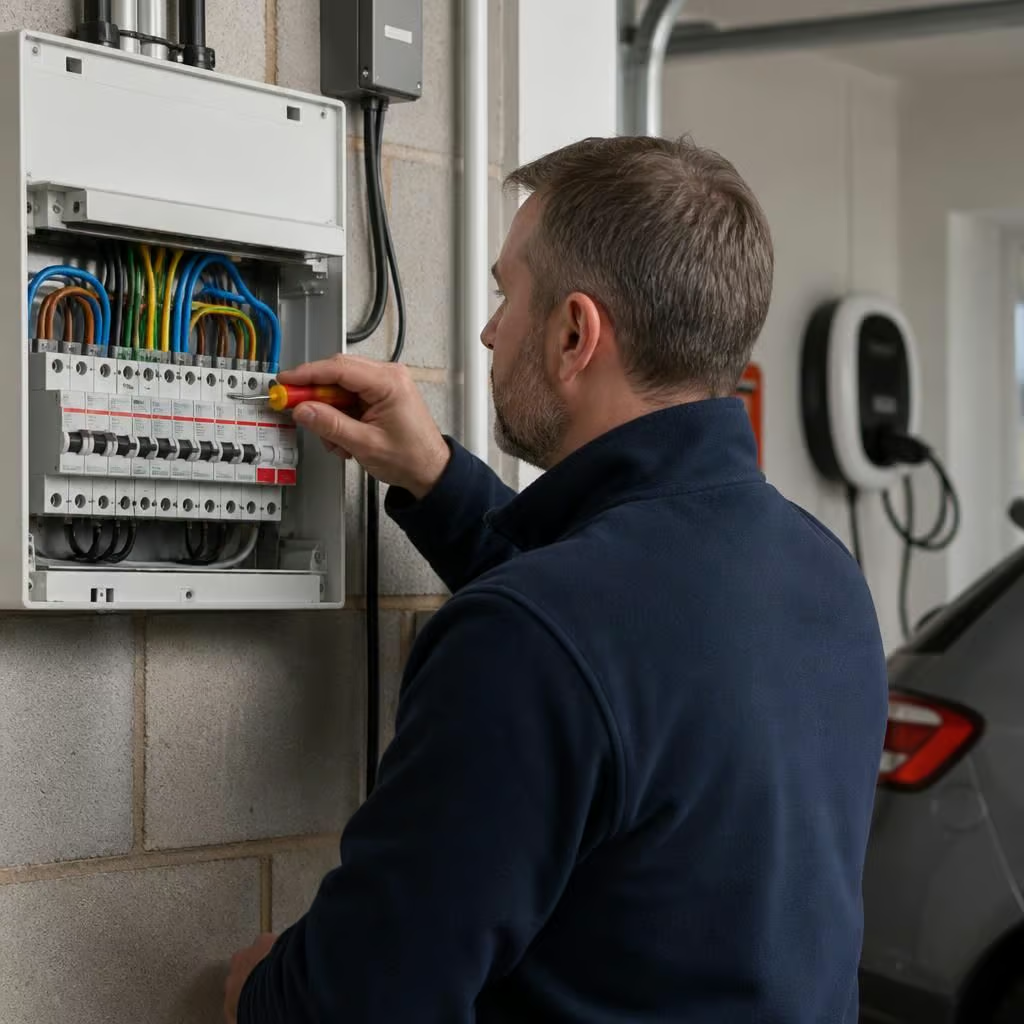
Does my consumer unit need upgrading for an EV charger?
Not always. We check the consumer unit’s condition, earthing, protective devices and available capacity; if it cannot safely support the charger, we’ll explain the upgrade needed before installation.
A full consumer unit replacement is not always necessary for an EV charger. It may be possible to add a dedicated protective device to an existing board. If the board cannot provide the required protection, has no suitable spare capacity or is in poor condition, we may recommend an upgrade before the charger is fitted.
Your consumer unit may be known as a fusebox or fuse board. Older units often use rewireable fuses or older cartridge fuses. That does not automatically make them unsafe, but they may not provide the protection needed for a modern EV charging circuit.
Common reasons for an upgrade include:
- There is no suitable spare way for the charger’s dedicated circuit.
- The board does not provide modern residual current protection.
- The existing protective devices are not compatible with the chosen charger.
- The enclosure, switches or internal components show damage, overheating or deterioration.
- The earthing or bonding arrangements need remedial work.
- The incoming supply or meter tails cannot safely support the additional demand.
An EV charger normally needs its own circuit from the consumer unit. We do not treat it like an ordinary outdoor socket. The circuit needs the correct cable size, isolation, overcurrent protection and residual current protection for the charger and the way it detects leakage.
Your existing board may be suitable if it is in good condition and has the necessary protective arrangement. In that case, we can install the charger circuit without replacing equipment that does not need replacing. This can reduce disruption and avoid the cost of a full board change.
Some older boards can accept an additional device but still need improvements elsewhere. For example, we may find that the board is sound but the main earthing conductor, bonding or meter tails need attention. We explain each remedial item and why it matters before work starts.
Capacity is a separate question from protection. A consumer unit can have a spare way and still need a load assessment. The house may already be using electricity for an immersion heater, electric heating, an induction hob, solar equipment or battery storage. We consider the expected demand rather than judging the installation by the number of empty spaces in the board.
Where the supply has limited spare capacity, managed charging may provide an alternative to a larger electrical upgrade. A suitable load-management arrangement can reduce the charger’s output when the property is using more electricity elsewhere. We only recommend this where the equipment and installation design support it.
Properties with older wiring need a closer look. A barn conversion, solid-wall house or rural property may have had several electrical alterations over the years. Extensions, outbuildings and older cable routes can affect the condition of the circuit serving the charger. We trace the proposed route and check the parts of the installation that the new circuit will rely on.
The earthing arrangement also affects the design. Some electricity supplies use a PME arrangement, which requires appropriate protection if a fault affects the protective earth. The charger installation may use built-in protective detection or another permitted method. If the existing arrangement is not suitable, we explain the practical alternatives instead of assuming that a new consumer unit alone will resolve it.
Our assessment usually covers:
- The age, type and condition of the consumer unit.
- The main switch, protective devices and available ways.
- The earthing and bonding arrangements.
- The meter tails and incoming supply.
- The likely route and length of the charger cable.
- The charger output and the other significant electrical loads in the home.
- Any solar panels, battery storage or other equipment connected to the installation.
If an upgrade is needed, we normally replace the consumer unit with a modern board and move the existing circuits across. We label the circuits clearly and test them as part of the work. Existing faults or damaged wiring may need separate attention before the new board can be signed off.
A consumer unit replacement is more involved than fitting a single protective device. The power must be isolated while we work, and several circuits may need checking before they are reconnected. We protect the working area, keep the disruption focused on the electrical equipment and tell you in advance if access to particular rooms or outbuildings is needed.
Once the installation is complete, we test the charger circuit and the relevant parts of the electrical system. You receive the appropriate electrical certification and information about any limitations or follow-up work. As NICEIC-registered electricians and ECA members, we carry out the electrical assessment and installation under the standards that apply to the work, rather than treating the consumer unit as an optional extra.
The right outcome may be a new consumer unit, a smaller remedial repair or no board change at all. We set that out in writing before work begins, so the decision is based on the condition and demand of the installation rather than on the age of the fusebox alone.
A consumer unit upgrade does not usually mean rewiring the whole house. We retain sound existing circuits and only recommend further work where testing finds a fault or the wiring cannot safely support the charger.
That distinction matters in older homes, where replacing the board can sound more disruptive than it is. We explain which parts can stay, which need attention and what the charger installation depends on before you decide.