
Which are the cheapest EV charging stations?
The cheapest public EV charging stations are usually slower AC chargers, particularly when you use an off-peak tariff or a subscription that reduces the unit price. Compare the cost per kWh, connection fees, parking charges and any subscription requirement before choosing a charger, as the lowest headline price may not be the lowest overall cost.
The cheapest public charging station is not always the one with the lowest advertised price per kWh. The total cost depends on the energy you take, the charging speed, parking rules, connection fees and whether you pay for a membership.
Start by comparing the full cost of a session rather than the headline tariff. A charger may charge for electricity by the kWh, then add a connection fee, minimum charge, parking fee or overstay charge. Some networks also apply different rates to members and pay-as-you-go drivers.
Check the price before you plug in
Prices can vary between chargers at the same location. The operator’s app, website or on-screen instructions should show the current tariff. Check the following points before starting:
- the price per kWh;
- any connection or minimum-session fee;
- whether the price changes with the time of day;
- parking charges at the site;
- when an overstay fee begins;
- whether the charger has a different price for app, contactless or roaming payments;
- the cost of using a membership or subscription.
A charger that looks cheap on a price-per-kWh comparison may cost more once these charges are included. A free car park can also make a higher electricity tariff worthwhile if you need to stay there anyway.
Destination charging is often better value
Chargers at supermarkets, hotels, leisure centres, workplaces and council car parks are often intended for longer stays. They commonly use AC charging, which suits a car parked for several hours. You can add energy while shopping, working or visiting somewhere, rather than making a separate stop.
Motorway and major-road chargers are convenient when you need energy during a journey, but convenience can be reflected in the tariff. If your battery has enough charge to reach a lower-cost destination charger, that may reduce the overall cost. Include the extra driving distance and time when making the comparison.
Choose the slowest charger that meets your need
A high-power charger is useful when you need to leave quickly. It is not automatically the cheapest choice. If your car will be parked for an hour or more, a slower AC unit may provide enough energy without paying for a faster service.
There is little benefit in choosing a faster charger if the car cannot accept that charging rate. The vehicle’s maximum AC and DC charging speeds, rather than the number shown on the charger, determine how quickly energy enters the battery.
Very short charging sessions can also work out poorly where a minimum fee applies. If you only need a small amount of energy, compare the total session cost with the cost of charging at a different stop or at home later.
Work out if a membership is worthwhile
Some networks offer a lower member tariff in return for a monthly or annual fee. This can be the cheapest option for a driver who regularly uses that network. It may not suit someone who charges publicly only occasionally.
To test the value, compare the membership fee with the saving on each expected charging session. Include the places where the membership applies and check whether the reduced tariff covers all chargers or only selected sites. A low member rate is not useful if the network does not operate where you normally drive.
Roaming services can make several networks easier to access through one account, but the price may differ from paying the charger operator directly. Check both options when the difference matters.
Consider the whole journey cost
The cheapest station for a single kWh may not be the cheapest choice for the journey. A detour uses energy and adds miles, while waiting for an unreliable charger can cost time. A location with several compatible chargers may be preferable if arriving at a single-unit site could leave you needing another stop.
Before travelling, check the charger’s connector type, power rating, location, operating status and payment method. Live availability information is useful, but it may not always reflect a fault or a vehicle that has stayed beyond its charging time.
Some cars and charging apps show the estimated session cost before charging starts. Treat this as an estimate where parking or overstay charges are separate. Keep the receipt or payment record if the final amount does not match the displayed tariff.
Home charging changes the comparison
For drivers who can charge at home, public charging is usually best reserved for journeys, days away and times when home charging is not practical. A home charge point lets you compare the electricity cost with the public tariff on a like-for-like basis. The calculation should use the energy taken by the car, not just the charger display, because charging involves some electrical loss.
Your home supply, parking position and existing electrical installation determine what can be fitted safely. We assess the cable route, consumer unit and available capacity before recommending a charge point. That matters particularly where the parking space is away from the house or the property has an older electrical installation.
For most public charging decisions, compare the complete session price, choose a charging speed suited to the time available and check whether a membership actually matches your driving pattern. The cheapest option is the one that meets your energy need without adding unnecessary fees, detours or waiting time.
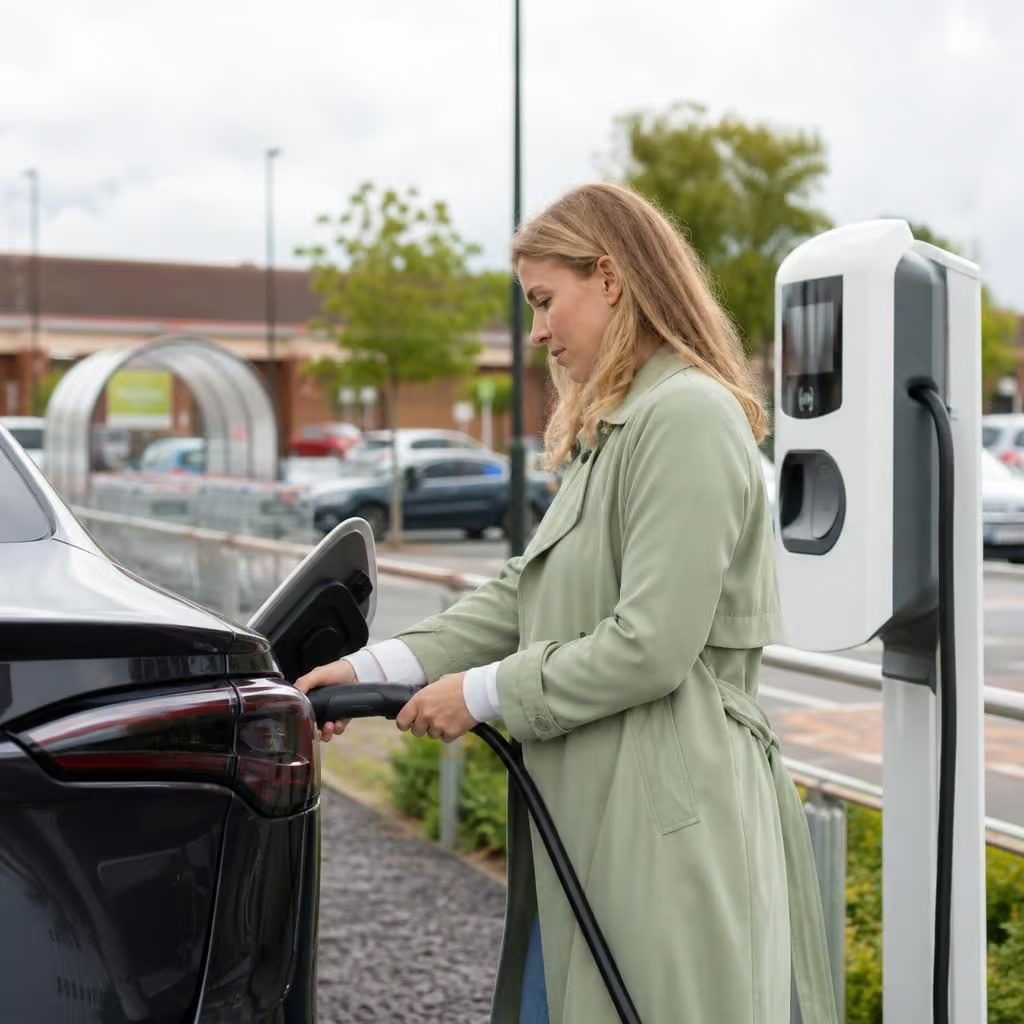
A charger’s headline tariff only matters if it can serve your car without a costly delay. Check that the connector matches, the unit is available and the vehicle can use its stated charging rate before setting off.
For a short stop, add only the energy needed for the next part of the journey. Paying for a longer session can cost more than using a slightly dearer charger that lets you leave sooner. The cheapest choice is therefore the charger that meets the car’s immediate need at the lowest complete session cost.