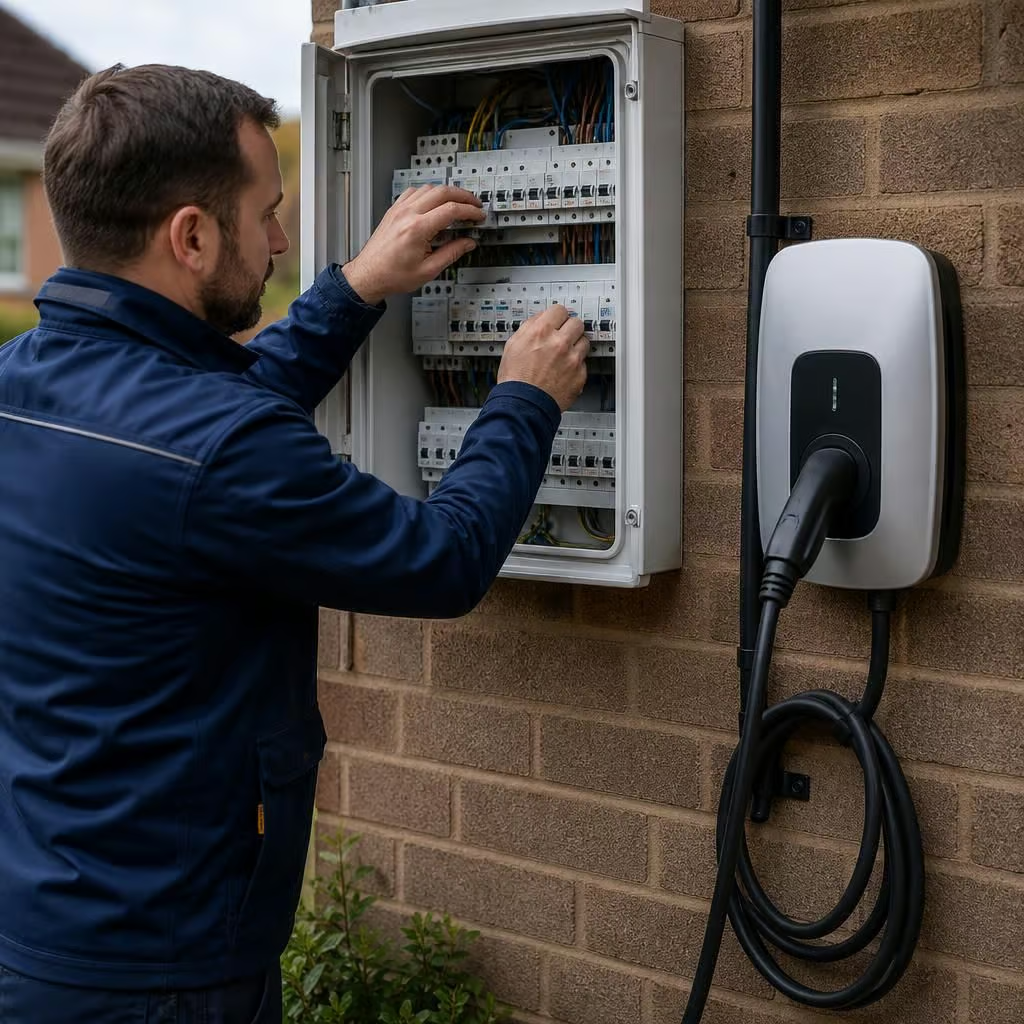
What information do you need for an EV charger installation quote?
For an accurate EV charger installation quote, we need details of your car, parking space, preferred charger location and the route between it and the consumer unit. Photos of the consumer unit, electricity meter and proposed cable route can help us assess the installation before arranging a survey.
The most useful information is anything that shows how power will travel from the consumer unit to the parked vehicle. Alongside the details already given, we need to understand the electrical supply, the cable route, the charger you want and any restrictions affecting the property.
Tell us about the electrical supply. The age and type of the consumer unit help us judge whether it can support a dedicated EV charging circuit. A modern unit with spare capacity may need only the new circuit and protective equipment. An older fuse board, limited space or signs of damage may mean that an upgrade forms part of the quotation.
Let us know if the property has single-phase or three-phase electricity, if you know it, and whether the supply has caused nuisance tripping before. We also need to know about large electrical loads such as electric heating, a hot tub, an immersion heater, solar panels or a battery. These loads affect how we assess the available capacity and whether load management would be useful.
Explain the cable route as clearly as you can. The price depends on more than the distance between the consumer unit and the charger. A short route through an accessible garage may be straightforward. A similar distance across a solid-wall house, paved drive or detached outbuilding can require different materials and more work.
- Tell us whether the cable can pass through a garage, utility room, loft, cellar or external wall.
- Point out any extension, outbuilding or detached garage that the cable would need to reach.
- Identify hard surfaces, garden areas, drainage channels and other places where the route may need protection.
- Tell us if the cable would need to cross a boundary, shared access or land that you do not own.
- Explain how visible you are prepared for the cable to be, including whether surface-mounted trunking is acceptable.
Photographs often help us understand this before visiting. A clear image of the consumer unit, the proposed charger position, the parking space and the route between them is more useful than a general photograph of the front of the property. Include close-ups of any existing cable, outbuilding supply or damage that may affect the work.
Describe the parking arrangement. A private driveway is usually simpler to assess than a communal car park or a space on a shared forecourt. If the vehicle parks away from the house, tell us who owns the land and whether you need permission to run or fix equipment there. A landlord, management company, freeholder or neighbour may need to approve part of the installation.
If the property is rented, include the landlord’s requirements. If it is a flat, listed building or part of a managed development, tell us this at the start. Restrictions on drilling, external equipment, shared supplies or cable routes can change the installation method and the information needed before work begins.
Give us the charger requirements, not only the vehicle make. Tell us whether you want a tethered unit with a permanently attached cable or an untethered unit using the vehicle’s charging lead. If you have a particular charger in mind, include its model or a link to its technical details. If you are undecided, explain what matters most, such as app control, solar diversion, a discreet appearance or charging more than one vehicle.
Tell us how you normally use the car and when it is usually parked at home. That helps us discuss the charging arrangement in practical terms rather than assuming the highest possible charging rate is necessary. If you plan to change vehicle soon, include the likely model or charging specification if you have it.
Include details of existing generation or storage. Solar panels and a home battery can affect the control equipment and how the charger is used. Send us the existing system’s make, model and installation information if you have it. We also need to know where its inverter, battery and relevant consumer unit are located.
Tell us about anything unusual before we prepare the price. Older properties may have unusual wiring routes, outbuildings with separate supplies or consumer units that do not meet current requirements. Let us know about previous electrical work, known faults, recent alterations or any inspection report that mentions remedial work. An EICR or other electrical documentation can be useful, but it does not replace our assessment of the proposed charging circuit.
We may need an on-site survey when photographs cannot show the cable route, the earthing arrangement, the supply capacity or the condition of the existing equipment. We use the visit to confirm measurements, access, drilling points, protective equipment and the position of isolation switches. This prevents a desktop estimate from overlooking work that becomes apparent on installation day.
The final quotation can then set out the charger, cable route, protective equipment, mounting method and any consumer unit work included. It should also identify assumptions, such as clear access to the route or permission to use a shared area. We provide the written quotation before work starts, so you can see what the price covers and what may need separate approval.
For a first estimate, send the address, the vehicle and charger information, photographs, the distance and route you have in mind, and details of the electrical supply and parking rights. We can then identify what needs confirming at a survey and prepare a more accurate installation quote.
If solar panels or a battery are already installed, the charger may need to work alongside their monitoring equipment. Send us the system’s commissioning paperwork if you have it, including the inverter and battery details. We can then check where the energy meter or current sensor is fitted and allow for any compatible control equipment in the quote. This helps avoid treating the charger as a separate load when you want it to use surplus generation or coordinate with battery storage.