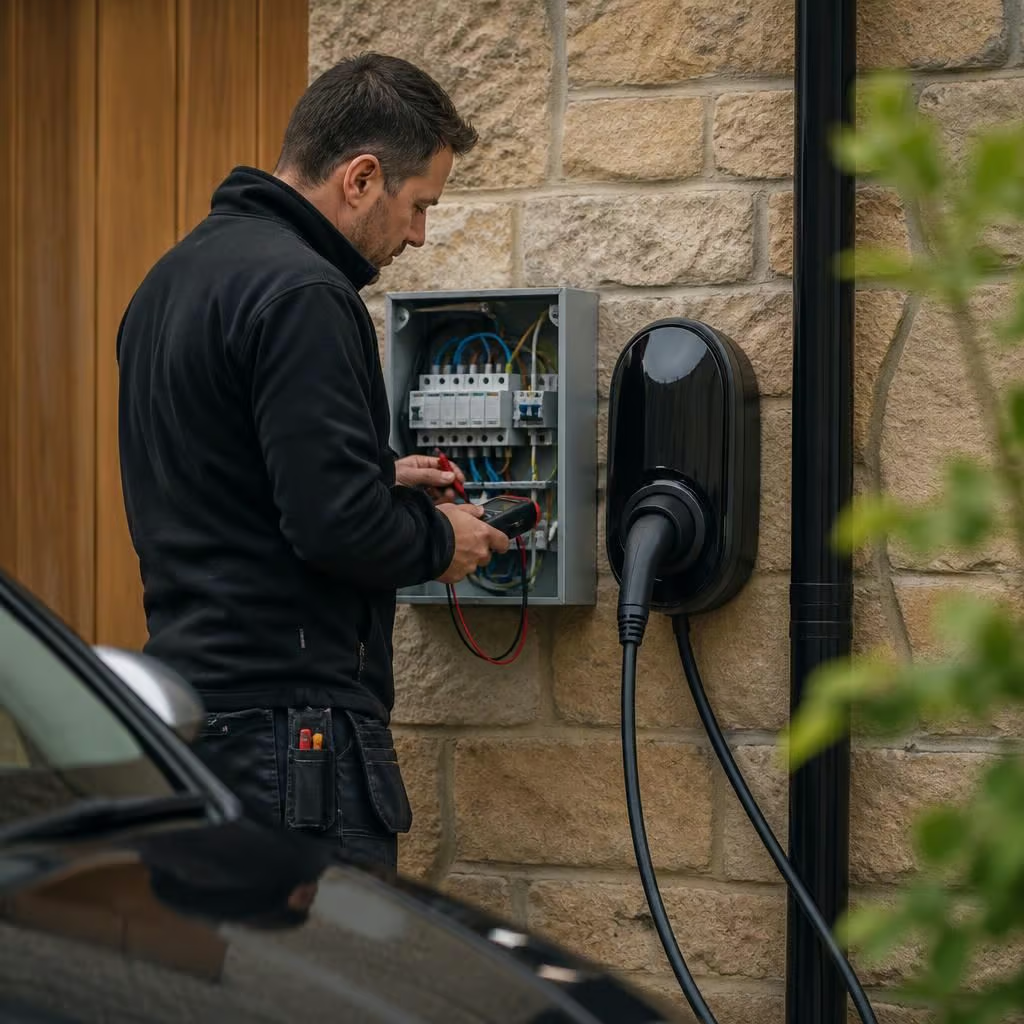
Does my EV charger installation need approval from the electricity network?
Not always. Some EV charger installations only need notifying to the Distribution Network Operator (DNO), while others require approval because of the charger’s power demand, your electricity supply or the effect on the local network; we assess this and handle the required notification or application.
Sometimes, but not for every installation. The requirement depends on the charger’s maximum current, whether the property has a single- or three-phase supply, and how much capacity remains on the local electricity network.
The electricity network operator is the company responsible for the cables, equipment and supply capacity in your area. It is different from your electricity supplier. The operator may need to approve the installation before the charger is fitted, or accept a notification from the installer after the work is complete.
Most standard domestic installations follow a notification process. A typical home charger uses a single-phase supply and can often be installed under the network operator’s approved process. We submit the required technical details and keep the confirmation with the installation paperwork.
Approval before installation may be needed when the installation presents a higher demand. This can include:
- a higher-powered charger or a three-phase charger;
- more than one charger at the property;
- a shared, private or unusual electricity supply;
- a property with a constrained local network;
- an installation alongside solar panels, battery storage or other significant electrical loads;
- a supply that already has limited spare capacity.
The network operator may ask for information about the proposed charger, the property’s supply, the main fuse, the number of phases and other equipment connected to the installation. Where the property has solar or battery systems, we also consider how the charger will operate alongside them.
Load management can sometimes avoid a supply upgrade. A compatible charger can reduce its charging rate when the cooker, immersion heater or heat pump is using more electricity. It then increases the charging rate when capacity becomes available. This does not remove the need to follow the network operator’s rules, but it can make an installation suitable where a charger running at full power continuously would not be acceptable.
Load management is not suitable for every property. The charger, consumer unit, communications equipment and existing electrical circuits all need checking. We explain what the proposed control method will do, including whether charging could slow down when other appliances are running.
Network approval is separate from other permissions. It does not replace electrical safety requirements, building regulations or any permission needed for work on a flat, rented property or shared parking area. A listed building, conservation area or property with a private parking arrangement may also need separate checks. Those matters depend on the property and the proposed cable route.
A supply upgrade may be the appropriate answer if the network operator cannot accept the proposed load. That could involve changes to the service equipment or a larger connection, with additional cost and work outside the charger installation itself. We explain this before work starts rather than treating it as an unexpected charge.
For a new installation, we assess the charger rating, cable route, consumer unit and available supply capacity together. If the network operator needs an application, we provide the technical information and wait for its requirements before agreeing the final installation approach. If notification after installation is permitted, we complete that process and provide the relevant records.
The result is a charger that has been assessed against the electricity network’s requirements, rather than one that simply fits the wall. If the property has an older electrical installation, a shared supply or other high-demand equipment, mention it when you ask for an assessment. It can affect both the network process and the equipment needed at the property.
Electricity network approval isn’t always a simple yes or no. The operator may accept the charger provided it works within stated limits or uses specified controls.
We review those conditions before the installation is agreed. That means the charger settings, supply equipment and charging behaviour match the approval rather than being adjusted after the work is complete. You receive the relevant confirmation with the installation records.