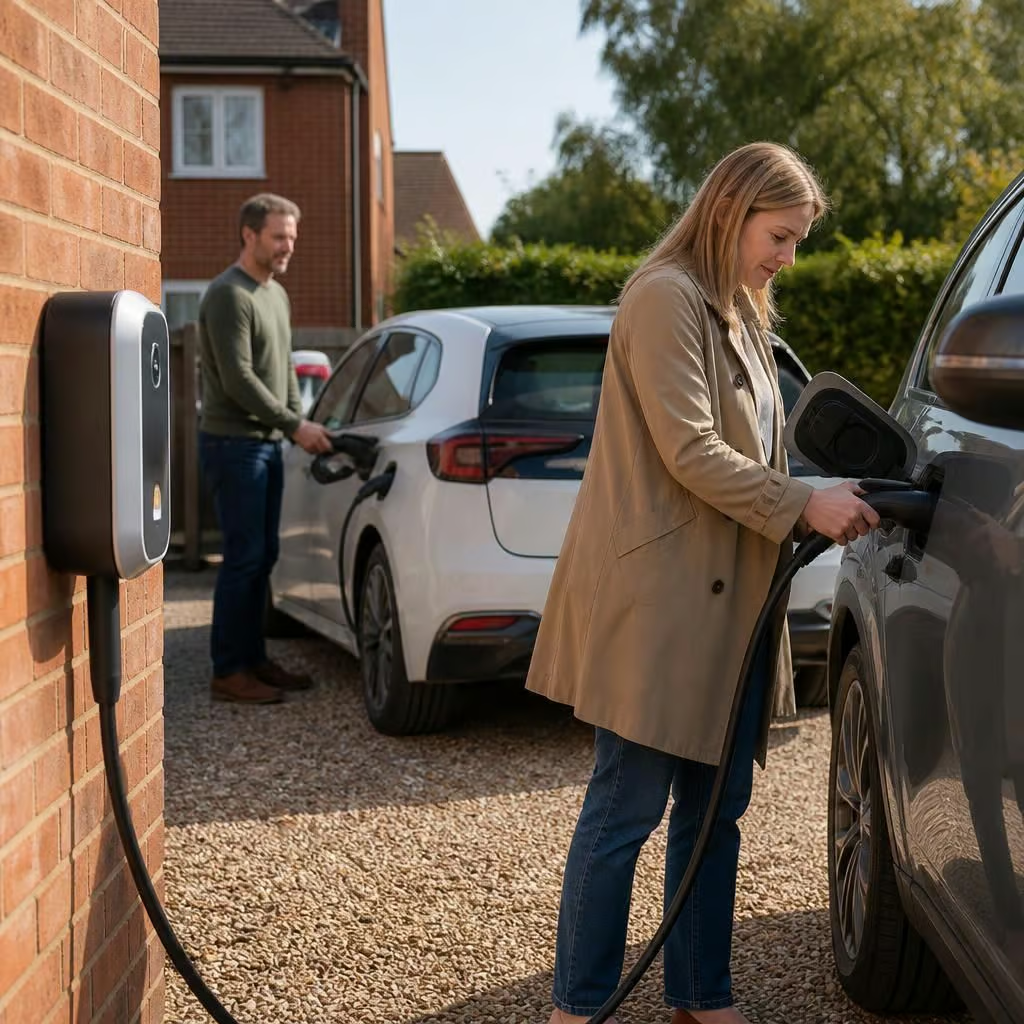
Can different electric car brands share one home charger?
Yes. Different electric car brands can usually share one home charger, provided their vehicles use compatible charging connectors and the charger is correctly configured for each car.
For a multi-car home, we can check both vehicles and recommend a charger with suitable smart-charging features, so each car can charge safely without needing a separate unit.
In most multi-car homes, one charger can serve several vehicles. The main checks are the charging connector, the cable arrangement and how the charger controls demand from the electrical supply.
Connector compatibility comes first. Most home chargers use the standard Type 2 connection for the car side of the charge. Many electric cars use this arrangement for normal AC charging, but the cable may be separate from the charger or permanently attached to it. An untethered charger lets each driver use the cable supplied with their car. A tethered charger keeps one cable ready to plug in, so a second vehicle may need an additional compatible cable.
The car controls how much power it accepts. Plugging a vehicle into a higher-rated charger does not make it charge faster than its onboard charger allows. The charger and the vehicle communicate before charging begins, then the car takes an appropriate current. This means different electric cars can use the same unit even when their charging capabilities differ.
One charger normally charges one car at a time. Moving the connector from one vehicle to another is straightforward, but it does not charge both cars together. A charger with two outlets may support two vehicles, although the available power has to be shared between them. That arrangement needs careful design because two cars charging together place more demand on the home’s supply.
Smart charging helps when two cars are regularly parked at home. You can set charging priorities, schedules or separate user access through the charger’s controls or app, depending on the equipment selected. For example, one car can charge first for an early journey, while the other uses the remaining available capacity later. The exact controls vary, so we explain how the selected charger handles multiple vehicles before installation.
Your electrical supply still sets the practical limit. A charger may be compatible with both cars, but the installation must also work alongside the cooker, heating system, solar installation, battery and other heavy electrical loads. We assess the consumer unit, incoming supply, cable route and earthing arrangements before recommending the charger. Where demand could become too high, load management can reduce or pause vehicle charging rather than overloading the installation.
This assessment matters particularly in older homes, converted properties and rural houses with long cable runs or earlier electrical equipment. It may be possible to install the charger without major changes, but we identify any necessary consumer unit or cabling work before the quotation. You receive the cost and scope in writing, rather than discovering additional electrical work after the car charger has been fitted.
The best setup depends on how the cars are used. We ask which vehicles need regular charging, where they are parked, whether either car needs a separate cable and whether both may be connected at the same time. We also consider solar panels or a home battery if they are already installed, so the charging controls fit around the rest of the property rather than operating in isolation.
After installation, we test the charger, confirm that it communicates correctly with the vehicle and provide the relevant electrical certification. If you replace one of the cars later, you will normally only need to check its connector and cable arrangement. The fixed charger can often remain in place, provided the new vehicle uses a compatible home-charging connection.
Different brands do not usually require separate fixed chargers. The important distinction is between the charger on the wall and the cable that connects it to the car. An untethered unit lets each driver keep the correct cable in their own vehicle, which can make a shared charger easier to use when the cars have different charging arrangements.
If one car is replaced, the household may only need a different cable rather than a new charger. We check both vehicles before installation and explain which cable each driver should use. That avoids choosing equipment around a brand name when the relevant detail is the car’s charging connection.