
What access do engineers need for circuit breaker repair?
For circuit breaker repair, we need clear access to the consumer unit, the affected circuits and any safe areas where testing may be needed. Please move stored items away from the consumer unit and make rooms, sockets and fixed appliances on the affected circuit accessible.
For circuit breaker repair, we need access to the distribution board and enough of the affected circuit to diagnose the cause safely. The visit may involve checking the breaker, identifying what it supplies and testing the wiring or equipment connected to it.
The consumer unit may be in a hallway cupboard, utility room, garage or another enclosed space. The cupboard door must open fully, and we need room to work without reaching over stored items. If the board is behind furniture or boxes, those items may need to be moved before testing can begin.
We may need to switch circuits off during the inspection. This can affect lights, sockets, heating controls, outbuildings or fixed appliances, depending on how the installation is arranged. Please tell us which equipment was running when the breaker operated and whether anything has recently been installed, damaged or exposed to water.
A circuit can supply several rooms, so we may need to inspect selected outlets, switches and light fittings rather than only the point where you first noticed the fault. For example, a socket circuit could run through a kitchen, utility room, garage or external outlet. We do not need unrestricted access to every room in the house, but the affected parts of the circuit must be reachable if testing leads us there.
Some faults are caused by an appliance rather than the breaker or fixed wiring. We may therefore need access to appliances that were connected when the breaker tripped. This could include a cooker, immersion heater, washing machine, pump, boiler supply or outdoor equipment. Do not remove covers or attempt to disconnect hard-wired appliances yourself; leave that work for a qualified electrician.
If the fault appears to be in concealed wiring, further access may be needed in a loft, under-floor space, garage or outbuilding. We will explain why that access is relevant before carrying out additional investigative work. A breaker that repeatedly trips should not be reset over and over, particularly if there is a burning smell, heat, visible damage or evidence of water.
For an intermittent fault, useful information can reduce unnecessary disruption. Note which breaker moves, which rooms lose power and whether the problem follows the use of a particular appliance. Photographs of the consumer unit and any visible damage can also help us understand the issue before the visit.
If the property is rented or the consumer unit is in a shared or locked area, arrange access with the landlord, managing agent or relevant keyholder. We may also need permission to isolate supplies to parts of the property while the fault is tested.
We first make the installation safe, then test the circuit and establish whether the breaker, a connected appliance or the wiring is responsible. A repair may involve replacing the faulty protective device, correcting a connection or dealing with the underlying circuit fault. If the consumer unit itself needs wider work, we explain the reason and provide the next steps rather than treating replacement as the automatic answer.
Our electrical work is carried out by NICEIC- and ECA-recognised electricians. That means the fault is investigated as part of the wider installation, not simply covered by fitting another breaker and leaving the cause unresolved.
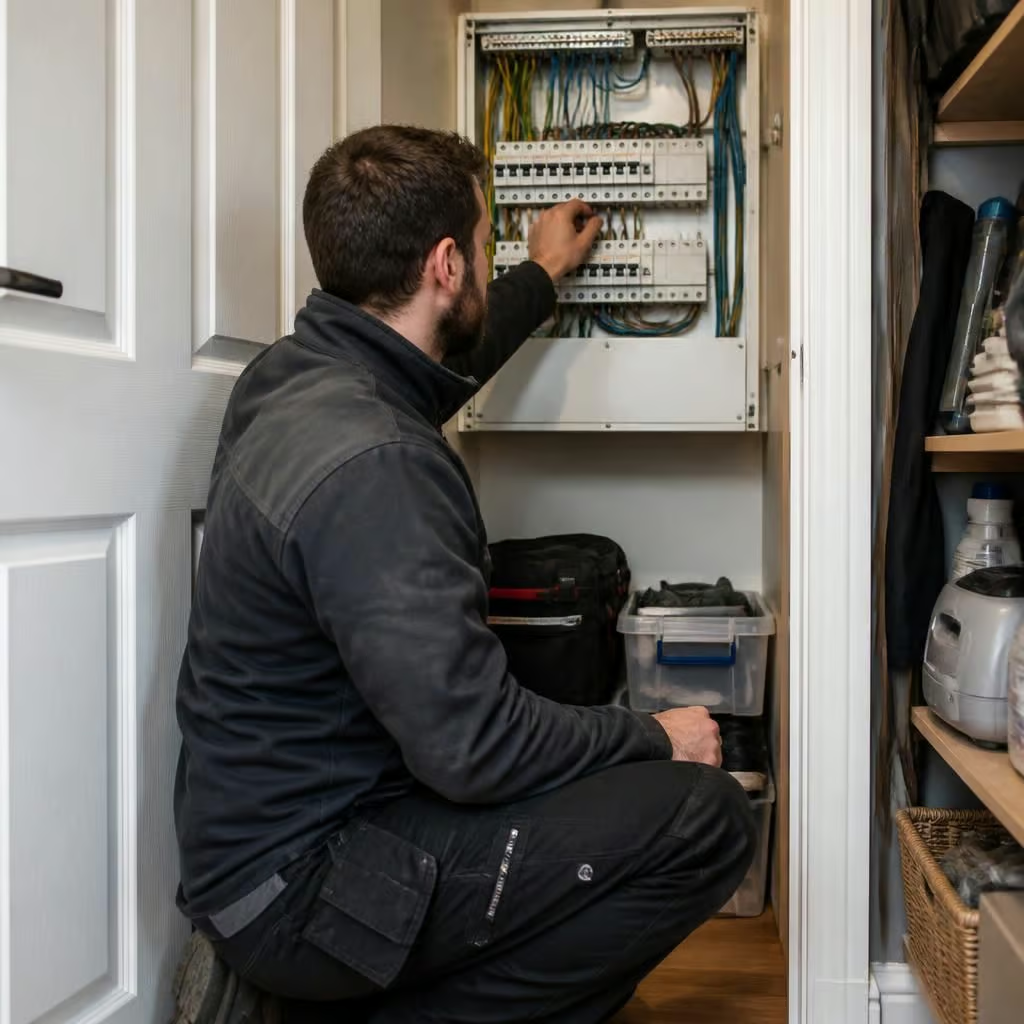
The working area around the consumer unit must be dry, stable and safely reachable. If it is in a loft, under-stairs cupboard or garage, clear the route and provide access to any hatch or door. We need to position test equipment without standing on boxes, furniture or other unstable surfaces.
If the board is difficult to reach because of its height, location or restricted lighting, tell us when arranging the visit. That helps us bring suitable equipment and plan the inspection without creating avoidable risk.