
Can commercial electrical installation include control panel wiring?
Yes. Control panel wiring can form part of a commercial electrical installation where the design and scope are agreed in advance. We connect the panel to the relevant supply and equipment, then test the installation and provide the required compliance paperwork.
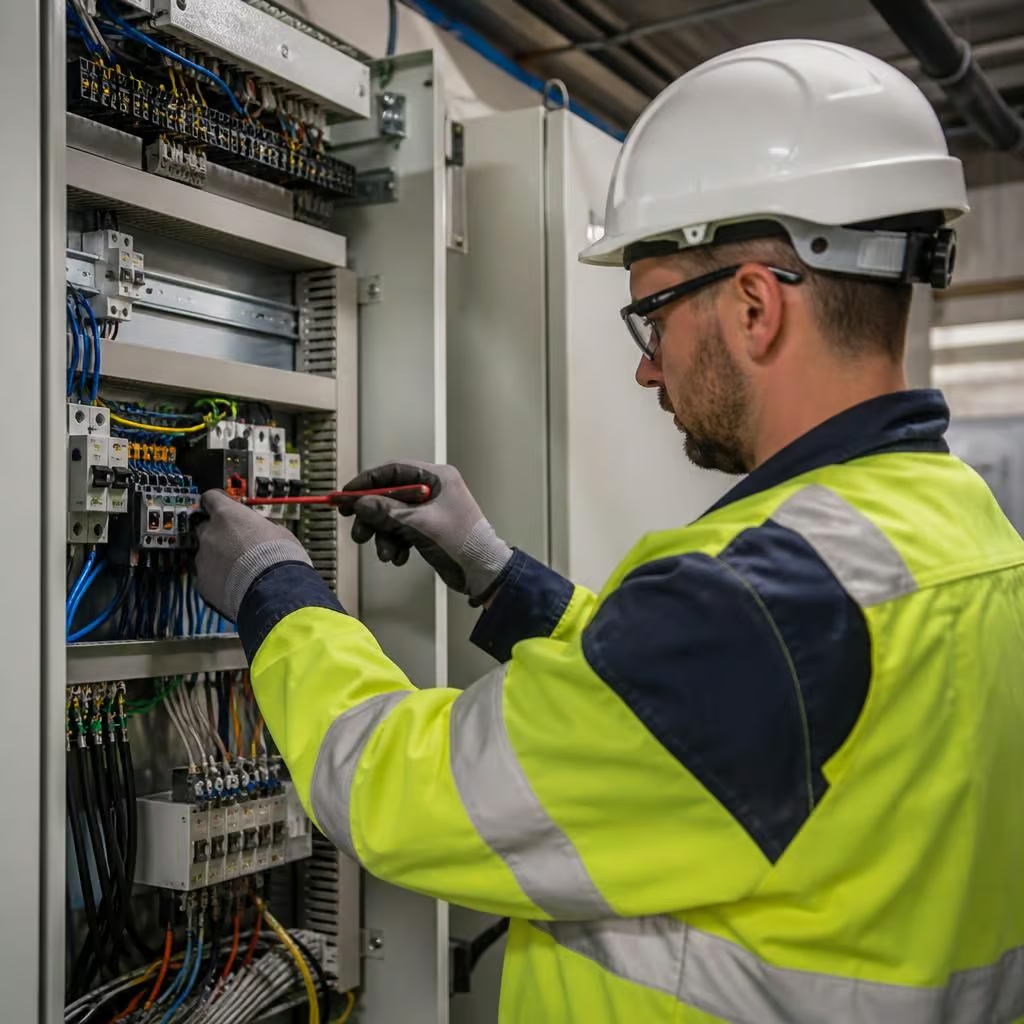
Control panel wiring can form part of a commercial electrical installation when the panel controls equipment, plant or building services. The work may include wiring inside the enclosure, connecting the panel to its incoming supply and linking it to motors, valves, sensors, switches and other field devices.
The panel’s purpose comes first. A panel serving a pump, ventilation system, heating plant, production process or access system will have different electrical and control requirements. We establish what each circuit must do before deciding how it should be supplied, protected, isolated and tested. That prevents a panel being wired correctly in isolation but failing to work with the equipment it controls.
Your existing equipment may already have a panel, or a new panel may arrive as part of another contractor’s plant. We can assess the electrical installation around it and agree the work boundary. That may include the supply to the panel, outgoing motor or equipment circuits, control cabling, isolators, emergency stops and connections to sensors or switches. If the panel requires specialist programming or proprietary commissioning, we clarify which tasks belong to the panel manufacturer or controls contractor.
A site survey identifies the practical risks. We look at the available supply, the panel location, cable routes, access for maintenance, the surrounding environment and the equipment being controlled. We also check whether the existing distribution board has enough capacity and whether protective devices are suitable for the connected loads. A dusty, damp, hot or exposed area may require different enclosure and cable-entry arrangements from a clean plant room.
Space inside an existing panel can also affect the work. Your panel may have spare terminals but no usable capacity, or its wiring may be poorly labelled or difficult to isolate. In that situation, we explain whether an extension, replacement panel or separate enclosure is the safer route. We don’t assume that an unused way is suitable simply because it is physically available.
Good wiring keeps power and control functions clear. We separate power circuits from low-voltage control and signal wiring where the design requires it. Cables are routed, glanded and terminated so that vibration, movement and electrical interference are controlled. Each conductor is identified, and terminals, isolators and equipment connections are labelled so another engineer can trace the system later.
Protection must match the load and the way the equipment starts and stops. Motors, pumps and other plant can draw a higher starting current than their running current. We consider the protective device, cable size, switching method and isolation point together rather than selecting each part separately. Interlocks and emergency-stop circuits are connected according to the agreed control sequence, so a fault or unsafe condition can prevent the relevant equipment from continuing to run.
Modifying an operating premises needs careful planning. A panel may control ventilation, refrigeration, heating, pumps or production equipment that other parts of the business depend on. We identify the circuits that need isolation and discuss the effect of the work before changing them. Where the installation must remain in service, the work is planned around the equipment’s operating requirements rather than treating every circuit as interchangeable.
Before connecting new wiring to an existing panel, we check the condition and identification of the old circuits. We may find damaged insulation, loose terminations, missing labels or protective devices that no longer suit the installation. Those issues are reported before they are incorporated into new work. This gives the person responsible for the premises a clear choice about remedial work instead of hiding problems behind a new connection.
Testing covers both electrical safety and operation. We carry out the appropriate inspection and testing on the new circuits, including checks such as continuity, insulation resistance, polarity and earthing arrangements where applicable. We also test the control sequence with the connected equipment. That can include checking start and stop commands, alarms, interlocks, emergency stops, sensor signals and the response after a protective device operates.
A panel that powers up is not necessarily commissioned correctly. The connected plant must respond as intended, and the controls must leave equipment in a safe state when a signal is lost or an emergency stop is used. If the final operational test depends on another contractor’s equipment or software, we record what has been tested and what still needs to be completed.
The finished installation should be understandable to the next person who works on it. We provide the relevant electrical test results and certification for the work carried out. Depending on the project, the handover information may also include circuit schedules, terminal details, labels, isolation information and marked-up drawings. A written quotation is provided before work starts, and any change outside the agreed scope is discussed before it affects the cost.
For a new commercial panel, we can discuss the electrical requirements at the design stage. For an existing panel, a survey usually gives the clearest answer because capacity, condition and control arrangements cannot be confirmed from photographs alone. The result is a defined scope showing what we can wire, what needs coordinating with other specialists and how the completed installation will be tested.
If a panel is being made for a machine or plant system, the electrical details need agreeing before wiring starts. We confirm the supply characteristics, control voltage, connected equipment and required signals with the relevant contractors. That gives the panel builder a clear interface and reduces the risk of incompatible connections when the equipment arrives on site.
This is particularly useful when the panel, plant and building wiring come from different suppliers. You receive a clear division of responsibility, so it’s easier to identify who must adjust a setting, alter the controls or rectify a fault after installation.