
Can PAT testing certificates be updated after an appliance is repaired?
Yes, but the appliance should be inspected and retested after the repair rather than simply having its old PAT certificate amended. We record the repair, retest date, result and next review date, then update the register and label so they match the appliance’s current condition.
A repair does not automatically restore an appliance’s electrical safety. The person carrying out the repair must decide which checks are appropriate before the appliance goes back into use.
The important distinction is between changing the paperwork and establishing a new test result. A certificate is evidence of the appliance’s condition at a particular point in time. It should not be treated as proof that the appliance remains safe after somebody has opened it, replaced a component or altered its wiring.
What happens after a repair?
The extent of the repair determines the testing needed. Replacing a plug, flex, switch, fuse, thermostat or internal electrical component can affect safety. The appliance may therefore need a visual inspection and electrical tests before it is returned to service.
Depending on the appliance, those checks can include:
- checking the plug, cable, casing, strain relief and accessible parts for damage;
- confirming that the correct fuse and wiring connections have been used;
- checking protective earth continuity on Class I equipment;
- checking insulation resistance or leakage current where the appliance design permits it;
- checking polarity and correct operation;
- confirming that guards, covers and safety cut-outs have been refitted correctly.
Not every repair needs every test. A competent tester selects the checks that suit the appliance and the work carried out. A cosmetic repair, for example, may not have altered the electrical safety of the equipment. That decision should still be recorded clearly, particularly where someone else manages the property or equipment.
What should the updated record show?
The new entry should identify the appliance without relying only on a description such as “kettle” or “desk fan”. An asset number, serial number, location, make or model can prevent the wrong item being matched to the record.
The record should also show the repair reference or a short description of what changed, who carried out the inspection, which tests were completed and whether the appliance passed. If the appliance failed any check, the record should explain what happened next rather than showing only a later pass.
For a business, landlord or managing agent, this creates a useful chain of evidence:
- the appliance was identified and inspected;
- a defect was found or a repair was completed;
- the relevant safety checks were carried out;
- the appliance was either returned to use or kept out of service.
This is more useful than a certificate showing only a date and a pass result, especially if somebody later asks why the appliance was taken out of service or repaired.
What if the appliance fails after repair?
A failed result means the appliance should not be returned to normal use until the defect has been dealt with or the equipment has been formally assessed as unsuitable for repair. A failed item should be clearly identified and separated from equipment that has passed, so another person cannot plug it in by mistake.
After further work, the tester assesses the appliance again. If it still fails, the record should make that clear. A certificate should never be used to make a failed appliance appear compliant simply because it has received attention.
Does PAT testing have to take place at a fixed interval?
There is no universal testing interval that applies to every portable appliance. The appropriate approach depends on the type of equipment, how often it is used, where it is used and the consequences of a failure.
An appliance used on a building site, in a workshop or in a communal area may need closer attention than equipment in a clean, dry office. A repair, relocation, visible damage or change in use can justify an inspection before the next planned check.
For rented property, commercial premises and managed buildings, the testing record should support the organisation’s electrical safety arrangements. It does not replace a risk assessment, manufacturer’s instructions or any inspection required for the wider installation.
Can the original certificate be edited?
It is better to issue a new certificate or add a clearly linked entry than to alter an old document without showing what changed. The original result relates to the appliance before the repair. A later result relates to its condition after the repair and testing.
Where several appliances are listed on one certificate, the repaired item should be identifiable within the revised paperwork. If that is not possible, a separate certificate or detailed register entry avoids uncertainty about which appliances were tested and when.
We can inspect repaired portable equipment, carry out the appropriate checks and provide records that distinguish the repair history from the later test result. That gives you a clear basis for deciding whether an appliance can return to use.
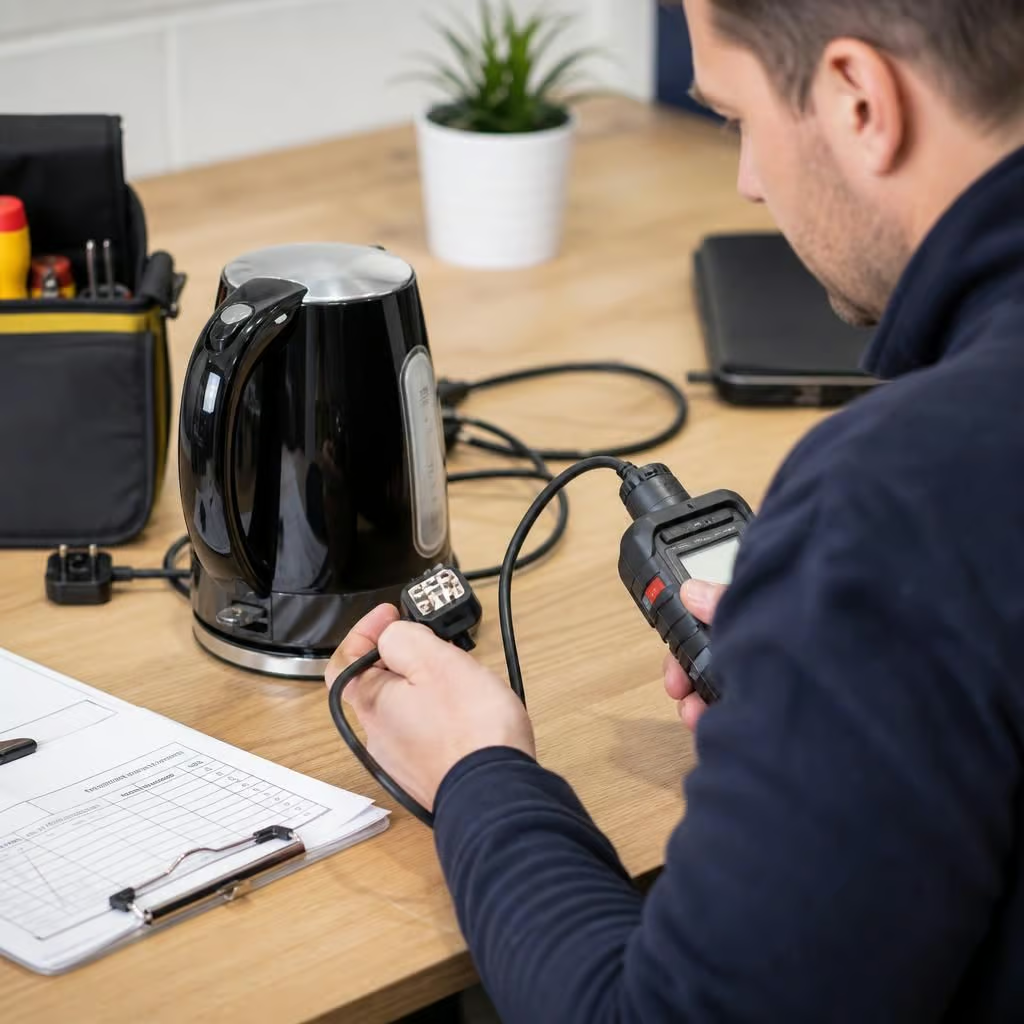
If the appliance has a PAT label, don’t change its date just because a repair has been completed. The old date relates to the appliance before the repair and remains part of its testing history.
After the repair, we carry out the appropriate checks and record the new result. Only then should the label be replaced or updated, with the repair details linked to the new entry in the testing register.