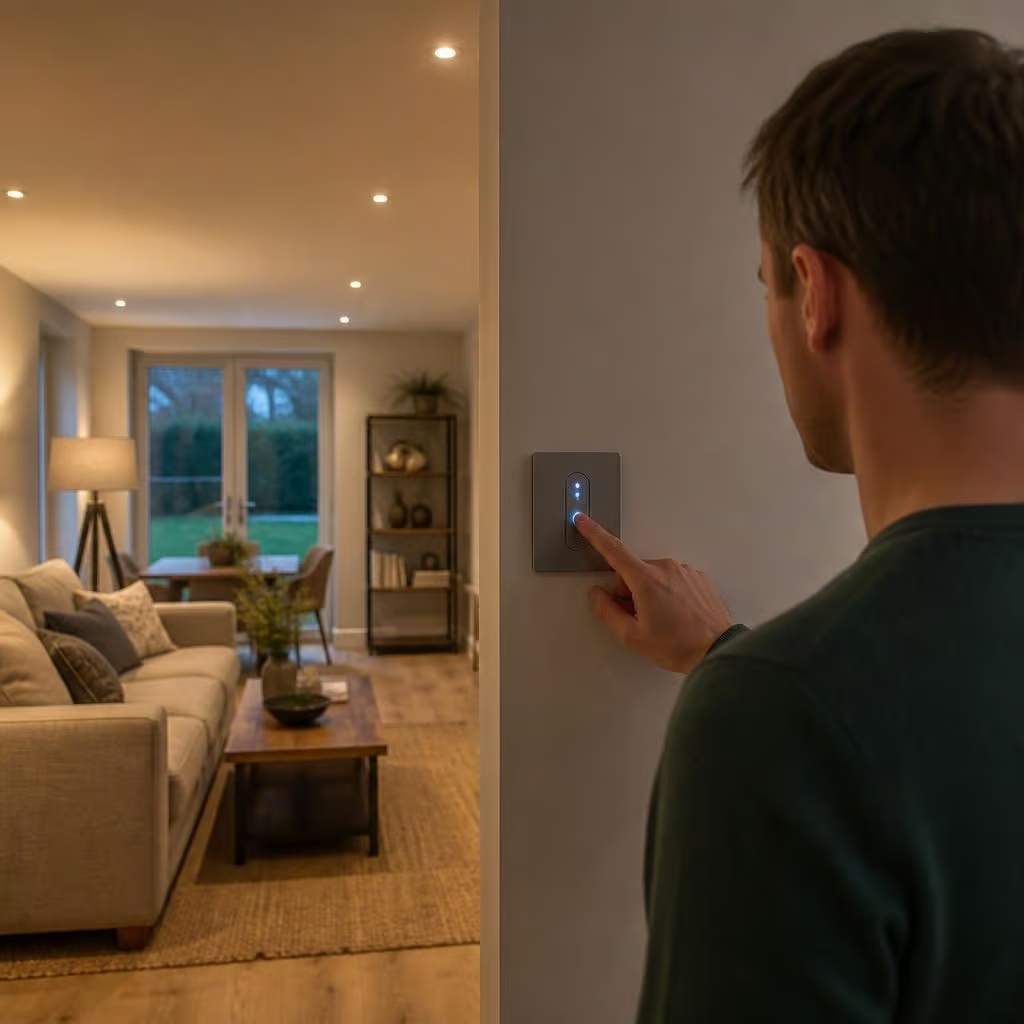
Will smart lighting controls work if the internet goes down?
Usually, yes: lights linked to a local switch or hub will still work when the internet is down. Remote app control, voice commands and cloud-based schedules may stop until the connection returns, so we plan local controls for essential lighting.
Internet loss does not automatically make a smart lighting system unusable. The result depends on where the control logic sits, how the switches communicate and whether the home network is still running. A well-planned installation keeps ordinary lighting usable and limits the functions that depend on an outside internet connection.
The internet and the home network are separate things. A failed broadband connection may stop communication with remote servers while the router and local wireless network continue to operate. In that situation, a compatible wall switch, scene button or local control panel may still operate the lights. If the router itself loses power, local wireless controls may also become unavailable, even though the light fittings still have power.
A complete power cut is different again. Smart lighting cannot operate without electricity unless the property has a backup supply. When power returns, some equipment restarts immediately, while other devices may need a short period to reconnect. We check this behaviour during commissioning rather than assuming every component will recover in the same way.
Local controls matter most for essential lighting. Hallways, stairs, kitchens and outside entrances should not rely solely on a phone app or a cloud service. A physical switch gives you a dependable way to turn the light on when the broadband is down, your phone battery is flat or the app has changed. Where the layout needs two-way or intermediate switching, we plan controls that remain practical for everyone using the room.
Your preferred lighting scenes can also behave differently during an internet outage. A scene stored in a local hub may continue to run, while a routine held on a remote server may pause. Scheduled events can be affected if the system needs an online time service. We identify which routines are important and keep those functions within the home where the equipment allows it.
Voice control normally depends on an online service. Saying “turn on the landing light” may therefore stop working when the internet connection fails, even if the light can still be operated at its wall control. App access from outside the property has the same limitation. That does not mean the lighting installation has failed; it means those particular control routes are unavailable.
The choice of equipment affects offline reliability. Some systems communicate directly between switches and lights. Others use a central hub, and some depend heavily on cloud processing. We look at the manufacturer’s documented failure behaviour before recommending an arrangement. We also check whether a hub can retain settings locally, whether switches work after a network interruption and what happens after a power cut.
Existing wiring can influence the options. Older lighting circuits may not include a neutral conductor at every switch position. Certain smart switches need one, while others are designed for different wiring arrangements. LED lamps can also cause flickering or a dimmer to behave poorly if the control gear is not compatible. We inspect the circuit, the switch boxes, the lamps and the protective devices before deciding what can be added safely.
That assessment is particularly useful in older houses where wiring has been altered over several decades. A control that works well in a modern circuit may not be suitable for a converted barn, solid-wall property or extension with mixed wiring. We can keep conventional switching in the rooms where it is the better choice and add smarter control only where it provides a clear benefit.
During installation, we label the relevant circuits and test more than the normal on-and-off operation. We check manual switching, dimming, scenes, reconnection after the router is restarted and the behaviour of the lights after power is restored. You should know which features remain available offline and which require the internet, rather than discovering the distinction during a fault.
For electrical alterations, our NICEIC and ECA-registered electricians check that the circuit protection, connections and control equipment are suitable for the installation. The finished arrangement should leave you with a clear fallback: a wall switch or other local method for important lights, with app, voice and remote functions treated as additional convenience.
If your internet provider replaces the router, the lighting can lose its network details even though the broadband is working again. We record the hub and device settings during commissioning, then check how the system reconnects after a router change.
That makes future network work less disruptive. You won’t need to pair every light from scratch without knowing which equipment controls it. We also explain which functions depend on the router and which remain available through the installed controls.