
Can regular servicing reduce solar panel maintenance costs?
Regular servicing can reduce solar panel maintenance costs by identifying small faults before they develop into expensive repairs. It also helps us keep the panels, inverter, cabling and monitoring equipment working efficiently, although it cannot prevent every fault or replace worn components.
Yes, regular servicing can lower the overall cost of solar panel ownership, but it is not automatically worthwhile for every system. The financial benefit comes from checking the parts that can fail, correcting avoidable problems and keeping the system within its intended operating conditions. A service still has a cost, so we consider the system’s age, condition, location and performance before recommending a maintenance plan.
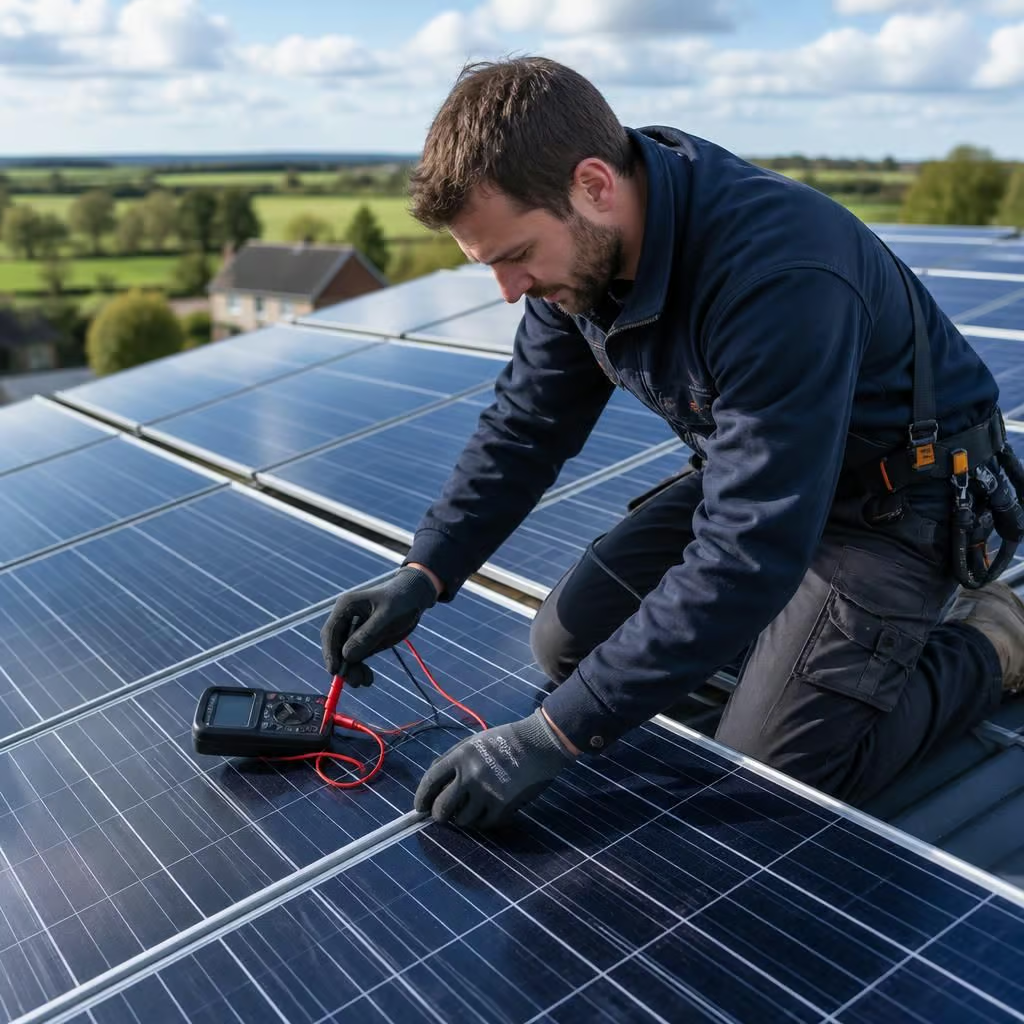
Solar panels have no moving parts, so the panels themselves often need less attention than the equipment around them. The inverter, isolators, cabling, roof fixings and monitoring equipment can all affect the cost of keeping the system running. A service gives us the chance to inspect these items together rather than waiting for a complete loss of generation.
During a planned visit, we can review the system’s generation history and look for changes that may not be obvious from the display. A gradual drop can point to shading, soiling, a monitoring fault, inverter trouble or a problem affecting part of the array. Finding the cause matters because replacing the wrong component wastes money, while leaving a genuine fault can lead to a longer period of reduced output.
- Inverter checks: error codes, warning lights, ventilation and operating readings can show whether the inverter is working normally.
- Electrical checks: we inspect accessible isolators, connections and cabling for heat damage, deterioration or signs of moisture.
- Roof and mounting checks: we look for movement, damaged fixings, corrosion and cable routes that may have become vulnerable.
- Panel condition: we check for visible cracks, delamination, heavy soiling and shading from nearby growth or changes around the property.
- Monitoring: we compare available readings with the system’s expected operation and make sure the owner can see useful information about performance.
These checks can reduce unnecessary call-outs. For example, a monitoring failure may make a working array appear faulty, while an inverter warning may identify a problem that needs attention before other components are affected. Clear records also help us distinguish a new fault from an issue that has been present since installation.
Cleaning is not automatically part of every service. Rain will remove some surface dirt, but dust, bird fouling, pollen and agricultural deposits can remain. A clean may be sensible where soiling is visibly affecting the panels, particularly on a low-pitched roof or near fields and trees. Cleaning costs should be weighed against the likely effect on generation. Unnecessary cleaning adds expense and can create avoidable access risks.
Regular servicing is more useful where the array is exposed to difficult conditions. Properties near farmland, trees or the coast may face more dust, organic growth, moisture or corrosion. A system with complicated roof access, older monitoring equipment or a history of faults may also benefit from more structured checks. We base the timing on the installation rather than applying the same schedule to every home.
Planned maintenance can also help with repair decisions. If an inverter is ageing, we can explain whether a repair is sensible or whether replacement is more practical. If roof work is being planned, an inspection can identify cable routes and panel fixings before another contractor starts. This helps avoid paying for repeated access, temporary disconnection or remedial work caused by separate jobs being carried out without reference to the solar installation.
Servicing does not remove every possible cost. Panels can crack, inverters can fail and weather or building work can cause damage despite sensible maintenance. A service also cannot correct a system that was poorly designed, shaded from the outset or affected by a wider electrical problem. We will separate maintenance findings from installation defects or replacement work so the recommended expenditure is clear.
Keeping service records is useful when a fault develops or a warranty claim is considered. We can record the system readings, visible condition and work carried out, giving the next diagnosis a reliable starting point. The records may also show whether a recurring fault is being caused by the equipment, the building or the way the system is being used.
For a relatively new, accessible system with stable readings and no visible problems, an inspection may not need to be frequent. For an older or exposed installation, the cost of planned checks may be easier to justify because access, diagnosis and lost generation can become more complicated after a fault. We can assess the system and explain what needs attention now, what can be monitored and what does not need spending on yet.
The main saving often comes from making the right decision at the right time. If an inspection finds a developing fault, we can explain whether it needs immediate attention, can be watched, or is better dealt with during planned work.
That helps you avoid paying for unnecessary replacements or repeated diagnostic visits. It also gives you a clearer maintenance budget, based on the condition of the actual installation rather than a fixed service schedule.