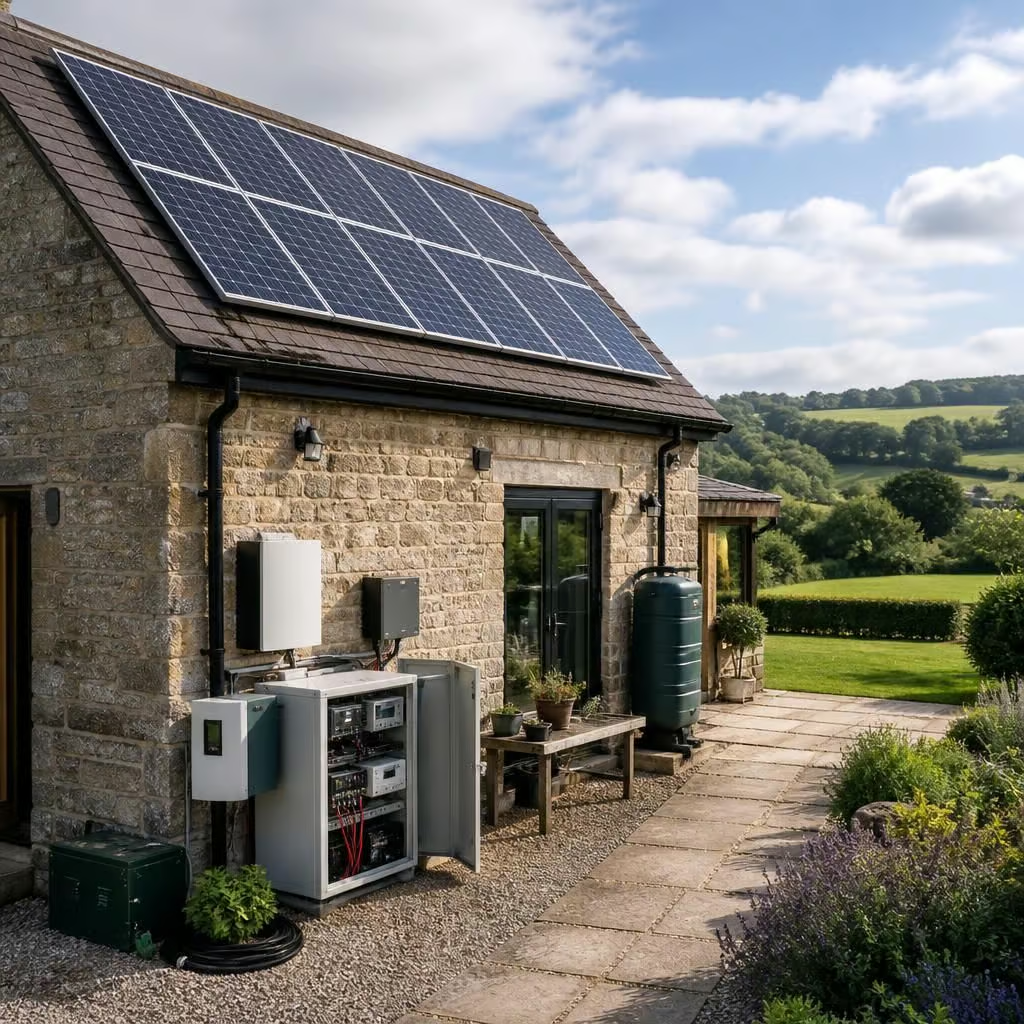
Can off-grid solar work without battery storage?
Yes, but only while the panels are producing enough electricity, so an off-grid home without battery storage needs another power source when sunlight is weak or unavailable. For reliable year-round power, we normally assess battery storage alongside a generator or other backup option.
Off-grid solar can operate without battery storage, but only in a limited way. The system must use electricity as the panels generate it, or rely on another source when solar output drops. That can suit a daytime-only load, but it rarely provides the dependable supply expected in a full-time home.
What happens without a battery? Solar panels produce a variable amount of electricity. Output changes with sunlight, cloud, season and the position of the panels. A suitable inverter can send that power directly to appliances, pumps or other loads, provided they are running at the right time.
If a kettle, washing machine or water pump needs more power than the panels are producing, the system cannot make up the difference without stored energy or another generator. If the load needs less power, some generation may go unused unless the system can divert it to a useful load, such as water heating.
Many conventional off-grid inverters also need a battery bank to stabilise the system and manage changes in demand. A panel-only arrangement therefore needs carefully selected equipment. It is not simply a matter of leaving the batteries out of a standard design.
When can a battery-free system make sense?
- A daytime-only building may use solar directly for lighting, refrigeration, ventilation or small appliances.
- A pump or irrigation system can run when solar production is available, without needing power overnight.
- A workshop, shed or seasonal property may accept that equipment only works in suitable daylight conditions.
- Solar can heat water during the day if a suitable controller and immersion heater are included.
- A separate generator can supply electricity when the solar output is too low.
These arrangements work best when the loads are predictable and the occupants can choose when to use them. They become less practical when the property needs lighting, heating controls, refrigeration, communications equipment and other essential services after sunset.
A generator is the main alternative to battery storage
For a full-time off-grid home, a generator can provide the missing power. It may run when the sun is weak, during prolonged cloudy weather or when demand exceeds solar production. The generator needs suitable controls, fuel storage, ventilation and a safe connection to the electrical system.
This approach changes the balance rather than removing the need for planning. The generator may start at inconvenient times, consume fuel during poor weather and need regular servicing. It also needs to cope with the starting current of pumps, compressors and other motors. We assess those loads before deciding whether a generator can cover them.
Using a generator alongside solar can be sensible for a property that has occasional high demand. It is less attractive if the intention is to run the home mainly from renewable electricity with minimal manual involvement. In that case, battery storage usually gives the inverter a more consistent source of power and makes daytime surplus available later.
Removing the battery does not always reduce the overall cost
A battery-free design may reduce the initial equipment cost, but it can require more solar capacity, a larger generator or additional control equipment. Extra panels also cannot solve every problem. They produce nothing at night and may still produce too little during dark winter weather.
There may also be more wasted generation. If nobody is using electricity and there is no battery or hot-water load, the system has nowhere useful to send the surplus. We compare that lost generation with the cost of storing it or using a generator before recommending an arrangement.
Older and rural properties need a practical load assessment
An off-grid home may have several demands that are easy to underestimate. Oil or LPG heating controls, well pumps, sewage pumps, freezers, security systems and broadband equipment can all need power when solar output is low. A barn conversion or rural outbuilding may also have long cable runs and higher starting loads.
We review the appliances that must remain available, when they run and how much power they draw at start-up. We also look at roof orientation, shading, seasonal use and space for plant and fuel. That shows whether direct solar is enough, or whether the design needs batteries, a generator or both.
The result may be a simple daytime solar system, a solar-and-generator arrangement or a complete off-grid system with battery storage. The right choice depends on the way the property is used, not just on the number of panels that fit on the roof.
A panel-only system works best when the building can follow the sun. That means running pumps, tools or water heating during the hours when generation is strongest, rather than expecting every appliance to be available whenever it is needed.
Loads may also need to be started separately. A pump starting while another appliance is running can exceed the available solar output, causing the inverter to limit supply or disconnect the load. We therefore design the controls around the equipment being powered, with non-essential loads kept separate from anything that must remain running.