
Will my existing cylinder work with solar water heating?
It may, but only if it is a suitable twin-coil cylinder with a lower coil for the solar circuit. We check the cylinder type, condition and capacity; a standard single-coil cylinder will usually need replacing before solar water heating can be connected.
The key question is whether the cylinder has a suitable internal heat exchanger for the solar circuit. Solar water heating normally needs a lower coil to receive heat from the roof collectors, while the boiler or immersion heater provides backup through a separate heat source.
A twin-coil cylinder is usually the simplest arrangement. The lower coil transfers heat from the solar fluid into the stored water. The upper coil remains available for the boiler. This means the system can use solar heat first and bring in the boiler when the stored water needs more heat.
Some older cylinders have an unused coil, but that does not automatically make them suitable. We check the coil’s position, size, connections and condition. A small or poorly positioned coil may not transfer enough heat for the proposed system. We also check that the cylinder has the correct sensor pocket and connections for the solar controls.
The cylinder’s type matters as well as its age. A vented cylinder may be compatible if its internal arrangement and condition are suitable. An unvented cylinder must meet the requirements for the additional solar heat source, controls and safety equipment. We check its temperature controls, expansion arrangements, discharge pipework and certification before including it in the design.
Older cylinders can also have practical problems that are not obvious from the outside. Weak insulation increases heat loss. Corrosion around the connections can make alterations risky. Sediment inside the cylinder can reduce its useful capacity. If the cylinder is already near the end of its serviceable life, fitting solar equipment around it may cost more in the long run than replacing it during the same project.
Capacity is important for making use of the heat collected during the day. Your household may use hot water in the morning, evening or at irregular times, while the collectors produce most of their heat during daylight. We compare the cylinder’s usable capacity with the number of occupants, bathrooms and typical hot water use. A cylinder that is too small may leave less room to store useful solar heat.
We also check how the cylinder works with the existing boiler or other backup heater. The controls need to bring in backup heat without unnecessarily reheating water that the solar system has already warmed. An immersion heater may be needed for additional control options, particularly when the system is designed to use surplus solar heat at certain times.
The physical position of the cylinder can affect the work involved. We look at the route from the roof collectors to the cylinder, the space around the cylinder and the position of the pump station and controls. A compatible cylinder in a cramped airing cupboard may still need alterations to nearby pipework. We explain those changes before work starts rather than treating them as an unexpected extra.
For an older or rural home, the heating history is useful when we assess the cylinder. Properties with oil or LPG heating often have different hot water arrangements from homes connected to mains gas. We check the existing system as a whole, including the boiler, hot water controls and pipework, so the solar installation does not leave another part of the system unsuitable.
If the cylinder cannot be used, replacement normally involves draining the system, disconnecting the old cylinder and fitting a solar-compatible model with the required coils and controls. We then connect the solar circuit, backup heat source and hot water outlets, test the safety devices and commission the controls. The amount of disruption depends mainly on access, pipework changes and whether the replacement cylinder fits in the existing space.
We set out the cylinder assessment, any replacement work and the reason for it in the quotation. You can then compare the cost of retaining the existing cylinder with the cost and practical benefits of upgrading it. Our heating and plumbing engineers carry out the checks and explain if the cylinder is suitable, borderline or not worth adapting.
The final decision should take account of more than whether a spare connection is present. The cylinder needs to transfer solar heat effectively, store enough hot water, work safely with the backup heater and remain reliable after the installation. A proper assessment gives you that answer before you commit to the rest of the solar water heating system.
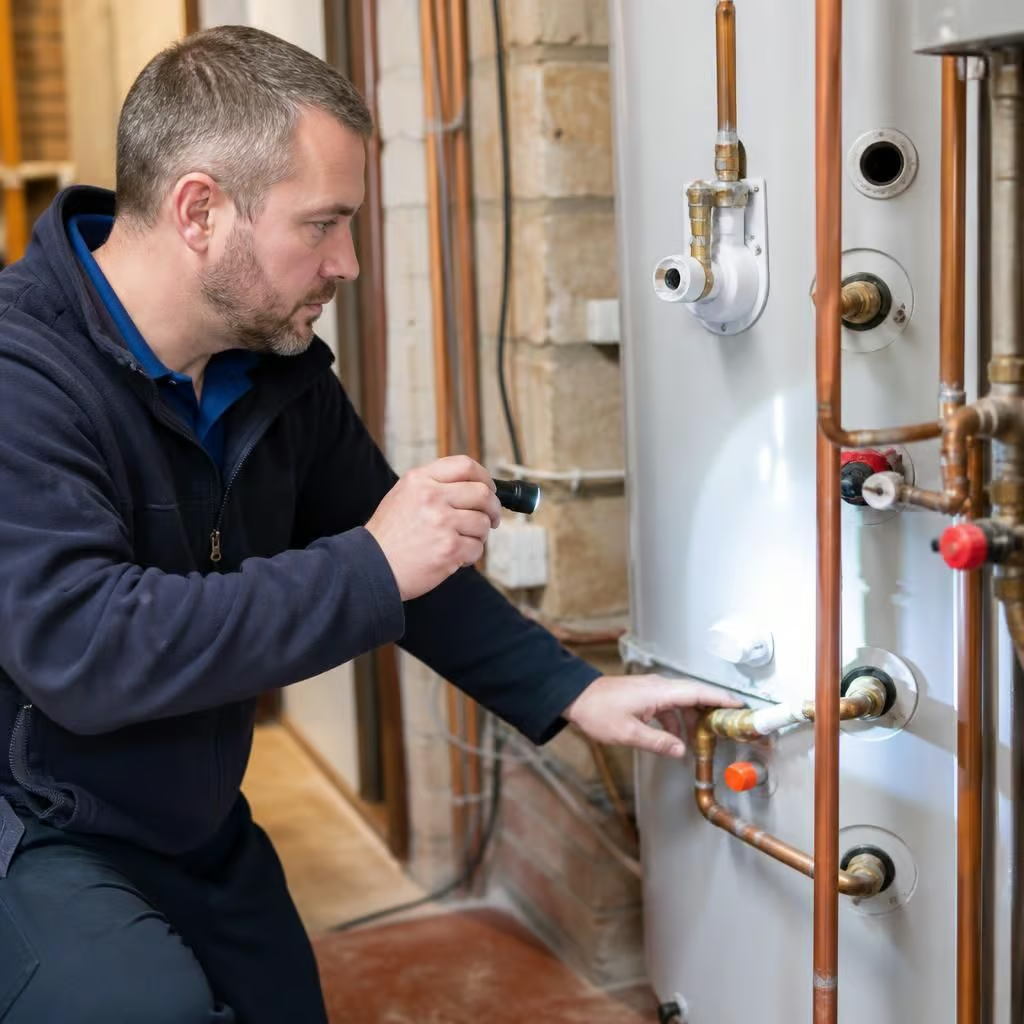
If the cylinder is boxed in or covered with insulation, a photograph may not show enough to confirm compatibility. We identify the model, trace the existing connections and check the installation records where they’re available. That helps us distinguish a genuinely usable cylinder from one that only appears suitable from the outside. You’ll know what can stay before we price the solar water heating work, rather than discovering limitations after the cylinder has been disconnected.