
How much electricity can a home solar battery store?
A home solar battery can store several kilowatt-hours of electricity, although the usable capacity depends on its size and settings. We size the system around your household’s electricity use, solar generation and how much power you want available after sunset.
A home solar battery can store the amount of electricity stated as its usable capacity. Systems range from a single compact unit to several modular batteries connected together. The correct capacity is the amount your home can use productively, not simply the largest battery that will fit.
Capacity is measured in kilowatt-hours
Kilowatt-hours, written as kWh, measure how much energy the battery can hold. Kilowatts, written as kW, measure how much power the battery can deliver at one time. These are different figures.
A battery might hold enough energy for several evening appliances but still be unable to run a high-powered electric shower, cooker or heat pump at the same time. The inverter controls the maximum power available, so we look at both figures when assessing a system.
Nominal capacity and usable capacity are not the same
Manufacturers usually state a battery’s total, or nominal, capacity. The usable figure is lower when the system keeps a reserve to protect the cells and maintain reliable operation. Charging and discharging also involve small energy losses.
For that reason, the figure that matters on a proposal is the usable capacity. It shows how much stored electricity is available for the home rather than presenting the battery’s internal capacity on its own.
Your evening demand has the biggest bearing on size
A smaller battery may suit a home that uses little electricity after the solar panels stop generating. A larger system may make better use of surplus generation where the household cooks electrically, runs appliances in the evening, or charges an electric vehicle at home.
We review electricity bills and usage patterns rather than sizing the battery from the number of bedrooms. Two similar properties can need different capacities if one has an electric vehicle, immersion heater or home office and the other does not.
Solar generation also limits the useful size
A battery needs enough surplus electricity to charge. If the solar array rarely produces more energy than the house is using, a large battery may sit partly empty. If the array regularly exports electricity during the day, additional storage may allow more of that generation to be used later.
Seasonal output matters too. A battery that fills regularly in spring and summer may receive less surplus energy during darker winter months. We consider the solar array, roof orientation, shading and expected household use together.
Some systems can charge from the grid
Solar batteries do not all operate in exactly the same way. Some can charge from the grid as well as from solar generation, subject to the selected controls and electricity tariff. That can be useful for a household with limited daytime solar surplus, but it changes how the battery should be sized and operated.
The expected charging pattern should be agreed before installation. A battery designed mainly to store solar electricity may not need the same capacity as one intended to provide scheduled grid charging.
Backup power needs more than extra storage
If you want the battery to keep selected circuits running during a power cut, capacity is only part of the design. The inverter must support backup operation, the installation needs suitable changeover equipment, and the circuits must be selected carefully.
Most home backup arrangements are designed for essential circuits rather than the entire property. Lighting, refrigeration, communications equipment and selected sockets may be included, while large loads such as electric heating or a cooker may not be. A reserve level may also be held back so the battery can respond when the grid fails.
Space and future changes affect the answer
The available wall or floor space can limit how many battery units can be installed. We also consider access, ventilation, cable routes, the inverter position and the location of the consumer unit. A battery should not be specified by capacity alone if placing it safely would create unnecessary disruption.
Your electricity use may change later. An electric vehicle, heat pump, home office or change to working patterns can increase demand. Modular systems may allow additional capacity to be added, although the manufacturer, inverter and installation design determine whether expansion is possible.
What we include in the assessment
- Recent electricity use and the times when demand is highest.
- The solar array’s expected generation and likely daytime surplus.
- Existing inverter capacity and whether it can support the proposed battery.
- Any electric vehicle, heat pump, immersion heater or other significant load.
- Whether the battery is for solar self-use, tariff-based charging, backup power or a combination.
- The usable capacity, maximum output and reserve settings shown on the system proposal.
A suitable battery is therefore not necessarily the biggest available. It is large enough to store a useful amount of surplus electricity without leaving much of the system unused, and powerful enough to meet the loads you expect to run together. We set out those assumptions in the quotation so you can see why the proposed usable capacity fits the way your home operates.
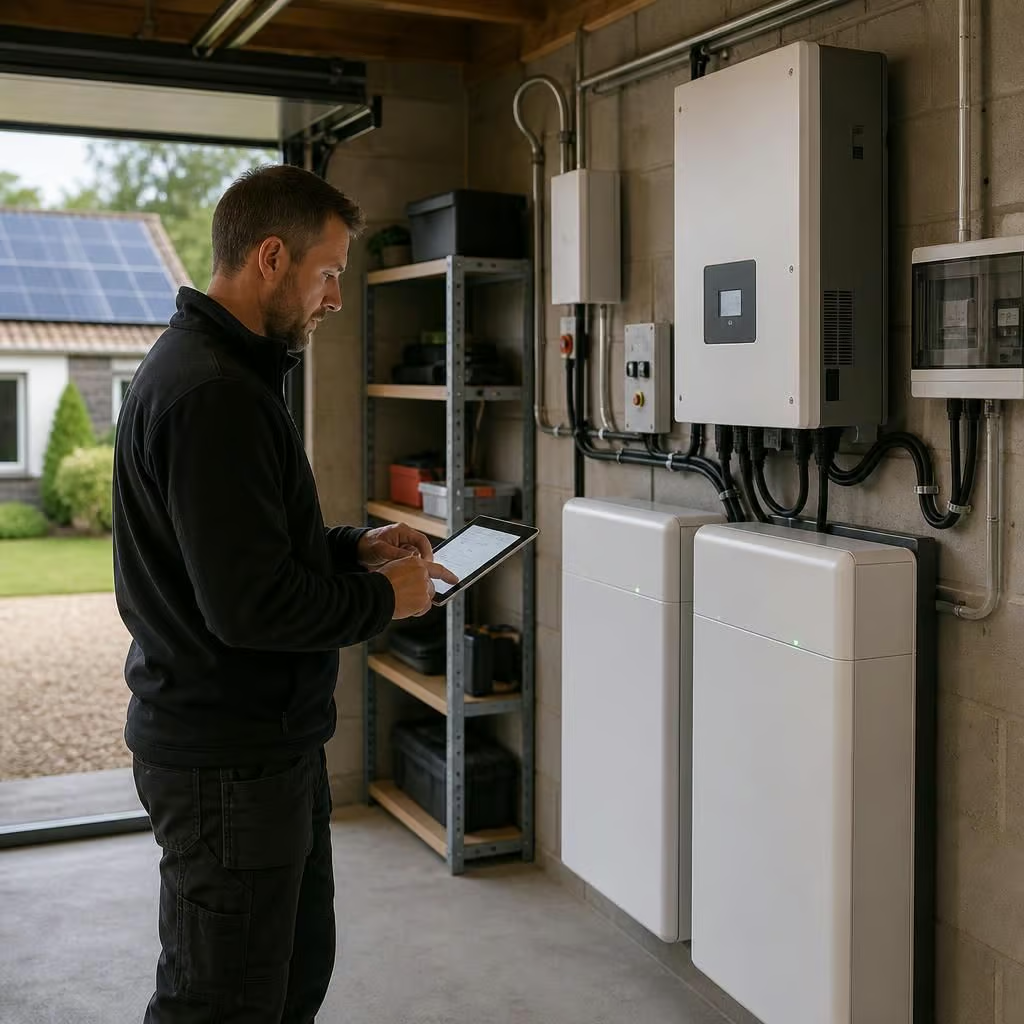
Solar panel capacity and battery capacity are measured differently. Panels are rated by the power they can generate, while a battery is sized by the energy it can store. The two figures do not need to match.
A large solar array may produce useful surplus across the day, but that does not mean all of it can or should be stored. We compare the array’s expected output with the times your home uses electricity, then specify a battery capacity that reflects the surplus available to charge it.