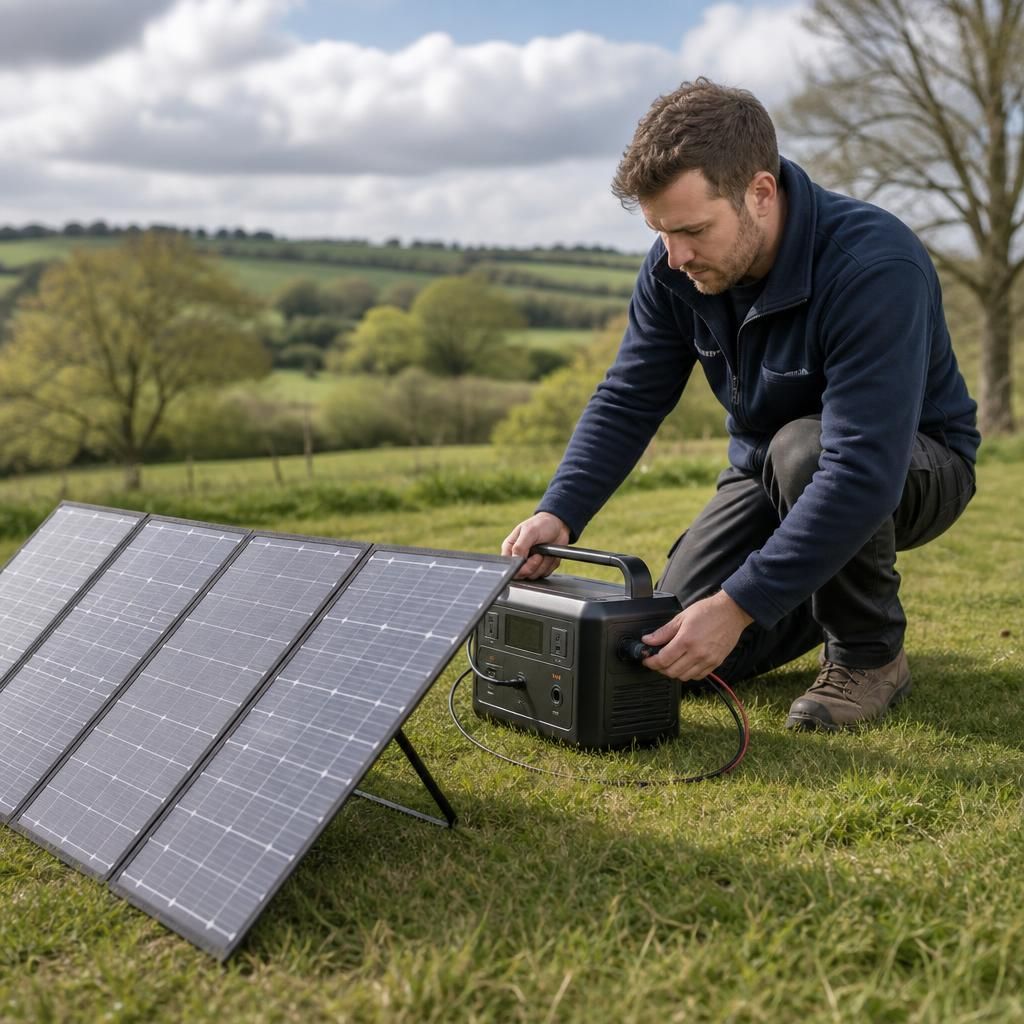
Can I use portable solar panels with any power station?
No. Portable solar panels only work with a power station if the panel output, connector and charging limits are compatible. Check the power station’s solar input specifications before connecting anything, or the system may charge slowly, fail to charge or become unsafe.
Compatibility depends on the power station’s solar input, not simply on the panel’s advertised wattage. A panel and power station can be used together only when the complete electrical specification is suitable.
Check the power station first. Its manual should state the acceptable solar charging voltage range, maximum charging current and maximum solar input power. It may also specify a particular connector or require an unregulated DC solar input with an MPPT charge controller.
- Voltage: the panel’s operating voltage should sit within the power station’s permitted range. Also check its open-circuit voltage, usually marked Voc. A panel can produce a higher voltage in cold, bright conditions, so its maximum possible voltage must not exceed the station’s limit.
- Current: the panel’s output current must be suitable for the station’s maximum solar input current. A station may limit the current, but you should not assume it can safely accept an excessive input.
- Wattage: the panel’s rated watts must not take the system beyond the station’s solar input rating. A higher-wattage panel does not necessarily charge faster if the station limits the input.
- Connector and polarity: the plug must fit correctly, and positive and negative connections must be in the right arrangement. A connector adapter can change the physical fit, but it cannot correct an unsuitable voltage or current.
The figures on a panel can be confusing because a solar panel normally has more than one voltage and current rating. Vmp and Imp describe its output under specified test conditions. Voc and Isc show its open-circuit voltage and short-circuit current. For compatibility, Voc is particularly important because it represents the panel’s voltage with no load attached.
Series and parallel connections change the calculation. Connecting panels in series adds their voltages, which can push the combined Voc above the power station’s limit. Connecting them in parallel adds their available current. Do not combine panels simply because their plugs fit. Use the arrangement stated by the power station manufacturer, and check the combined figures rather than the rating of one panel.
Some portable panels are designed to connect directly to a power station. Others provide USB output, use a built-in regulator or are intended for a separate solar charge controller. A USB panel is not automatically suitable for a station’s DC solar input. The charging path, connector and electrical limits all need to match.
Foldable panels can also differ from fixed-size panels in how they behave. Shade over one section, a damaged cable or a loose connector can reduce the voltage enough for charging to stop and restart. Two panels with different electrical ratings may also perform poorly when connected together, even if their combined wattage appears suitable.
Use the panel’s maximum figures, not only its headline wattage, when checking compatibility. Then compare them with the power station’s solar input limits. The manual or manufacturer’s technical sheet should take priority over a retailer’s description.
If the figures are unclear, do not test the combination by plugging it in and hoping the station protects itself. An incorrect voltage, reversed polarity or unsuitable connection can prevent charging and may damage the input. Keep the panels disconnected while you check the specification, and use only the cable or adapter intended for that charging input.
The term “solar generator” doesn’t guarantee that every portable panel will work with it. Different power stations accept different types of solar input, even when their battery capacities look similar.
If you’re comparing a panel and power station, keep the exact model numbers together. We can check the manufacturer’s technical information and confirm whether the pairing is suitable before you buy extra cables or equipment. That leaves you with a charging setup designed to work together, rather than one that only appears compatible because the plugs fit.