
What safety features should a portable solar generator have?
A portable solar generator should have battery-management protection against overcharging, overheating, deep discharge, overloading and short circuits. Look for enclosed, clearly rated outlets, safe solar and mains charging, cooling that cannot be obstructed, and a display showing charge level and fault warnings.
The safest portable solar generator combines battery protection, a properly controlled inverter and clear safeguards against incorrect connection. Look beyond the headline capacity and check how the unit manages charging, discharging, heat, earthing and connection to your equipment.
Battery protection should cover more than basic low-charge cut-off. The battery-management system should monitor each cell or battery section and stop charging or discharging when conditions become unsafe. Useful protections include:
- overcharge and deep-discharge protection;
- cell balancing, so individual cells do not drift to unsafe voltages;
- over-current protection;
- thermal monitoring during charging and use;
- automatic isolation if the battery detects an internal fault; and
- a clear display or app warning before the unit reaches a protective shutdown.
A unit that simply stops working without showing why is harder to use safely. The manual should explain each warning, the reset procedure and when the unit must be taken out of service.
Check the inverter output as well as the battery. The inverter changes stored DC power into the AC supply used by household equipment. A good unit should state its continuous output, temporary surge output and the protections built into the AC sockets. The output should have a stable voltage and frequency suitable for the equipment connected to it. Sensitive electronics, chargers, pumps and motors can behave poorly if the output waveform is not suitable.
Do not rely on the surge figure alone. A fridge, pump or power tool may draw more current when its motor starts. The generator should either manage that starting load safely or shut down without overheating. Repeated overload trips can indicate that the equipment is too demanding for the unit.
Look for safe AC socket arrangements. UK-style sockets should be protected against accidental contact, firmly mounted and clearly marked with their maximum load. The unit should not allow several outputs to exceed the inverter’s total rating. If it has a 12-volt or USB output, those should have their own current protection rather than relying only on the main inverter.
An RCD or residual-current protection can reduce the risk from some earth-leakage faults, but it does not replace sound insulation, correct earthing or sensible use. Check the instructions to see which outputs are protected and how the protection operates when the unit is running from its battery or from an external supply.
Charging controls matter just as much as discharge controls. The solar input should be protected against excessive voltage, current and reverse connection. The stated solar input limits must match the panel arrangement, particularly when panels are connected in series. A panel configuration that exceeds the unit’s maximum voltage can damage the charging circuit or create a serious hazard.
Mains charging should use the supplied charger or an approved replacement with the correct voltage and current. A charger that fits the connector may still be electrically unsuitable. The generator should stop or reduce charging safely when the battery is full, becomes too hot or detects an abnormal input.
Temperature control is essential for lithium batteries. Charging should be prevented or limited when the battery is too cold or too hot. The unit needs a clear ventilation path around its cooling fans and air inlets. Do not cover it with clothing, place it against a radiator or leave it in direct summer sun. Unusual heat, swelling, a chemical smell, smoke or repeated fault messages means you should stop using it and follow the manufacturer’s isolation instructions.
The enclosure should suit the way you will use the unit. A strong case protects the battery and inverter from knocks, but a rugged appearance does not make a unit waterproof. Check the stated ingress rating before taking it into a shed, vehicle, tent or other damp environment. Keep connectors covered when they are not in use, and keep the generator away from standing water, fuel, corrosive substances and loose metal objects that could bridge battery terminals.
Connection to a building needs a separate safety check. A portable solar generator must not be plugged into a normal wall socket to energise a home’s wiring. That can backfeed the electrical installation and expose anyone working on the supply to live power. A suitable changeover or transfer arrangement must be designed and installed correctly by a qualified electrician, with the generator, earthing arrangement and circuits checked together.
For occasional use, connect appliances directly with undamaged leads and avoid daisy-chaining extension blocks. If the unit will supply a fixed circuit, a workshop or essential household loads, we can assess the installation and explain what equipment is needed instead of treating a portable unit as a substitute for a permanent battery system.
Good safety information is a feature in its own right. Before buying, look for:
- clear maximum input and output ratings;
- instructions for solar, mains and vehicle charging;
- guidance on storage charge level and transport;
- details of the battery type and replacement arrangements;
- fault codes that identify the reason for a shutdown;
- instructions for isolating the unit after damage or water exposure; and
- evidence that the supplied charger, cables and plugs are intended for use with that model.
Keep the manual with the generator and label any cables that belong to it. Before relying on the unit during a power cut, test it with the actual appliances you plan to run. That confirms the connections, starting loads and expected operating pattern without discovering a problem when the mains supply has already failed.
If you are comparing a portable unit with solar panels, a fixed battery or a backup supply for the house, the right choice depends on the circuits, earthing and equipment involved. We can check the proposed arrangement and identify any electrical changes needed before you connect it.
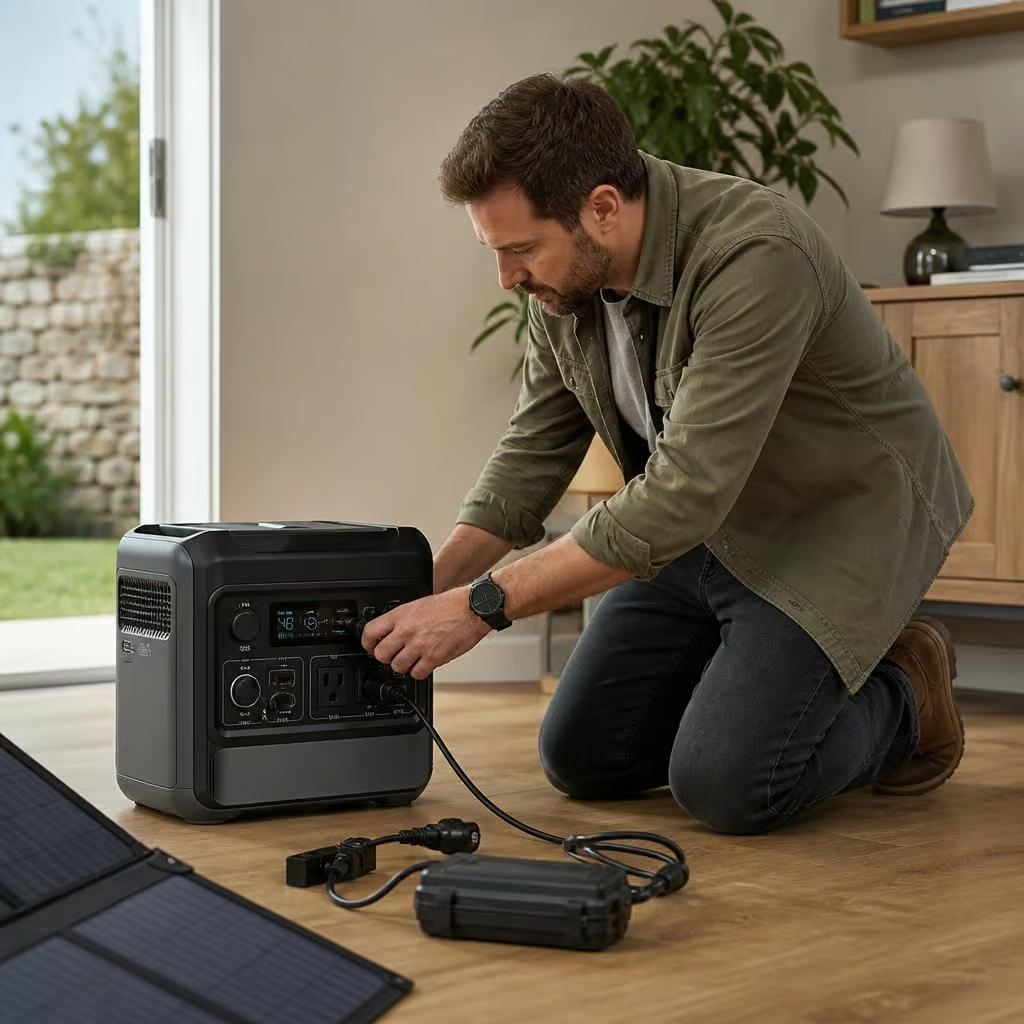
Safety also depends on being able to identify the unit if a fault or recall emerges. Choose a portable solar generator with a permanent model and serial number, a named manufacturer, and a manual that matches the exact model.
Keep the purchase record and register the unit if the manufacturer provides that option. If the manufacturer issues a safety notice, you can check whether your generator is affected and follow the correct repair or replacement instructions. Avoid unmarked units with unclear origins, missing instructions or chargers supplied without clear compatibility information.