
Does air source heat pump installation need planning permission?
Air source heat pump installation often falls under permitted development, so a full planning application may not be needed if the system meets the relevant limits and conditions. We check the property, outdoor unit and local restrictions first, then tell you if permitted development, prior approval or a planning application applies.
Usually, an air source heat pump can be installed under permitted development rights in England, so you may not need a full planning application. The installation still has to meet several conditions. A listed building, conservation area, unusual site layout or larger-than-standard equipment can change the position.
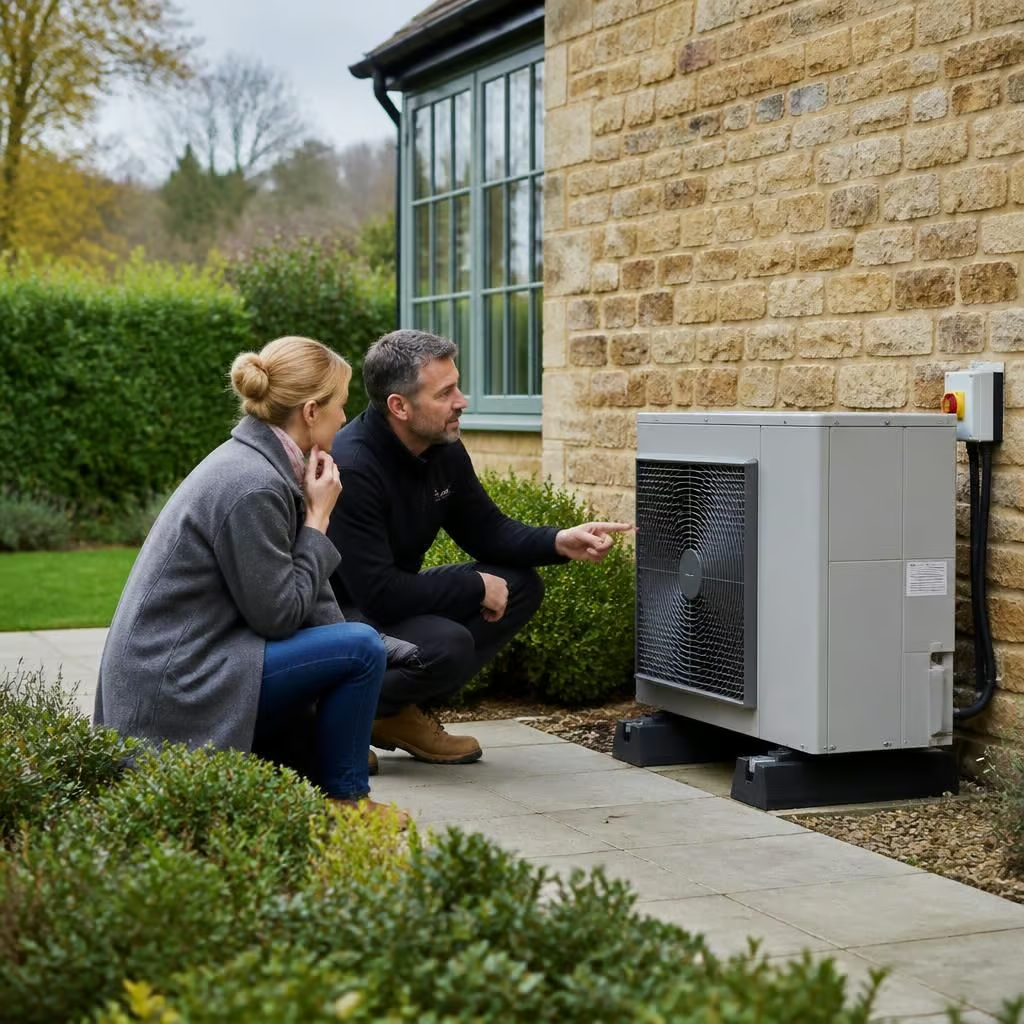
Permitted development covers many domestic installations where the outdoor unit is appropriately sized and positioned. The equipment must meet limits on its volume, location, number of units and noise. It must also be at least the required distance from the property boundary, and the installation must not create an unacceptable effect on neighbours or the appearance of the building.
Those rules apply to the complete outdoor unit and its housing, not just the fan section. A tight side passage can therefore matter even when the heat pump itself looks compact. The height, depth, access route and distance from windows and boundaries all form part of the planning assessment.
Some properties have tighter controls. If your home is listed, you may need listed building consent as well as planning permission. That can apply to work affecting the building or its setting, including the outdoor unit, pipework and internal changes. Planning permission does not replace listed building consent.
A conservation area can also restrict where the unit may be placed. The council may have controls over equipment on a principal elevation or in a prominent position. A property in a designated heritage area may therefore need a different unit position or a formal application, even where a similar installation elsewhere would fall under permitted development.
Local restrictions can affect the answer too. An Article 4 direction may remove permitted development rights in a particular area. Conditions attached to an earlier planning permission can also limit external equipment. Flats, maisonettes and some converted buildings may not have the same permitted development rights as a house.
Your property may be off the gas grid, have solid walls or form part of a barn conversion, so we look at the whole building rather than relying on a standard assumption. During the survey, we assess the outdoor unit position, boundary distances, noise, pipe routes and the effect on the building’s appearance. We also check whether planning controls apply to the property.
The position of the outdoor unit matters for practical reasons as well as planning. Air needs to move freely through the fan, and the unit needs space for servicing and defrost water. Placing it beneath a bedroom window, in a narrow passage or too close to a wall can create noise, airflow and maintenance problems. We use the survey to identify a workable position before the installation is designed.
If the proposed work meets the permitted development conditions, we explain the basis for that decision and retain the relevant installation information. Some homeowners also choose to apply for a lawful development certificate. This is not the same as planning permission, but it gives formal confirmation from the council that the existing or proposed work is lawful.
If a full planning application is needed, we can identify that before work starts. The application may need plans showing the unit, house and boundaries, together with equipment dimensions, noise information and an explanation of the proposed position. Heritage properties may need additional information about the building and its setting.
Planning permission is separate from building regulations. The heat pump, cylinder, controls, radiators and pipework must still be designed and installed correctly. Electrical work may also require its own compliance certification. A permitted development decision does not confirm that the heating system will perform well or that the rest of the installation meets building standards.
For grant-funded work, the planning position should be settled before the system is ordered. Our MCS-certified renewable energy installers can assess the site and advise whether the proposed installation can support a Boiler Upgrade Scheme application. MCS certification also allows the completed system to qualify for the Smart Export Guarantee where the relevant requirements are met.
The safest approach is to check the property and the proposed equipment together. If the site falls outside the permitted development conditions, we explain what approval is needed and how that may affect the design. We do not treat planning permission as automatic simply because another heat pump has been installed nearby.
Our planning assessment is guidance, not a formal decision from the council. If the position is uncertain, we explain the available routes so you can choose whether to seek written confirmation before the work proceeds.
That distinction matters when you sell the property or make future changes. Keeping the survey findings, equipment details and any council correspondence gives you a clear record of why the installation was treated as permitted development or approved through an application.
Check whether your heat pump needs planning permission
If you’re considering an air source heat pump, arrange a site survey before choosing equipment or applying for funding. We’ll assess the proposed position and explain whether permitted development, a lawful development certificate or a planning application is the appropriate route.