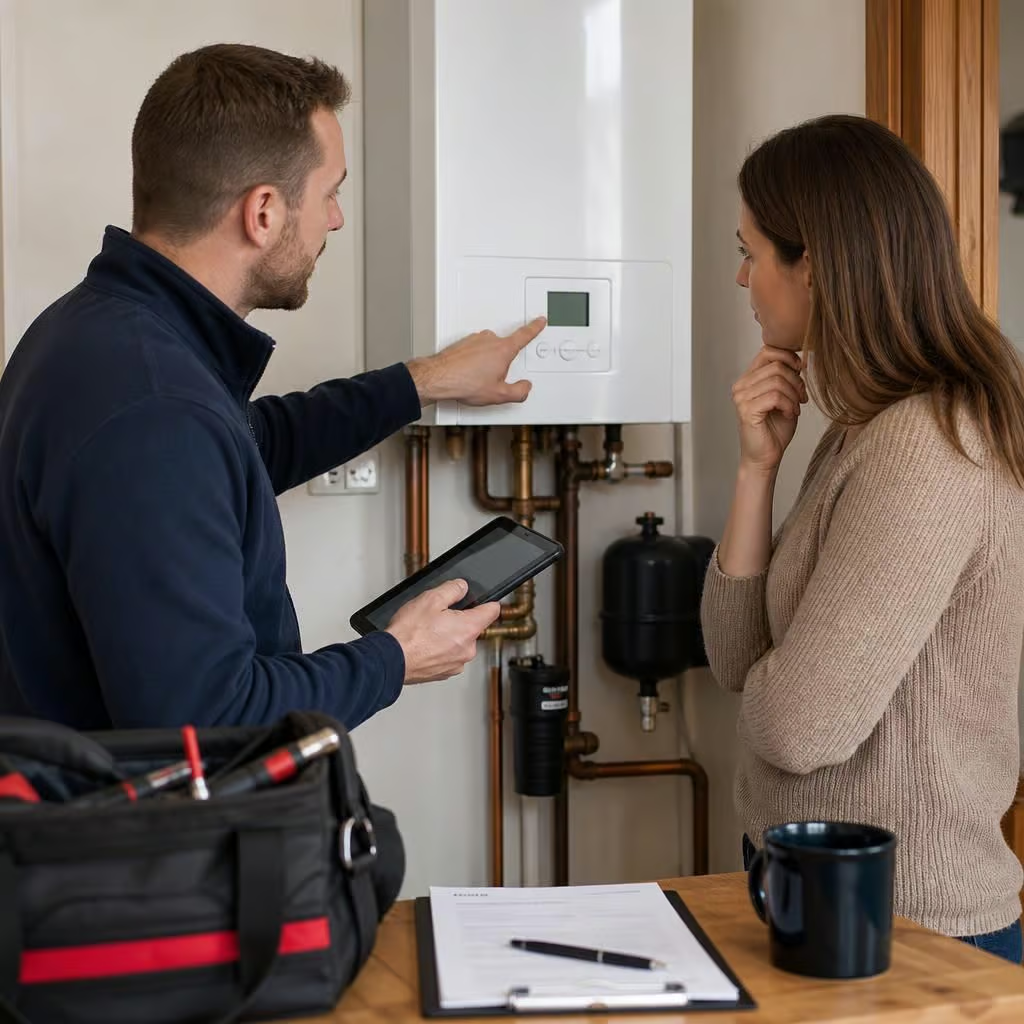
What details should I provide when booking a heating repair?
When booking a heating repair, tell us the boiler or heating system type, the fault symptoms, the property location and any access information. Include error codes, unusual noises, pressure readings and anything you’ve already tried, so we can prepare for the repair.
The most useful booking information is anything that helps us understand the fault before we attend. Alongside the system details, tell us what the heating was doing normally, what changed, and what has already been tried.
Explain the pattern of the fault. Tell us whether the problem is constant or intermittent, and whether it affects the radiators, hot water or both. If the heating works at some times but not others, describe when that happens. A fault that appears after the system has been running for a while can point us in a different direction from one that occurs at start-up.
Let us know if anyone has recently changed the controls, replaced a thermostat, carried out building work or serviced the system. A recent change can be relevant even if it does not seem connected. Details of previous repairs can also help us avoid repeating checks or fitting a part that has already failed.
Photos can be useful before the visit. If it is safe to do so, send clear images of:
- the boiler or appliance label;
- the display and control settings;
- the pressure gauge, if the system has one;
- the surrounding pipework and valves; and
- an oil tank, LPG installation, hot water cylinder or heating controls where these form part of the system.
Do not remove covers or take photographs inside the appliance. A picture helps us identify the equipment, but it does not replace an engineer’s inspection.
Tell us about the fuel and wider system. Gas, oil and LPG appliances need different checks and parts. If the property is off the gas grid, say so when booking. For an oil-fired system, our OFTEC-registered engineers can assess the appliance and associated oil installation. Gas boiler work is carried out by Gas Safe-registered engineers, which is the legal requirement for working on gas appliances.
If the property has more than one heating zone, underfloor heating, a hot water cylinder or a separate programmer, mention this too. It gives us a better picture of the installation and helps us allow for the controls and pipework connected to the fault.
Include any safety information. Tell us about water leaking near electrical equipment, unusual smells, smoke, scorching, unusual noises or signs of overheating. If you smell gas, suspect carbon monoxide or see smoke, leave the property if necessary and contact the appropriate emergency service or network operator. Don’t use the appliance or attempt to remove its casing.
For a leak, switch off the appliance if it is safe and turn off the water supply if you know where the isolation valve is. Avoid repeatedly resetting a boiler or opening its casing. Tell us what you have done, so the engineer knows the system’s current condition.
Booking information also matters. If you are a tenant, landlord or letting agent, tell us who has authority to approve work and where the relevant keys or access arrangements are held. Mention pets, parking restrictions, narrow access or any areas we need to reach, such as an external flue, loft equipment, cylinder cupboard or oil tank.
Once we understand the fault, we can plan the visit around the equipment and access available. If a repair is practical, we explain what it involves. If a part is obsolete or the appliance has reached the point where replacement makes more sense, we explain that before work starts rather than treating a replacement as the only option.
We provide a written quotation before work starts, so the cost and proposed work are clear. If further faults appear during the inspection, we discuss them with you before carrying out additional chargeable work.
If you have the boiler’s service record, installation certificate or previous repair paperwork, keep it nearby when you book. The model, age and parts already fitted can help us understand what we may find on site.
Don’t delay the booking if those documents are missing. Tell us what you know, and we’ll confirm the appliance details during the visit before recommending the next step.