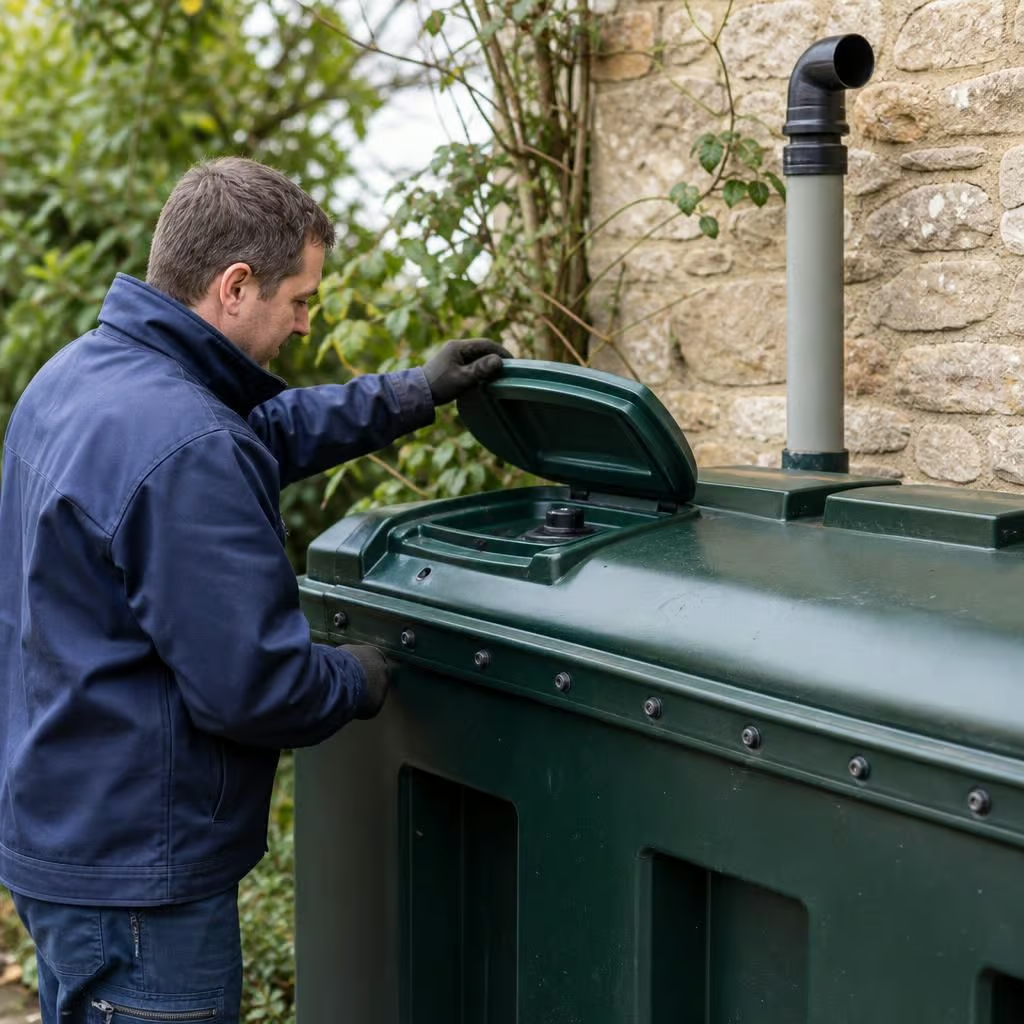
Is my heating oil tank safe for delivery?
Your heating oil tank should be sound, stable and safely accessible, with a fill point the delivery hose can reach without crossing unsafe ground. If you’re unsure about its condition, location or access, we can check the practical risks before you order.
The key test is whether the tank, its fittings and the delivery route can be assessed without putting the driver, property or environment at risk. A delivery driver may refuse to discharge oil if the installation cannot be safely identified, reached or connected.
Use this checklist before placing an order
- Tank position: The tank should stand where the delivery driver can approach without crossing unstable ground, steep banks or areas blocked by vehicles, gates or stored materials.
- Delivery route: Check that the route from the tanker to the fill point is clear of locked gates, dense vegetation, building materials and trip hazards. Delivery companies have limits on hose length and access, so confirm the route before ordering if the tank is far from the driveway.
- Fill point identification: The driver needs to know which connection serves the heating oil tank. A clearly marked fill point, with its cap present and accessible, reduces the risk of connecting to the wrong pipe.
- Vent arrangement: The vent should discharge safely and remain visible during delivery. Do not cover it with plants, boxes or temporary screening.
- Nearby hazards: Keep bonfires, smoking areas, portable heaters and other ignition sources away from the tank and delivery area. Remove anything that could be damaged by the hose or obstruct the driver’s view.
- Tank surroundings: Do not use the tank as a storage surface. Ladders, timber, tools and garden equipment can restrict inspection and make it harder to spot a problem during delivery.
Look beyond the tank itself
A tank can appear acceptable from a distance while its fittings create the greater risk. Check the condition of the fill pipe, vent pipe, filter, isolation valve and flexible connections. A loose fitting, damaged cap or pipe that has shifted should be dealt with before the next delivery.
Pay attention to the ground beneath and around the installation. Oil staining, an unusual smell or persistent wetness needs investigation, even if the tank still supplies the boiler. A bund that contains oil or rainwater also needs attention; an engineer can determine whether the tank or its containment needs repair or replacement.
Older tanks need a closer assessment
Age alone does not prove that a tank is unsafe. Older installations can still be suitable when the tank, base, pipework and containment remain in good condition. However, ageing plastic can become brittle, while older steel tanks may develop corrosion in less visible areas. Previous alterations can also leave unsuitable joints or unsupported pipework.
This matters particularly on rural and off-gas-grid properties, where tanks may sit behind outbuildings, at the end of a long access track or in a location chosen many years ago. We can inspect the installation, consider the delivery route and explain whether a repair, replacement or change of position is appropriate. We also check the oil-fired system as a whole, with OFTEC registration covering work on the oil heating installation.
Check the storage requirements for the property
Oil storage requirements depend on the tank’s capacity, location and proximity to buildings, boundaries and watercourses. The rules can also differ between domestic and commercial premises. A tank that has been in place for years is not automatically suitable simply because previous deliveries took place.
If the tank is close to a house, garage, boundary or drain, ask for an assessment before arranging a full delivery. Do not move the tank or alter its pipework yourself. A change that improves access could create a different safety or compliance issue.
When delivery should wait
Do not arrange a refill until someone has assessed the installation if you notice an active leak, a strong oil smell, a damaged connection, an unstable base, significant movement or oil escaping beyond the storage area. Avoid using naked flames near the tank and keep people away from the affected area. Contact the delivery company to explain the problem and arrange an inspection.
If oil has reached a drain, stream, ditch or soil, report the pollution through the appropriate environmental route as well as arranging professional help. Do not wash the oil away with water or cover it with material that could spread the contamination.
What we check during an inspection
We assess the tank and its support, containment, connected pipework, fill and vent arrangements, isolation points and the practical route for the delivery hose. We also look for signs that oil has escaped and consider how the tank relates to nearby buildings, boundaries and drainage.
You receive a clear explanation of anything that could prevent delivery. If a repair is suitable, we identify the work needed before ordering oil. If replacement is the safer option, we can discuss the position, access and heating requirements before any installation goes ahead.
Prepare the area on delivery day
Clear the route and unlock any access points agreed with the supplier. Keep children, pets and vehicles away from the hose path, and make sure the driver can see the tank and fill point. Do not ask the driver to make temporary alterations or connect through an unsafe route.
After delivery, check the tank area for any new smell, staining or damaged fitting. If something looks wrong, do not start the boiler until the installation has been checked. A safe delivery is only one part of keeping an oil heating system safe; regular inspection helps identify problems before the next refill.
If the tank looks sound but the vent is blocked, delivery can still be unsafe. Oil entering the tank displaces air, which must escape through the vent without restriction. A damaged, capped or obstructed vent can increase the risk of pressure, spills or a failed delivery.
We check that the fill and vent arrangements work together and that the driver can identify both connections clearly. If vegetation, screening or a previous alteration hides either pipe, we explain what needs changing before you order oil.