
Does thermal storage improve heat pump efficiency?
A thermal store can improve heat pump efficiency when it helps the system run for longer, steadier cycles and matches heat production to demand. It isn’t automatically beneficial, though: an incorrectly sized or poorly designed store can add heat loss and reduce efficiency.
The efficiency gain comes from the way thermal storage changes the heat pump’s operation, not from storing heat by itself. A correctly designed store can reduce short cycling, improve heat transfer and let the heat pump work steadily at a lower flow temperature. A larger store can also waste energy through standing losses, so adding one without a clear design reason may make the system less efficient.
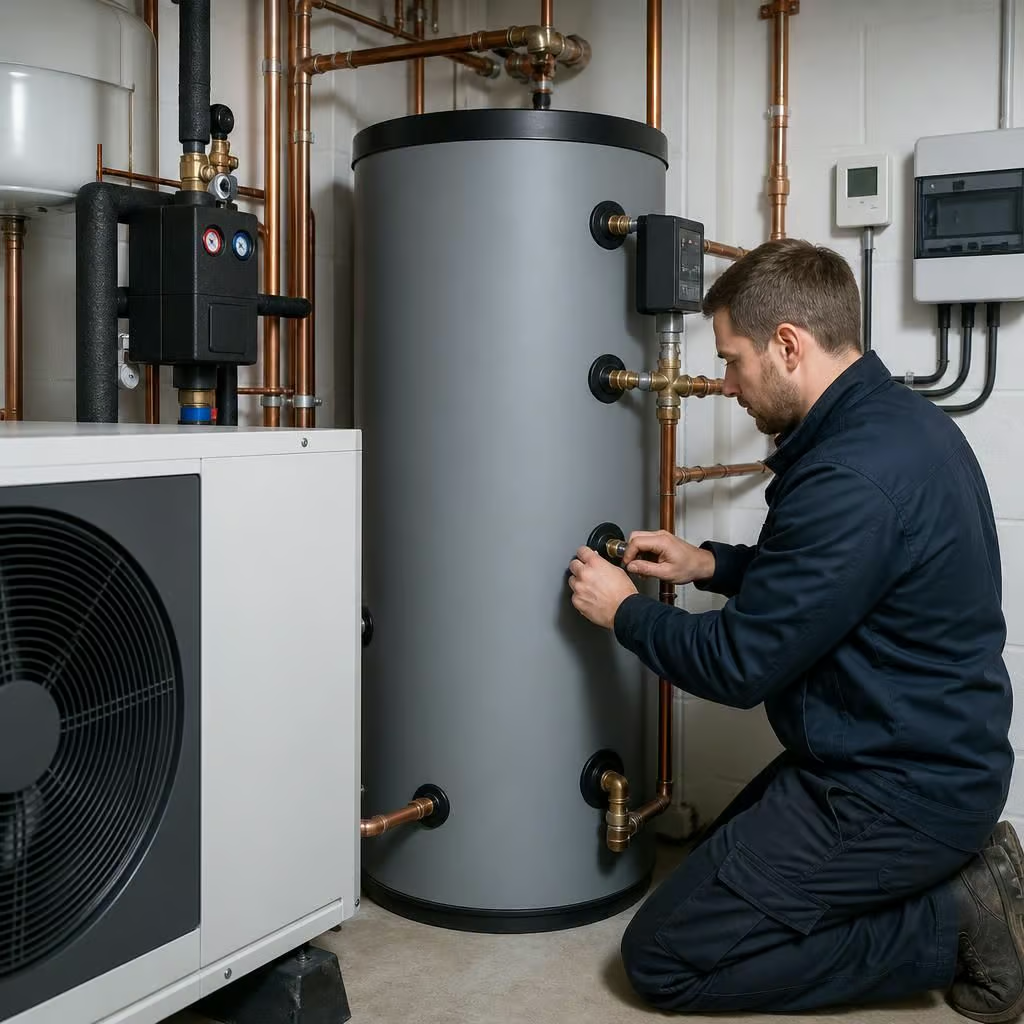
A buffer tank is different from a hot-water cylinder. A buffer tank sits within the heating circuit. It contains water for the heat pump to circulate through and can separate the heat pump circuit from the radiator or underfloor heating circuits. Its role is mainly to support stable operation.
A thermal store is a broader term. It may hold water at a useful temperature for space heating, domestic hot water or another heat source. In a heat pump installation, people sometimes use the term for the hot-water cylinder, although that cylinder does not automatically improve the heating system’s efficiency. We identify which type of storage is being considered before assessing its effect.
Storage is most useful when the heat pump cannot easily match the property’s changing demand. This can happen when the heating system has several small zones, thermostatic valves close many radiators, or the connected pipework contains too little water. The heat pump may then reach its target temperature quickly and stop. Repeated starts and stops are less helpful than a longer, controlled run.
A buffer tank gives the system more usable water volume. The heat pump can continue operating while the zones open and close, rather than responding to every small change in demand. This can also help where radiators and underfloor heating use separate circuits, or where the system needs hydraulic separation between pumps.
That does not mean a buffer tank should be added to every installation. A well-designed system with enough radiator capacity, suitable pipework and correctly configured controls may operate efficiently without one. Direct connection can avoid the extra heat loss, pump work and components that storage brings. We look at the complete heating circuit rather than treating a tank as a default upgrade.
The main efficiency benefit is usually steadier operation. A heat pump works best when it can run for extended periods at the lowest flow temperature that will heat the rooms. Weather compensation helps with this by adjusting the flow temperature as outdoor conditions change. Storage can support that control strategy, but it cannot compensate for radiators that are too small, poor insulation or an incorrectly set weather-compensation curve.
Flow temperature matters because the heat pump has to work harder as the required water temperature rises. If a store is charged to a higher temperature than the emitters need, the heat pump may spend more energy producing that heat. A tank can therefore improve cycling behaviour while still reducing overall efficiency if the temperatures, sensors or controls are poorly selected.
Storage can also help with system layout, but layout is not the same as efficiency. A property may need separate circuits for radiators, underfloor heating and domestic hot water. An older home may have a mixture of emitters installed at different times. A buffer tank can make those circuits easier to control and balance. The result may be a more stable heating system, even where the tank itself adds a small amount of unavoidable heat loss.
Older solid-wall homes, barn conversions and off-gas-grid properties need particular care. Their heat loss may vary considerably between rooms, and previous oil or LPG systems may have been designed around higher water temperatures. We check the building’s heat loss, radiator sizes, pipework, zoning and available plant-room space before deciding whether storage has a useful role. Replacing the heat source without checking those details can lead to high flow temperatures and poor operation.
Domestic hot-water storage should be assessed separately. A heat pump normally heats domestic hot water to a higher temperature than it uses for space heating. That can affect the timing of heating cycles and the electricity used. A correctly sized cylinder gives the household enough stored hot water without forcing the heat pump to maintain an unnecessarily large volume at a high temperature.
Controls determine much of the final result. We check the position and settings of temperature sensors, the heat pump’s operating limits, pump speeds, zone valves and weather-compensation controls. We also check whether the system is being asked to maintain a buffer at a higher temperature than the radiators require. A store that is correctly sized but badly controlled can still cause unnecessary cycling or heat loss.
The physical installation matters too. A tank needs adequate insulation and sensible pipe routes. Uninsulated valves, fittings and sections of pipe can lose heat into a plant room or airing cupboard. The location must also allow access for servicing and provide enough space for safe connections. These practical points do not make the heat pump more efficient on their own, but they prevent the storage arrangement from undermining the system.
When we assess an existing heat pump, we review its operating pattern rather than assuming the tank is at fault. We look for frequent starts, unexpected temperature changes, high flow temperatures, rooms failing to reach temperature and zones opening or closing rapidly. We then check whether the cause is system volume, emitter sizing, hydraulic balance, sensor placement or control settings. A control adjustment or radiator change may be more appropriate than installing additional storage.
For a new installation, the decision forms part of the design. We calculate the property’s heat loss, select suitable emitters and consider how each heating zone will operate. If a store is needed, we size it for the actual system rather than choosing the largest available cylinder. This limits standing losses and reduces the space, pipework and electrical components required.
The sensible test is therefore not simply whether a thermal store can be fitted. It is whether it allows the heat pump to run at a suitable temperature, for suitable periods, while meeting the property’s heating and hot-water demand. If it does, storage can support efficiency. If the underlying problem is poor insulation, inadequate radiators or incorrect controls, storage alone will not solve it.
During cold, damp weather, an air source heat pump may briefly reverse operation to clear frost from its outdoor coil. That defrost cycle uses heat from the system, so the rooms should not be left relying on an undersized water volume.
If the design calls for a buffer tank, we size and control it to provide that reserve without keeping a large volume unnecessarily hot. This can help the heat pump complete defrost cycles with less disruption to room temperatures. It is a design consideration rather than proof that a larger store will improve seasonal efficiency.