
What should a new boiler warranty cover?
A new boiler warranty should clearly state which parts and labour it covers, how long protection lasts, and who handles a fault. Check the registration deadline, servicing conditions and exclusions too, because poor installation, missed servicing or unapproved changes may leave you paying for repairs.
The important distinction is between what the manufacturer covers and what the installer covers. The manufacturer’s warranty normally deals with a fault in the boiler itself, while installation workmanship, system components and servicing may sit under separate terms.
Check exactly what the warranty includes. The written terms should identify the boiler model, serial number, warranty length and the parts covered. Ask specifically about the heat exchanger, burner, fan, pump, sensors, controls and seals. Some items may have different cover periods or exclusions.
Your heating system may include more than the boiler. A programmer, thermostat, filter, expansion vessel, cylinder, pump or zone valve may be supplied by another manufacturer. Those items might have their own warranties rather than forming part of the boiler warranty. Existing radiators and pipework are not automatically covered because a new boiler has been connected to them.
Check when cover starts and who must register it. The start date may be the installation date, the date of purchase or the date of registration. Registration may have to happen within a stated period. Keep the registration confirmation, installation invoice and boiler serial number together. If registration is missed, the manufacturer may reduce the cover to its standard term or decline a claim.
The warranty terms should also say who can make a claim. In some cases, the manufacturer handles the claim directly. In others, the original installer must diagnose the fault first. Check whether you can use any suitably qualified engineer or whether the manufacturer requires an approved service network. This affects what you do when the boiler stops working.
Look for a separate workmanship warranty. A boiler can be free from a manufacturing fault but still develop a problem because of the installation. Examples include a poorly supported flue, incorrect condensate routing, wiring errors or an incorrectly configured system. Ask how long the installer stands behind its workmanship and what the process is if that work causes a fault. Get the answer in the quotation rather than relying on a verbal assurance.
System water quality matters, particularly when a new boiler is connected to older radiators and pipework. Sludge, debris, unsuitable water treatment or a failure to follow the manufacturer’s installation requirements may be excluded. The terms may also exclude damage caused by freezing, corrosion, limescale, electrical problems, flooding, accidental damage or unauthorised repairs. Read the exclusions alongside the cover, not as an afterthought.
Check the servicing conditions. Many warranties require the boiler to be serviced at the intervals stated by the manufacturer. The service may need to be recorded in the service book or digital record. Ask whether a missed service ends the warranty completely or affects only a later claim. Keep invoices and service records, because the manufacturer or installer may ask for them.
Some terms exclude faults caused by other parts of the heating system. A failed pump, dirty system filter or blocked condensate pipe may not be treated as a boiler manufacturing fault. The engineer may need to identify the cause before the warranty provider accepts the repair. Ask whether diagnosis, call-out or replacement parts could incur a charge if the fault falls outside the terms.
Find out what happens if you sell the property. A warranty may transfer to the next owner, but the manufacturer may require notification or updated registration. Other warranties remain with the original purchaser. Keep the paperwork for the buyer and check whether the transfer has to happen by a particular date.
Also check whether the cover remains available if the original installer is no longer trading. A manufacturer-backed warranty is usually claimed through the manufacturer’s stated process, while an installer-backed promise depends on the installer being able to carry out the work. This distinction is worth understanding before you compare two otherwise similar quotations.
Before accepting a quotation, ask for these details in writing:
- the boiler model and serial number recorded after installation;
- the length and start date of the manufacturer’s cover;
- which boiler parts have different terms;
- the warranty for installation workmanship;
- the cover for controls, filters, pumps, cylinders and other added components;
- the servicing, water treatment and registration conditions;
- the exclusions and any possible call-out or diagnostic charges;
- the claim route and who will deal with the repair; and
- whether the warranty can transfer if you sell the property.
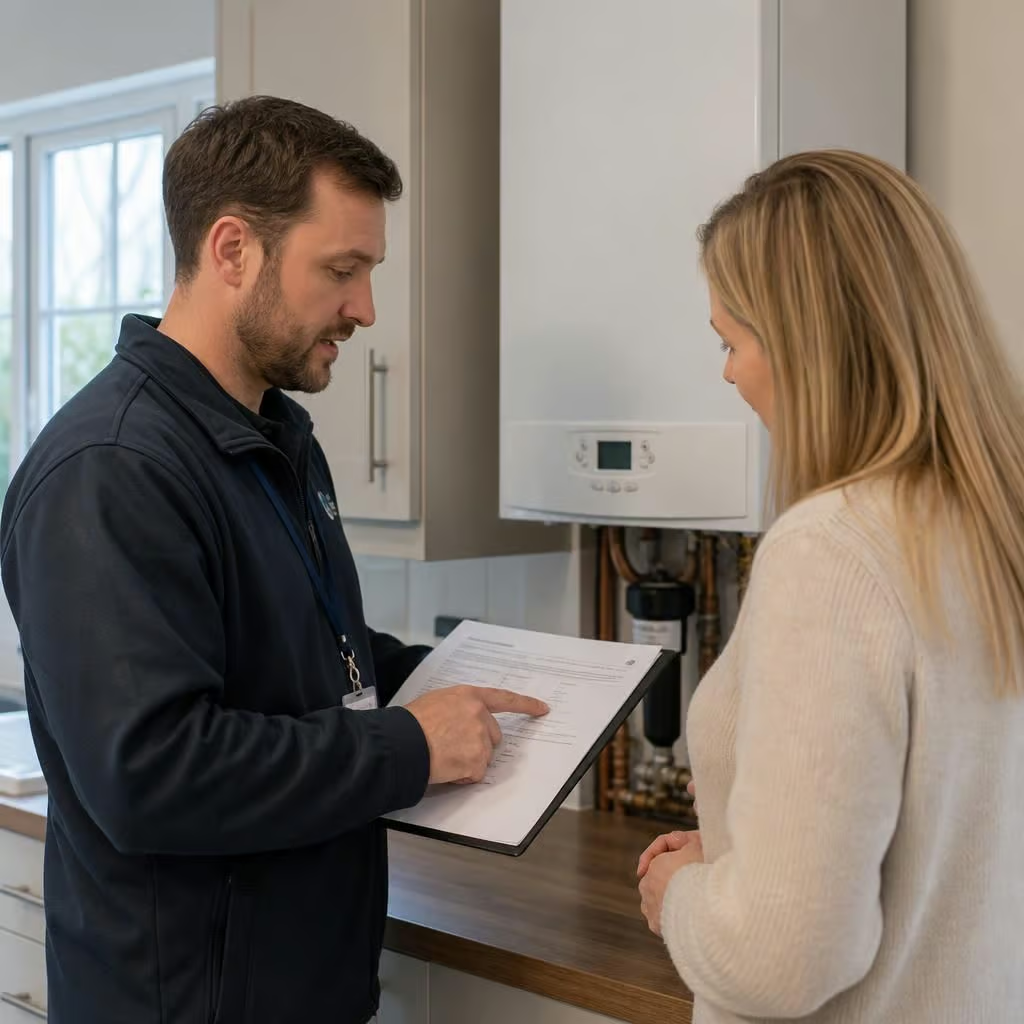
We include the registration and warranty paperwork with the installation records, so you know which cover applies to the boiler and which terms apply to the rest of the system. If a claim later arises, the model details, service history and installation documents give the engineer the information needed to assess it properly.
A manufacturer’s warranty is an extra promise, not a replacement for your legal rights as a consumer. If the boiler is faulty, keep the sales invoice and installation records, and don’t assume the warranty is your only route to a remedy. The seller may still have responsibilities under consumer law, depending on the circumstances.