
How much does replacing an oil or LPG boiler cost?
A replacement oil or LPG boiler does not have one fixed price: the total depends on the boiler, flue, fuel tank, controls, pipework and access to the work. We assess those details at the property, then provide a written quotation before work starts.
There is no reliable single price for replacing an oil or LPG boiler. A straightforward boiler change costs much less than work involving a new flue route, oil tank, LPG supply, heating controls, radiators or pipework. The boiler is only one part of the installation.
What a like-for-like replacement may include
- The new boiler and compatible flue components.
- Removal and disposal of the old appliance.
- Connection to the existing fuel, heating and electrical systems.
- Replacement of unsuitable isolation valves, filters, pumps or safety components.
- Condensate drainage and updated heating controls where required.
- Commissioning, safety checks and the manufacturer’s installation paperwork.
An oil boiler may be relatively simple to replace if the tank, oil line, flue and heating circuit are all in good condition. An LPG boiler can be similarly straightforward when the gas supply, regulator and storage arrangement are suitable. Problems with any of these parts can add work to the installation.
The main factors that change the cost
- Boiler position: Moving the appliance can mean extending heating pipework, altering the flue, providing new drainage and making good walls or cupboards.
- Flue route: A longer or more complicated route takes more materials and labour. The terminal also needs to meet current safety requirements.
- Oil tank: A corroded, poorly positioned or non-compliant tank may need replacement. The base, oil line, filter and fire valve may also need attention.
- LPG supply: The existing pipework, regulator, cylinders or bulk tank must suit the replacement boiler. Changes to the storage arrangement can make the project much larger than a boiler swap.
- Heating controls: An older system may need a modern programmer, room thermostat, motorised valves or improved zoning to control the new boiler properly.
- Radiators and pipework: A boiler replacement is not always the right time to renew the whole heating circuit. We check for leaks, corrosion, sludge and restricted flow, then identify what genuinely needs changing.
- Electrical work: The boiler needs a suitable electrical supply and protective controls. Older wiring or consumer unit arrangements may need upgrading before the heating system can be commissioned safely.
- Access and building fabric: A boiler in a loft, outbuilding, basement or tight cupboard takes longer to remove and install. Listed buildings and older solid-wall homes may also require a more careful route for pipes and flues.
Oil and LPG installations are not identical
Oil-fired systems need attention to combustion settings, the oil line, fire valve, filters and tank arrangement. We use OFTEC-registered engineers for this work, so the fuel system is assessed as part of the replacement rather than treating the boiler as an isolated appliance.
LPG systems need checks on the gas pipework, regulator, ventilation, flue and storage supply. If the boiler is connected to cylinders or a bulk tank, the available supply must match the appliance. A Gas Safe-registered engineer carries out work on the gas side.
When a repair may cost less
A repair can make sense when the boiler is otherwise sound and replacement parts are available. Replacement is more likely to be worth considering when the appliance is old, repeatedly breaking down, inefficient, corroding or affected by a major component failure. We can explain the condition of the system so the decision is based on the likely work, not just the age of the boiler.
When the replacement becomes a wider heating project
Your boiler may be working, but the rest of the system can still limit the value of a replacement. Heavy sludge, undersized radiators, leaking valves or poorly balanced circuits can leave rooms cold and make the new appliance work harder. We identify those issues before installation and separate essential safety work from improvements that can be planned later.
This is especially important in older rural homes. Oil and LPG properties often have extended pipe runs, external boiler rooms, older radiators or tanks that have been altered over time. A house may need a boiler replacement without needing every radiator or pipe replaced. We look at the actual system rather than assuming that a full refit is necessary.
How to compare replacement quotations
The lowest figure does not always represent the lowest project cost. Check that each quotation states whether it includes the flue, controls, filters, condensate drainage, system cleaning, commissioning, disposal and any work to the tank or fuel supply. Ask which parts are provisional and which are included.
It is also worth checking who will carry out the work and what paperwork you will receive. Gas boiler work must be carried out by a Gas Safe-registered engineer. Oil work should be handled by an OFTEC-registered engineer. The completed installation should be commissioned correctly, with the relevant safety and manufacturer documentation provided.
Could another heating system be more suitable?
A new oil or LPG boiler is not the only option for every property. If the home has suitable insulation, space for equipment and a heating system that can be adapted, an air source heat pump may be worth assessing. The cost can involve more than replacing the boiler because radiators, pipework, controls and the electrical supply may need changes.
We assess the building and existing heating system before recommending that route. Where an air source heat pump is suitable, our MCS certification means we can make a Boiler Upgrade Scheme grant application on your behalf. It also makes the installation eligible for the Smart Export Guarantee where the relevant renewable electricity system is installed. Grant rules and tariffs can change, so we confirm the current position during the assessment rather than using an outdated headline figure.
The useful comparison is the total work each option requires, not just the appliance price. That includes installation, alterations to the heating system, fuel storage, electrical work, future servicing and how well the system suits the home. We set those items out so you can compare a boiler replacement with other heating options on the same basis.
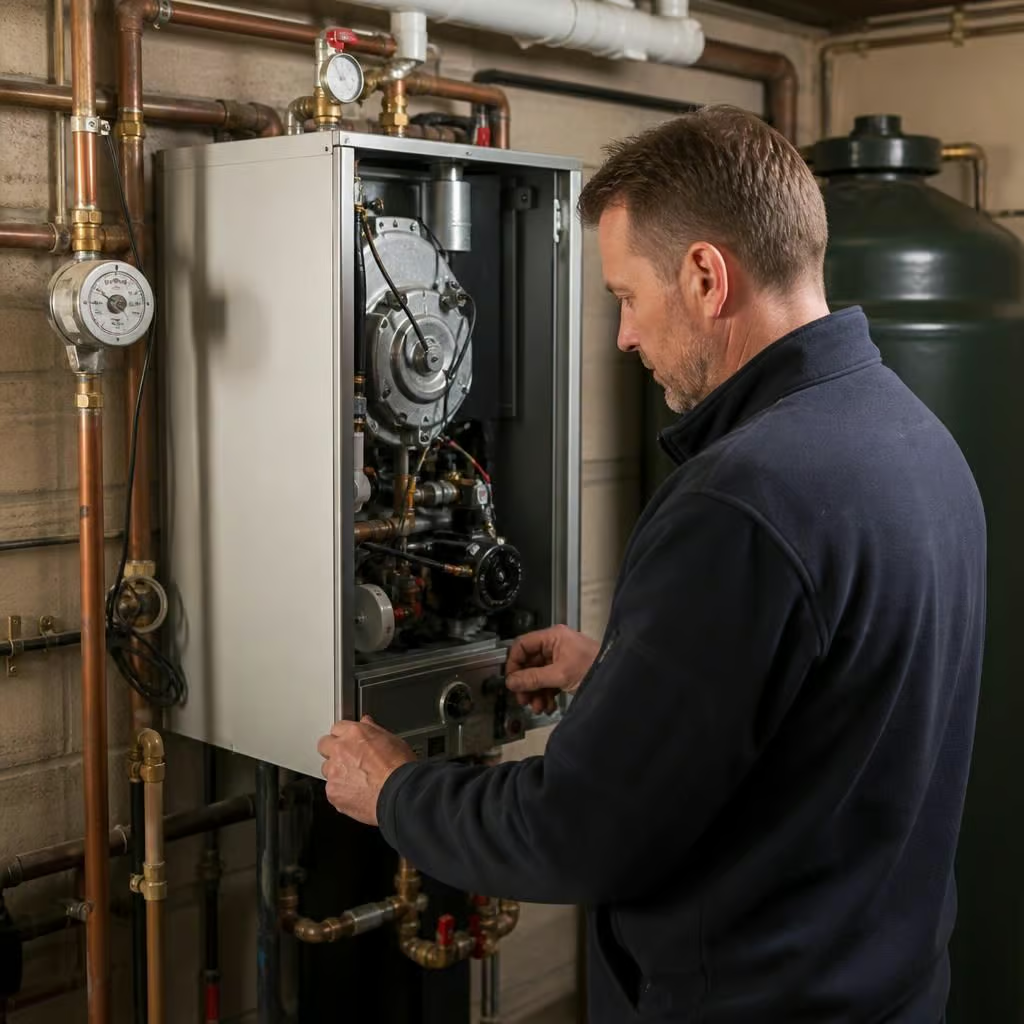
The boiler you have now may be larger than the home needs. We assess the property’s heat demand, hot water arrangement and existing controls before specifying its replacement. That helps avoid paying for an appliance that is unnecessarily large or unsuitable for the heating circuit.
The quotation then shows the cost of the correctly sized boiler alongside any changes needed to make it work safely and effectively. You can see which items are essential to the replacement and which improvements could wait.