
What information do you need before recommending HVAC maintenance?
We need the system type, fuel, make, model, age, recent faults and service history before recommending maintenance. Details about unusual noises, pressure loss, leaks, access restrictions or planned changes to the property help us suggest the right checks and avoid unnecessary work.
The most useful information is anything that shows how the heating is used, what the property needs and what has changed since the system was installed. This lets us recommend maintenance that addresses real risks rather than repeating checks that add little value.
Explain how the system is used. Tell us which rooms you heat, whether the property is occupied all year and how often the heating and hot water run. A home used mainly at weekends has different maintenance priorities from one heated continuously. Let us know if any rooms stay cold, overheat or take much longer to warm up.
Describe the controls and operating pattern. Information about thermostats, programmers, timers, smart controls and zone valves helps us understand whether a problem may come from the controls rather than the main appliance. Tell us if the heating follows a regular schedule or if people adjust it manually throughout the day.
Tell us about the hot water. We need to know whether hot water comes from a cylinder, a combination boiler or another arrangement. A slow recovery time, fluctuating temperature, poor flow or water that runs out sooner than expected can change the maintenance checks we recommend. If the property has more than one hot water outlet or a secondary cylinder, mention that too.
Share anything that has changed in the property. Building work, a loft conversion, an extension, altered insulation, new windows or changes to room use can affect heating performance. A room that has become an office, bedroom or bathroom may now need a different heating pattern. Photos or drawings can help us understand changes before we visit.
Tell us what access involves. We need to know where the equipment is located and whether it sits in a loft, cupboard, plant room, outbuilding or another restricted space. Mention narrow access, fixed shelving, stored belongings, delicate flooring or anything that would need moving. This helps us plan the visit and identify whether a longer inspection or additional equipment may be needed.
Provide useful documents if you have them. Installation instructions, commissioning records, previous safety certificates, warranty information and invoices for replacement parts can reveal how the system was configured. They may also show settings or alterations that are not obvious during a first inspection. You do not need to find every document before contacting us; a photograph of a certificate or control panel is often enough to start.
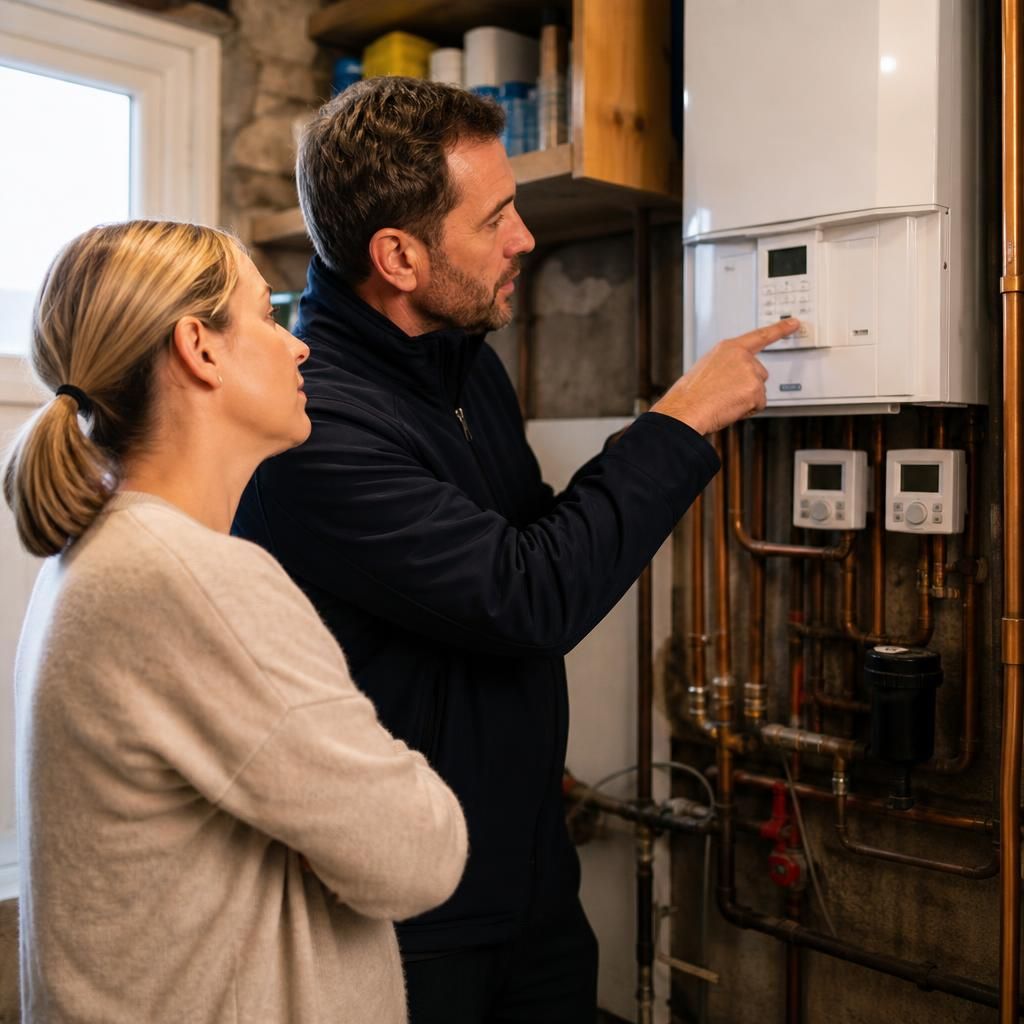
Include photographs where they are safe to take. A clear image of the appliance, controls, visible pipework, cylinder, flue termination and surrounding space can help us understand the installation. Do not remove covers or enter an unsafe area to take a photograph. We can inspect concealed components properly during the visit.
Tell us about safety concerns separately. Report any smell of gas or oil, signs of scorching, water near electrical equipment, damaged cables, carbon monoxide alarm activations or unusual fumes before arranging routine maintenance. If anyone feels unwell or the property may be unsafe, leave the area and follow the relevant emergency safety advice rather than waiting for a maintenance appointment.
Explain what you want the maintenance to achieve. You may be looking for a routine safety check, better comfort, more reliable hot water, lower running costs or advice before replacing equipment. These are different starting points. If replacement or a larger upgrade is already under consideration, tell us so we can avoid recommending maintenance that only delays a more appropriate decision.
We use this information to decide whether a routine service is suitable, whether the system needs a fuller diagnostic inspection or whether a planned upgrade deserves consideration. We will still check the installation in person before confirming the work. Information supplied in advance helps us arrive prepared and keeps the recommendation focused on the condition and use of the system.
If you do not know the exact details, do not guess. Send what you can, describe what the system does day to day and point out anything that has changed. We can establish the remaining information during the assessment.
If another appliance helps heat the home or water, tell us before we recommend maintenance. This might include an immersion heater, wood-burning stove, solar thermal system or secondary boiler.
One system may hide a problem in another. We use this information to understand which appliance normally runs, how the controls interact and whether a fault is being wrongly attributed to the main heating system.