
What should a proper HVAC service include?
A proper HVAC service checks the equipment, controls, filters, pipework, electrical connections, flue or ventilation and safety devices, then tests the system under operation. We record any faults or risks and explain which work is necessary, so you know what needs attention before it affects comfort, safety or running costs.
A proper HVAC service should leave you with more than a tick on a checklist. It should show whether the system is safe, working as intended and likely to remain reliable, while separating routine maintenance from repairs that need a separate decision.
We start with the system and its history. Your appliance may have been altered, extended or adapted since it was installed. We identify the equipment, its controls and the way each part connects before opening anything. Previous service records, recurring faults, unusual noises and changes in fuel use can point us towards problems that a brief visual inspection would miss.
Tell us about symptoms such as cold rooms, pressure loss, short cycling, slow hot water, tripped electrical protection or a heat pump that struggles in colder weather. These details help us test the part of the system causing the problem rather than simply resetting the controls.
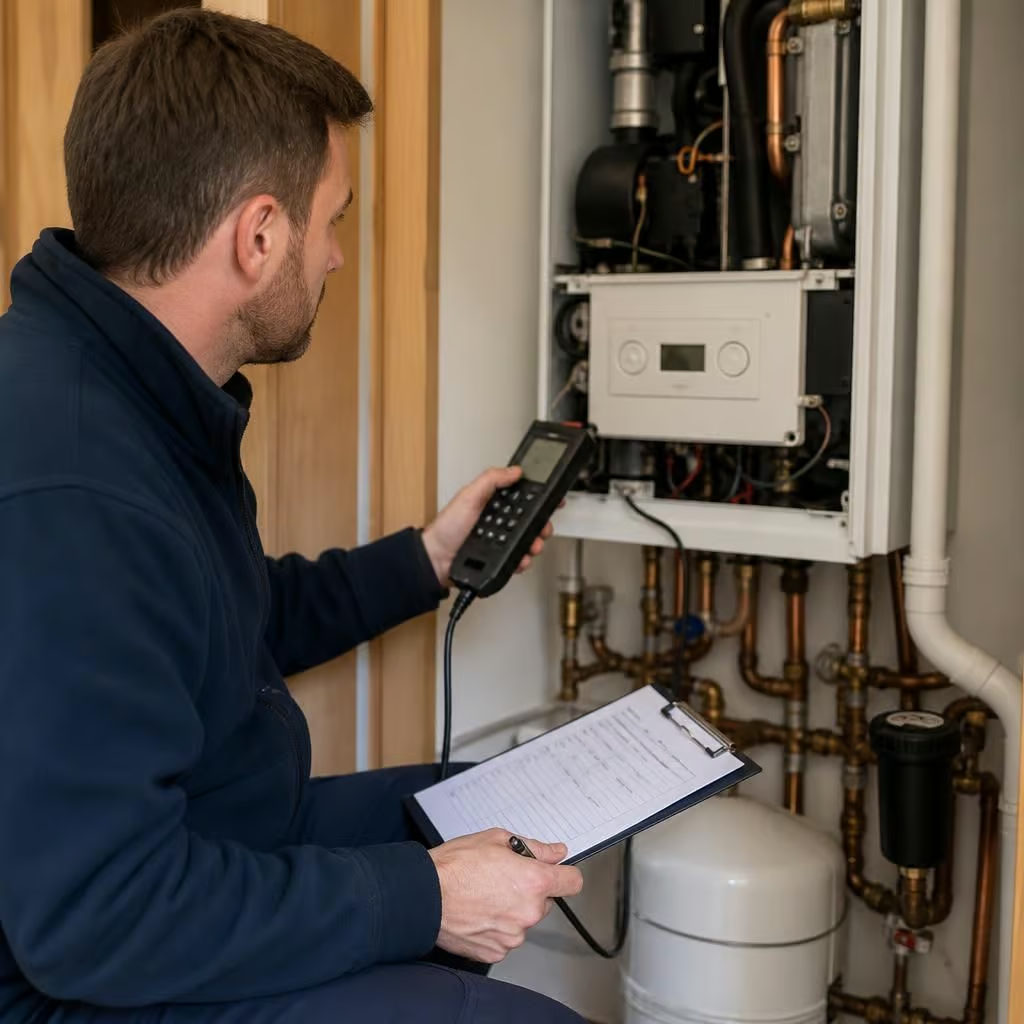
For a gas boiler, the service must include combustion and safety checks. A Gas Safe engineer inspects the burner, heat exchanger, seals and combustion chamber, then checks the appliance while it runs. We measure combustion performance and gas pressures where appropriate, examine the condensate route and assess the flue system, including accessible joints and the terminal outside.
A boiler that lights and heats water can still have unsafe combustion, restricted condensate drainage or a failing component. We explain any defect clearly and distinguish an item that needs attention from a condition that can be monitored. We do not treat a reset or a quick wipe-down as a completed service.
Oil-fired equipment needs a different inspection. On an off-gas-grid property, we check the burner operation, combustion, oil supply, filter and accessible parts of the appliance. We also look for signs that the tank, oil line or flue arrangement could affect safe operation. Our OFTEC-registered engineers understand the practical issues that arise with oil heating in older houses, barn conversions and rural properties.
Heat pump maintenance focuses on the whole low-temperature system. The outdoor unit needs clear airflow, a clean heat exchanger and a fan that runs correctly. We inspect the defrost operation, drainage and accessible pipework, then assess how the indoor unit, hot-water cylinder, thermostats and radiators or underfloor circuits are working together.
A heat pump can appear to be faulty when the issue is poor water flow, an unsuitable control setting, restricted emitters or a blocked condensate route. We look at the system as a whole and explain whether the remedy is adjustment, cleaning, repair or a larger change to the heating design.
Controls deserve practical testing, not just a glance. We check that thermostats, programmers, motorised valves and zoning respond to the commands being sent. If your heating runs at the wrong time, some rooms stay cold or hot water takes priority unexpectedly, we trace the control sequence and explain what needs changing.
For older properties, the service should also consider the condition of radiators, valves, pumps and expansion arrangements. Sludge, trapped air, poor balancing or restricted circulation can make a sound boiler or heat pump perform badly. We record what the system is doing and avoid recommending replacement equipment when a smaller correction may address the fault.
Electrical checks form part of safe HVAC maintenance. We inspect accessible connections, isolation points and protective devices associated with the heating equipment. We look for signs of overheating, loose connections, water damage or cables affected by the plant. Any electrical work beyond the service itself should be explained before it is carried out.
Ventilation and cooling equipment need their own checks. Where mechanical ventilation or air conditioning forms part of the installation, we inspect filters, fans, grilles, airflow, condensate drainage and accessible duct connections. Dirty filters can reduce performance and place extra load on the equipment. We tell you what cleaning or replacement is needed and which tasks can safely be handled between professional visits.
The service should include a controlled operating test. We run the system through a normal heating or hot-water demand and observe how it starts, modulates, circulates and shuts down. That can reveal delayed ignition, unstable temperature, repeated cycling, pump noise or a control fault that does not appear when the appliance is idle.
We also check the area around the equipment. Combustible materials, stored items, restricted access or inadequate ventilation can create a risk even when the appliance itself appears sound. You should not have to clear a cupboard after the engineer leaves to discover that routine access has been blocked.
A proper service ends with clear information. We give you a record of the checks completed, relevant readings, defects found and work that we recommend. If a repair is needed, we explain its purpose and urgency in plain terms. If replacement is more sensible, we set out why rather than presenting it as the automatic answer.
Some work will sit outside a routine service. Replacing a failed pump, repairing a leak, correcting unsafe wiring, cleaning a heavily contaminated system or altering pipework may require additional time and parts. We discuss that work with you first and provide a written quotation before starting chargeable repairs, so the service does not turn into an unexpected bill.
You can make the visit more useful by providing access and information. Keep the boiler, cylinder, heat pump controls and relevant isolation points accessible. Have the latest service record available and note when the fault occurs. Do not remove appliance covers or attempt to adjust gas, oil or electrical components yourself.
If you smell gas, see signs of oil leakage, detect burning from electrical equipment or suspect carbon monoxide, stop using the affected system and follow the appropriate safety procedure before arranging an inspection. A routine service is not a substitute for urgent action where there is an immediate danger.
If the property is rented, a boiler service and a landlord gas safety check are related but separate tasks. The service looks at condition, operation and maintenance. The Gas Safety Record confirms the required safety checks for gas appliances and flues. Ask us which checks and documents are included, so an inspection is not mistaken for compliance paperwork.
Oil-fired systems have different requirements. An OFTEC-registered engineer can assess the appliance and its associated oil components, but the paperwork should still state exactly what was inspected and any defects found. That distinction matters when you are managing several properties or preparing one for a tenant.