
Can commercial electrical installation work continue while the premises remains open?
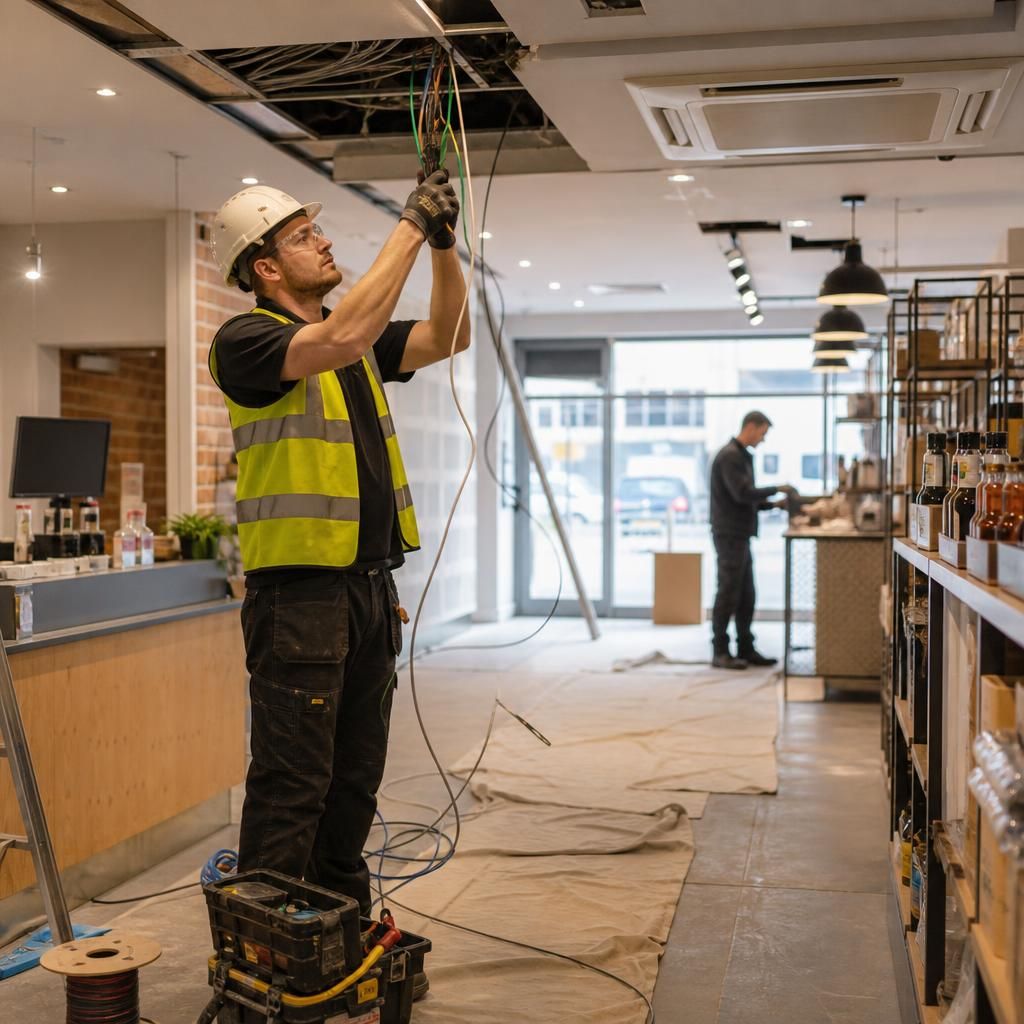
Yes, commercial electrical installation can often continue while the premises remains open, provided we plan the work in phases and isolate each area safely. We assess the affected circuits, agree any necessary shutdowns with you and keep staff, customers and other building users clear of the work.
Yes. Commercial electrical installation can usually continue while the premises remains open, but the work must be staged around the activities that cannot stop. Some connections, tests and changes to the main supply still require a controlled shutdown, so we identify those points before work starts.
Your business may need lighting, tills, refrigeration, servers, machinery, access systems or security equipment to remain operational. We establish which circuits are critical, trace them against the existing installation and plan the changeover so an unexpected loss of power does not become the first time anyone discovers what they serve.
Where records are incomplete, we investigate the installation before fixing the work sequence. Older commercial buildings often contain altered circuits, labelled incorrectly over the years. Testing and inspection help us separate the new work from faults or limitations in the existing system.
- Occupied areas: We keep tools, materials and cable routes out of customer and staff areas where possible. Temporary barriers and clear signage separate the work from normal movement through the building.
- Shared access: If engineers need to work near entrances, corridors, kitchens or loading areas, we agree how people and materials will pass safely before that stage begins.
- Noise, dust and disruption: Drilling, chasing and cable installation can affect nearby rooms. We identify those activities in advance and sequence them so affected areas are not unexpectedly taken out of use.
- Business-critical equipment: We discuss equipment that must not lose power and confirm what needs a planned isolation, temporary supply or separate changeover arrangement.
A premises cannot remain fully operational during every part of an installation. Work on a distribution board, incoming supply or a circuit serving a critical area may need an isolation. We tell you what will be disconnected, which areas it affects and what needs to happen before power is restored.
Your staff may need to continue using the building while the installation progresses. We provide the information they need for each stage, including restricted areas, temporary arrangements and what to do if they notice damage, an alarm or a loss of power. A nominated contact on site helps us resolve practical issues without delaying the work.
Fire alarm systems, emergency lighting, security systems and other life-safety equipment need particular care. We do not treat them as ordinary circuits. If a system must be isolated, we agree the control measures first and make sure the required testing takes place before the area returns to normal use.
Before starting, we review the scope, access, existing drawings and the condition of the installation. We then set out the work sequence, isolations, testing requirements and handover information. For larger or higher-risk premises, the site documentation also records the hazards and controls that apply to each stage.
When a new circuit or board is ready, we test it before it is put into service. We check protective devices, earthing, insulation and circuit operation, then correct any issue rather than leaving it for the occupied building to expose later. The completed work is labelled so future maintenance does not depend on guesswork.
You receive the relevant electrical certification and information for the completed installation. Our NICEIC and ECA registration supports the standard of inspection, testing and documentation expected for commercial electrical work, helping you maintain clear compliance records for the premises.
If the existing installation contains a serious fault, unsafe equipment or inadequate capacity, we explain the finding before changing the programme. That may mean separating remedial work from the new installation or agreeing a temporary restriction on part of the premises. You can then decide how to proceed with a clear view of the safety and operational implications.
When customers or staff remain on site, the work area needs more than a barrier. We agree how people will move around it, where materials can be stored and which escape routes must stay clear. If the installation affects a fire exit, entrance or accessible route, we plan an alternative before that section starts.
That gives the person managing the premises a clear arrangement for each stage. They know which rooms are restricted, which facilities remain available and when a section is ready to use again. We also remove temporary equipment and unused cable routes as the work progresses, rather than leaving an occupied building to work around an unfinished installation.
Plan your commercial installation around your business
If you’re planning commercial electrical installation while the premises remains open, contact us to discuss the building, working areas and operational constraints. We can then advise on a practical installation sequence before you commit to the work.