What paperwork will we provide after commercial electrical maintenance?
After commercial electrical maintenance, we provide a service record showing what we inspected, tested and found, along with details of any work completed. Where the work requires it, we also issue the relevant electrical certificates or compliance report, including outstanding remedial recommendations.
The documents you receive depend on the work carried out and the condition of the installation. Routine maintenance normally produces a dated maintenance record, while inspection, testing or remedial work may require a formal electrical certificate.
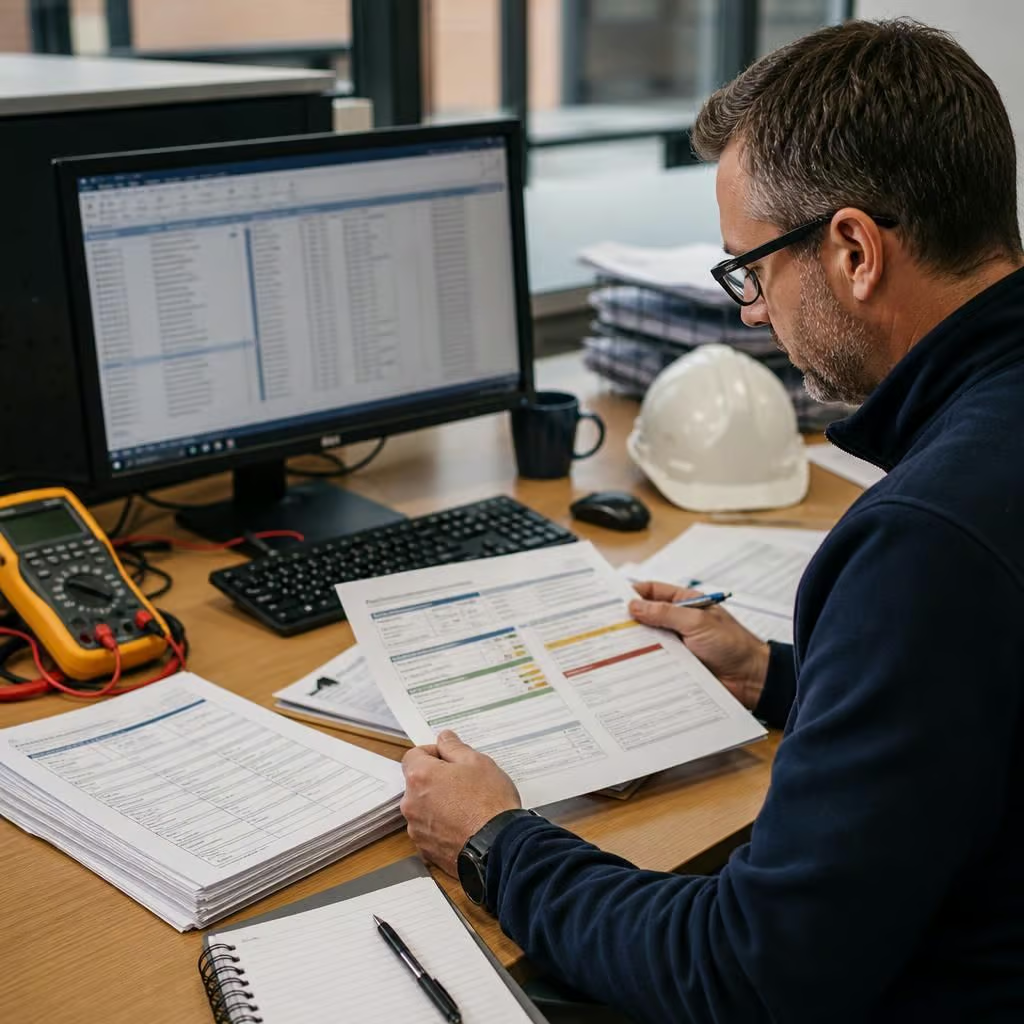
A maintenance record sets out the areas and equipment examined, the checks completed and any readings taken. It can include details such as distribution boards, protective devices, fixed wiring, lighting, emergency lighting, sockets and other connected equipment included in the visit. We also note limitations, such as areas that could not be accessed or equipment that was not available for testing.
This gives the property manager a traceable history rather than a simple note that an engineer attended. Keeping successive records together helps identify recurring faults, ageing equipment and items that need attention at the next planned visit.
Formal electrical certificates are provided where the work calls for them. The document may be an Electrical Installation Certificate for installation work, a Minor Electrical Installation Works Certificate for qualifying smaller work, or an Electrical Installation Condition Report following a periodic inspection. The certificate identifies the installation or circuit covered, the work or tests completed and the person responsible for the inspection or certification.
An Electrical Installation Condition Report is not the same as a general maintenance note. It assesses the condition of the installation at the time of inspection and records observations against the relevant requirements. It may identify coded issues that need remedial action, further investigation or monitoring. A satisfactory report does not mean that every part of a building is free from defects, so the scope and any limitations should be read with the result.
Test results support the certificate or maintenance record. Depending on the equipment and work, these may include continuity, insulation resistance, polarity, earth fault loop impedance and protective device tests. We record results that relate to the circuits or equipment tested, rather than presenting figures without explaining what they apply to.
Defect and remedial-action information explains what needs correcting and why. We describe the location, the observed issue and the level of action indicated by the inspection. If the work has not been authorised, the item remains clearly identified as outstanding. That prevents a quotation or recommendation from being mistaken for a completed repair.
Where remedial work is approved, the follow-up paperwork records what we changed or repaired. If further testing is needed after the repair, we complete that testing and provide the associated certification where applicable. This creates a link between the original finding and the action taken.
Emergency lighting and other specialist records are supplied where those systems form part of the maintenance visit. The record can identify the fittings or equipment checked, the type of test completed and any units that failed or require attention. The same principle applies to other electrical systems: the paperwork relates to the equipment included in the agreed scope.
For a landlord, managing agent or facilities manager, these documents provide evidence of what was checked and when. They can be kept with the building’s compliance file and shared with the owner, occupier, insurer or contractor when a maintenance history is needed. They also help separate urgent defects from planned improvements, so the next decision is based on the condition of the installation rather than guesswork.
Before additional chargeable work starts, we provide a written quotation describing the recommended work. The paperwork supplied after the visit then shows what was actually completed, while any work that remains outstanding is kept separate. This makes it easier to compare the maintenance record with the quotation and invoice.
If a particular certificate or format is required for an internal audit, property portfolio or handover, tell us before the visit. We can confirm which document the proposed inspection or maintenance work supports and what needs to be included in its scope.
When several defects appear in one report, the next step needs to be clear. We separate items needing prompt attention from work that can be planned, monitored or left unchanged. That helps a property manager brief the right person without treating every observation as an emergency.
If the report leads to a quotation, we link the recommended work to the relevant finding. Once you approve the work, the completion paperwork shows which items were dealt with and which remain open. The compliance file then reflects the building’s current position, not just the original inspection.