
How does an industrial electrician diagnose intermittent faults?
We diagnose intermittent faults by taking a detailed history, isolating circuits and testing under the conditions that trigger the failure. Where appropriate, we use thermal imaging and logged measurements to identify loose connections, overloaded equipment or failing components before the fault causes further downtime.
We diagnose an intermittent fault by building a repeatable link between the symptom and its cause. That means identifying what changes when the fault appears, capturing evidence before it disappears and checking the complete electrical path rather than changing components by guesswork.
We start with the fault history. A trip at motor start-up points to a different area than a control panel that drops out after several hours. We record which machine is affected, what it was doing, which protective device operated and whether temperature, vibration, moisture or another process event was involved. Existing maintenance notes and alarm records can show a pattern that is not obvious from a single visit.
We then map the route from the supply to the affected equipment. That can include the distribution board, isolator, contactor, protective device, cable, terminal, motor, sensor and control circuit. A fault may sit outside the machine that reports the alarm. For example, a poor connection in an upstream panel can cause a machine to shut down without leaving an obvious mark inside its enclosure.
When the fault cannot be seen, recorded data becomes important. We can use suitable test equipment to monitor changing voltage, current or other electrical conditions over a period of operation. This helps show brief disturbances, start-up effects or a gradual change that a single meter reading would miss. The monitoring method is selected around the equipment and the risk, so it does not interfere with normal operation unnecessarily.
Control faults need a different line of investigation from power faults. We separate the machine’s supply and control functions so we can establish whether the problem is caused by the incoming power, a protective device, a contactor, an interlock, a sensor or the control wiring. Where a programmable controller is involved, alarm history and input or output status can help identify whether the controller received an incorrect signal or acted on a genuine process condition.
Safety remains part of the diagnosis, not a step added afterwards. We isolate equipment before opening enclosures or disturbing connections, then use appropriate procedures for proving dead and re-energising the installation. If a fault must be observed while equipment operates, we plan the access, test points and safeguards first. That protects people and reduces the risk of turning a small intermittent defect into a larger failure.
Once the cause is narrowed down, we test the suspected point against the rest of the circuit. This may involve checking connection integrity, cable condition, insulation, protective-device operation, phase balance, motor behaviour or the condition of control components. We compare readings with the equipment’s requirements and the installation design, rather than treating one unusual measurement as proof on its own.
The repair depends on what the evidence shows. A loose termination may need correcting and checking for heat damage. A damaged cable may need replacement. An unsuitable protective setting, failing contactor or deteriorating motor may require a wider corrective action. If the machine itself is sound but the supply arrangement is not, we explain that distinction before recommending work.
After the repair, we check that the affected circuit and related protective measures operate correctly. We also look for contributing conditions, such as repeated vibration, moisture ingress, heat or excessive loading, so the same defect is less likely to return. The result is recorded with the tests carried out, the cause identified, the work completed and any further action that remains.
For industrial electrical work, our NICEIC and ECA credentials support a documented approach to inspection and testing. You receive a clear explanation of what failed and what we found, rather than a list of parts replaced without a clear reason.
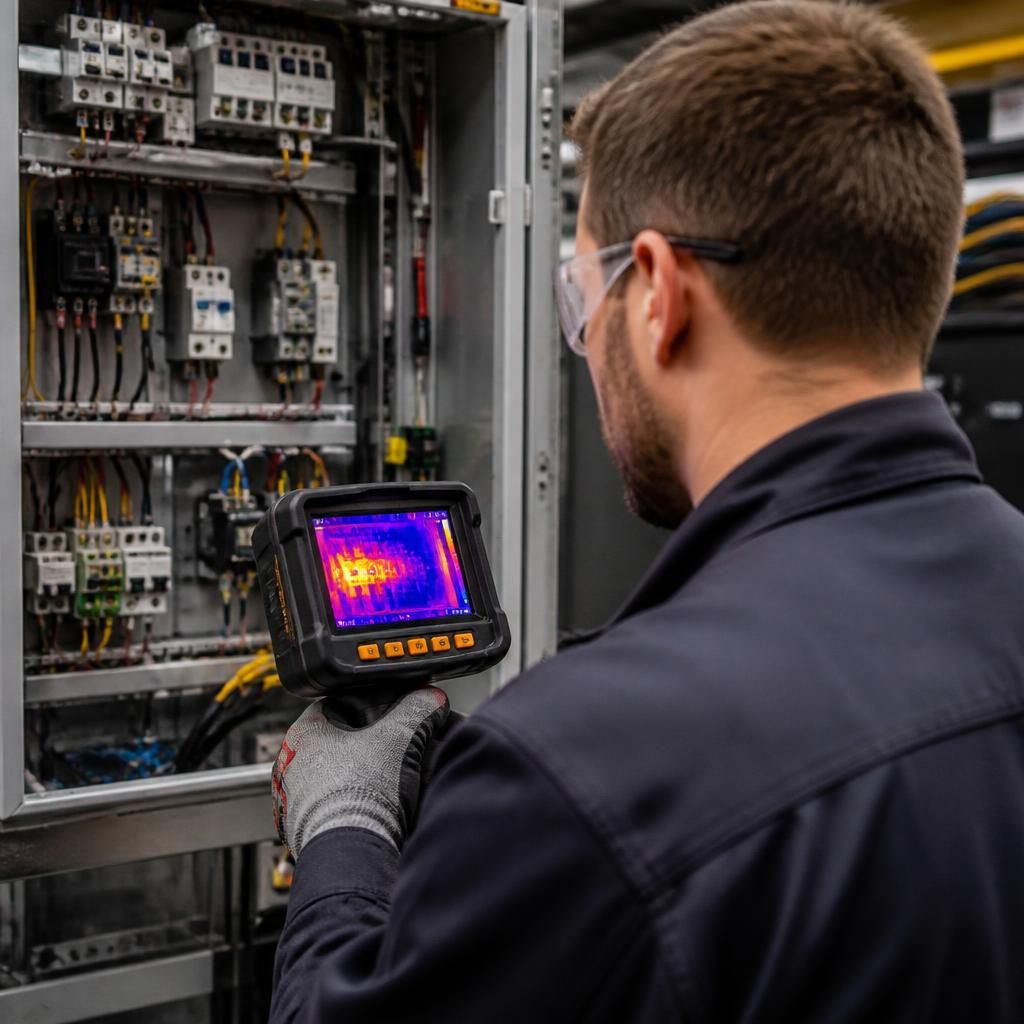
A thermal image can show where heat is developing, but it cannot identify the failed part on its own. A warm connection may indicate a loose termination, an uneven load or a component beginning to deteriorate. We compare similar points under the same operating conditions, then confirm the finding with electrical tests.
If the image shows an abnormal temperature at a panel or machine connection, we can focus the investigation there instead of dismantling unrelated equipment. The result is a clearer repair decision: correct the connection, investigate the load or replace the failing component only when the evidence supports it.