
What happens if commercial electrical testing finds a dangerous fault?
If testing finds a dangerous fault, we explain the risk, record it with the appropriate observation code and isolate the affected circuit or equipment where necessary. We then agree the remedial work with the responsible person, provide a written quotation before starting, and issue the relevant certification once the fault has been corrected and retested.
A dangerous fault does not always mean the whole premises must close. We make the affected part safe first, then determine whether the business can continue using separate circuits or equipment without exposing people to risk.
The report records the level of danger. Commercial electrical inspection reports use standard codes to show what needs to happen next:
- C1 — danger present: someone could be at immediate risk of electric shock, fire or another serious incident. We take urgent action, which may include disconnecting the circuit or equipment.
- C2 — potentially dangerous: the fault needs urgent remedial work, even if no immediate incident is taking place during the inspection.
- C3 — improvement recommended: the installation is not necessarily unsafe, but an improvement would bring it closer to current standards.
- FI — further investigation: the test has identified a concern that cannot be safely assessed without more investigation or partial access to the installation.
A C1 or C2 finding normally makes the electrical installation condition report unsatisfactory until the risk has been dealt with. The code does not by itself decide how much work is needed. We use the fault, the circuit’s purpose, the surrounding installation and the way the premises operates to establish the safest next step.
We identify what can remain in service. A fault on an external socket, distribution board or lighting circuit may not affect unrelated parts of the building. We trace the affected circuit, check whether other equipment depends on it and confirm that any remaining live equipment can be used safely. If the fault is connected to the main intake, earthing or bonding, more of the installation may need to be isolated.
That distinction matters in shops, offices, workshops, farms and managed properties. It can prevent unnecessary loss of lighting, heating, refrigeration or other essential equipment, while keeping people away from the unsafe part. We will not leave a circuit energised simply to avoid disruption.
We explain the immediate risk in practical terms. That may involve damaged insulation, exposed live parts, overheating connections, an ineffective protective device, water entering electrical equipment or a fault affecting earthing. We tell the responsible person which equipment must not be touched or used and what temporary restrictions apply.
If equipment has to be taken out of service, we identify it clearly and record the reason. In some cases, a temporary arrangement can support essential operations, but only if it is properly protected and does not introduce another hazard. A temporary measure is not a substitute for correcting the underlying fault.
The remedial work depends on the cause. A loose termination may need the connection remade and tested. Damaged cable may require replacement or rerouting. An overloaded circuit may need redesigning rather than simply replacing its protective device. A deteriorated consumer unit or distribution board may require a wider upgrade so that the installation has suitable protection.
Older commercial installations sometimes contain several issues that are linked. For example, replacing a failed protective device without checking the cable size, earthing arrangement and fault-current protection could leave the underlying danger in place. We investigate those relationships before recommending work.
We plan the work around the building where it is safe to do so. Some faults can be corrected with one circuit isolated. Others require a planned shutdown, access above ceilings, equipment removal or coordination with a tenant, facilities manager or landlord. We explain any expected interruption and separate urgent safety work from later improvements where that is appropriate.
For a rented or managed property, the person responsible for the electrical installation should keep the report, remedial records and test results together. If the fault affects a tenant’s equipment or a shared supply, the relevant parties may also need to be informed before the circuit is returned to use.
After the repair, we verify the result. We carry out the tests needed for the work completed, confirm that protective devices operate correctly and check that the repaired circuit is safe to energise. The paperwork shows what was inspected, what was corrected and which parts of the installation remain subject to any recommendation or limitation.
Our electrical testing and remedial work is carried out under NICEIC and ECA requirements. That gives the responsible person a clear record of the inspection and the electrical work undertaken, rather than relying on a verbal assurance that the fault has gone.
If a dangerous fault is found during testing, the sensible next step is to keep the affected equipment isolated and give the responsible person the report. We can then discuss the risk, the effect on the premises and the work needed to return the installation to safe use.
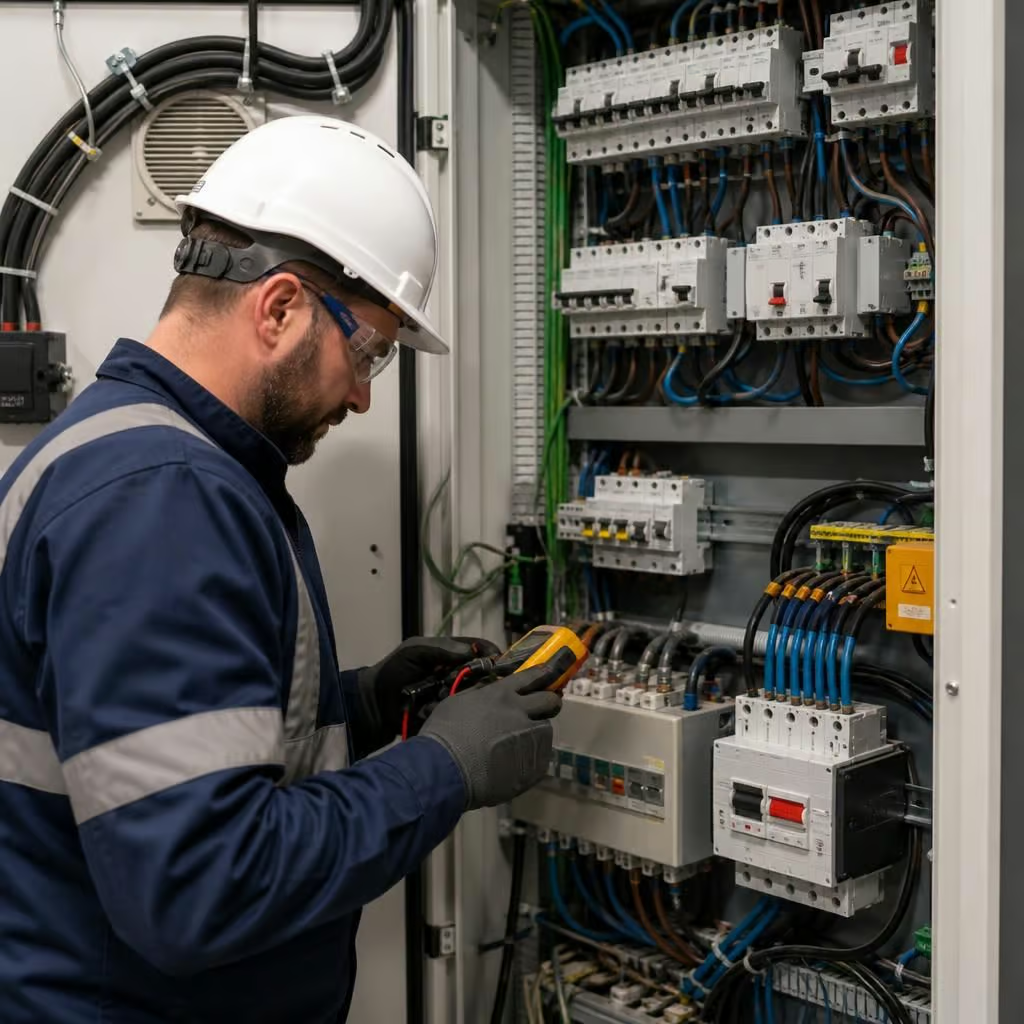
If the danger comes from a piece of portable equipment rather than the fixed wiring, we record that distinction clearly. A faulty appliance, extension lead or tenant-owned machine may need to be removed from use and assessed separately; repairing the socket would not make that equipment safe.
That boundary helps the responsible person direct the right action to the right party. The fixed installation report covers the building’s wiring and connected infrastructure, while appliance checks and repairs may sit with the equipment owner or operator.