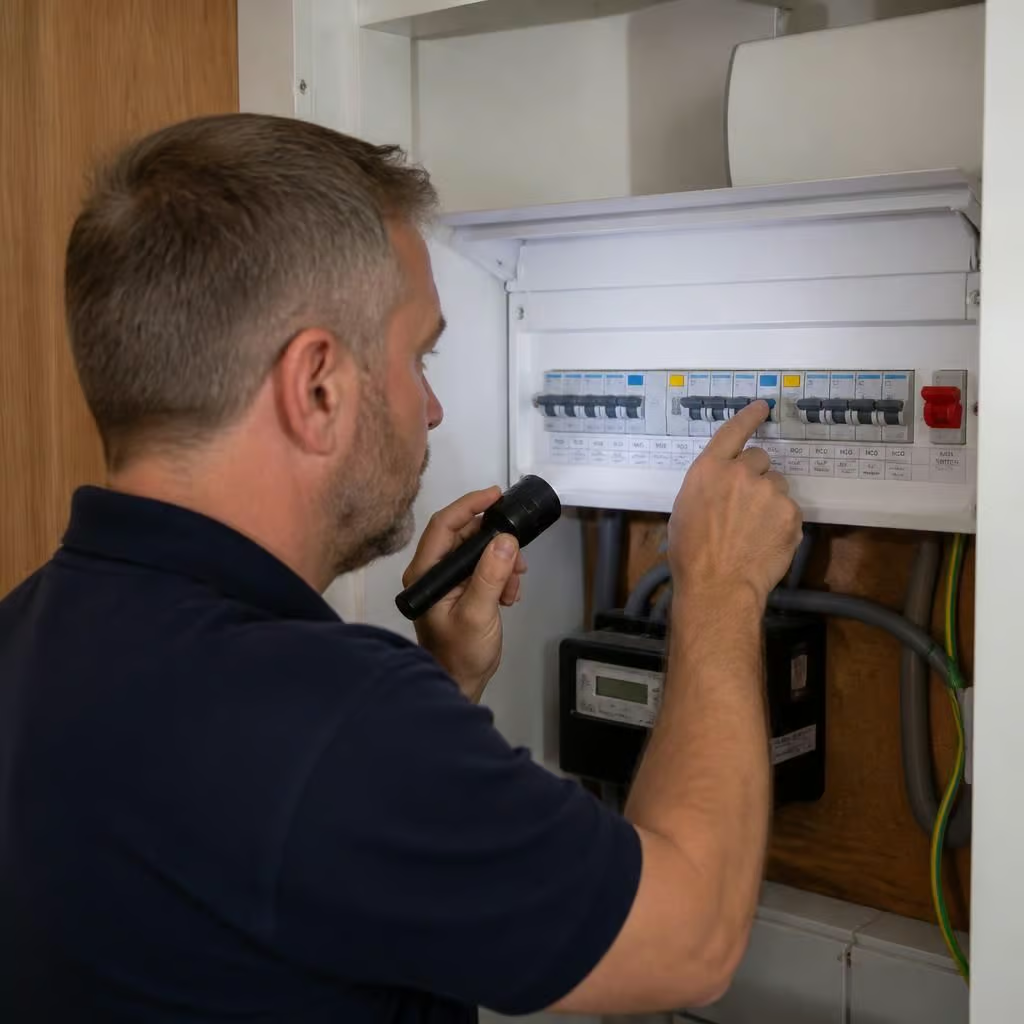
Can you add new sockets without rewiring the whole house?
Yes, in many homes we can add sockets without rewiring the whole house. We first check the existing circuit, cable condition, earthing and consumer unit, then confirm whether the new socket can be added safely or if part of the wiring needs upgrading.
A full rewire is usually considered only when the existing wiring is unsafe, badly deteriorated or unsuitable throughout the property. A single missing socket does not normally justify replacing every cable.
The important question is how the proposed socket will be supplied. We trace the circuit back to the consumer unit and identify whether it is a ring final circuit, a radial circuit or an existing spur. We then check the cable size, protective device, earthing, RCD protection and the condition of the connections. That tells us whether the circuit can safely support another outlet.
An extra socket may be possible by extending a suitable ring circuit. In other cases, we may use a radial circuit or install a separate circuit from the consumer unit. A new circuit is often the cleaner choice where the existing circuit already supplies several high-demand appliances, has limited capacity or has been altered over the years.
A spur can sometimes supply one additional socket, but it is not a general answer for adding several outlets. We check how the existing spur is protected and where it connects before recommending this route. A fused connection unit may be more appropriate for a fixed appliance, but it should not be treated as a substitute for a properly designed socket circuit.
Older wiring needs more than a visual check. Houses may contain aged cable insulation, loose or overheated terminals, borrowed earth connections, missing protective conductors or accessories that no longer meet current safety expectations. We test the relevant circuit and explain any defects that affect the proposed work. We do not recommend a full rewire simply because the installation is old, but we will tell you if the wider wiring makes an extension unsafe.
The route to the new socket affects both the price and the amount of disruption. We may run cable through a floor void, ceiling void, cupboard or loft space, or use surface-mounted containment where that is the most practical option. If the cable has to pass through a solid wall or chase, some local making-good may be needed. In a listed house, barn conversion or solid-wall property, we discuss the route before work starts so the decision is not based on appearance alone.
Socket positions also matter. We keep cables in recognised zones, protect them against damage and avoid routes affected by heat, moisture or future fixings. Sockets in kitchens, utility rooms, garages and other areas with increased risk need particular care. The proposed position may need to change if it would leave the accessory too close to water, heat or a likely source of mechanical damage.
Where the circuit has suitable RCD protection, we verify that it operates correctly. If the existing protection is missing or inadequate, the work may require an RCBO, consumer unit alteration or another protective measure. That does not automatically mean the whole consumer unit needs replacing, but we will explain the limitation and the available options.
Once the socket is installed, we test the altered circuit rather than relying on the fact that the outlet works. Testing checks continuity, insulation resistance, polarity, fault protection and RCD operation where applicable. We provide the relevant electrical documentation for the work and explain any restrictions that remain on the circuit.
A full rewire becomes more likely when several circuits have serious defects, when alterations have left the installation difficult to verify, or when the wiring cannot provide the required protection. It may also be sensible during major refurbishment if walls and floors are already open. In that situation, replacing sections in stages can sometimes be considered, but the safe approach depends on the installation and the planned building work.
If you are adding sockets because the existing ones are regularly overloaded with adaptors or extension leads, tell us what you intend to plug in. A socket plan based on the actual appliances may show that you need a new circuit rather than simply more outlets. We can then separate high-load equipment from general-use sockets and leave the installation easier to use safely.
Before work begins, we set out the recommended route, any access or making-good requirements and the price in writing. If the inspection finds a problem that changes the work, we explain it before carrying out additional work.
After the work, the new socket should be easy to identify and use safely. We label any altered circuit at the consumer unit and record what we have changed, so a future electrician does not have to guess how the extension was wired.
That record also helps if you later add another appliance, carry out refurbishment or arrange an electrical inspection. You have a clear starting point rather than an unexplained cable disappearing behind the wall.