
Can a consumer unit be installed without rewiring the whole house?
Yes, a consumer unit can often be replaced without rewiring the whole house, provided the existing circuits are safe and suitable. We test the wiring, earthing and bonding first, then explain any repairs needed before fitting the new consumer unit.
Replacing the consumer unit does not automatically mean rewiring the whole house. The existing circuits can usually remain if the cables, connections, earthing and protective conductors are in sound condition and the installation can be made safe with the new board.
A new consumer unit cannot make defective wiring safe. It provides improved protection and circuit control, but faults in cables, sockets, switches or concealed connections still need separate attention. That is why we assess the installation before deciding how far the work needs to go.
What we check before fitting the new board
- We inspect the accessible wiring, accessories and connections for damage, overheating, loose terminals and signs of previous alterations.
- We test insulation resistance to identify deterioration or a connection between conductors.
- We check that each circuit has a continuous protective conductor, often called the earth or CPC.
- We test the earthing arrangement and check the main bonding to services such as incoming water and gas pipes.
- We look for shared neutrals, overloaded circuits and extensions that have been added without suitable protection.
- We check whether the incoming supply tails and cut-out arrangement are suitable for the replacement board.
These checks can show that the board needs replacing while the circuit wiring remains usable. They can also identify one or two circuits that need repair or renewal before the installation can be signed off.
When a full rewire may be necessary
A full rewire becomes more likely when the cabling is broadly deteriorated or the installation has several fundamental defects. Examples include old rubber, lead or fabric-insulated cables, extensive damage, missing earth conductors, badly altered circuits or wiring that has repeatedly overheated.
Some older PVC installations can remain in service if testing shows that they are safe. Age alone does not prove that every cable must be replaced. Conversely, a relatively modern-looking installation may still contain unsafe additions or concealed faults.
We may recommend a full rewire if the existing layout cannot provide suitable protection for the way the house is used. A home with electric showers, an induction cooker, outbuildings, an EV charger or other high-load equipment may need additional circuits, even when its existing wiring passes basic tests.
Partial rewiring is often the middle option
If only one circuit fails, we can sometimes renew that circuit rather than disturbing the rest of the house. This might involve replacing a damaged cooker circuit, adding a correctly earthed circuit for an outbuilding or correcting wiring affected by an earlier alteration.
This approach can reduce disruption, but it must leave the installation coherent and safe. We do not treat a consumer unit replacement as a way to conceal unresolved faults. Any limitation that remains is explained before work starts, along with the repair needed and its effect on the quotation.
What changes when the board is replaced
The replacement board will normally provide individual protection for each circuit, rather than relying on a small number of older fuses or shared protective devices. Depending on the installation, that may involve residual current protection and individual RCBOs. The correct arrangement depends on the circuits, the earthing system and the equipment connected to them.
Modern protection can reveal problems that an old fuse board did not make obvious. For example, an RCD may trip because a cable or appliance has an insulation fault. That does not mean the new consumer unit is faulty. It means the underlying issue needs to be found and corrected before the circuit can be used reliably.
Some connected equipment must also be isolated or disconnected during testing. Sensitive electronics, surge protection and certain heating controls can affect test results. We identify these points as part of the assessment rather than applying a blanket assumption about the whole installation.
Older homes need a careful assessment
Properties built or altered over several decades often contain a mixture of wiring systems. A barn conversion, listed building or solid-wall house may have newer circuits alongside older sections hidden behind finished walls or floors. In that situation, a board replacement may be practical, but access and the condition of each circuit affect the final scope.
We aim to avoid opening sound walls and ceilings unnecessarily. If testing shows that a concealed circuit is safe, it may remain in place. If a cable cannot be tested adequately or has a defect, we explain the risk and the least disruptive way to address it.
What paperwork you should receive
A consumer unit replacement is electrical installation work that needs inspection, testing and appropriate certification. Our NICEIC-registered electricians test the completed installation, record the results and provide the relevant electrical certificate. Where the work is notifiable, the required building regulations notification is dealt with through the proper process.
The certificate records what was tested and whether any limitations or further work remain. Keep it with the property documents, particularly if you later sell the house, let it out or arrange further electrical work.
In practical terms, you may need only a consumer unit replacement, a replacement board plus repairs to specific circuits, or a complete rewire. The decision should follow the condition and test results of the installation, not the age of the fuse box alone. We set out that scope in writing before work begins, so you can decide with a clear understanding of what is necessary.
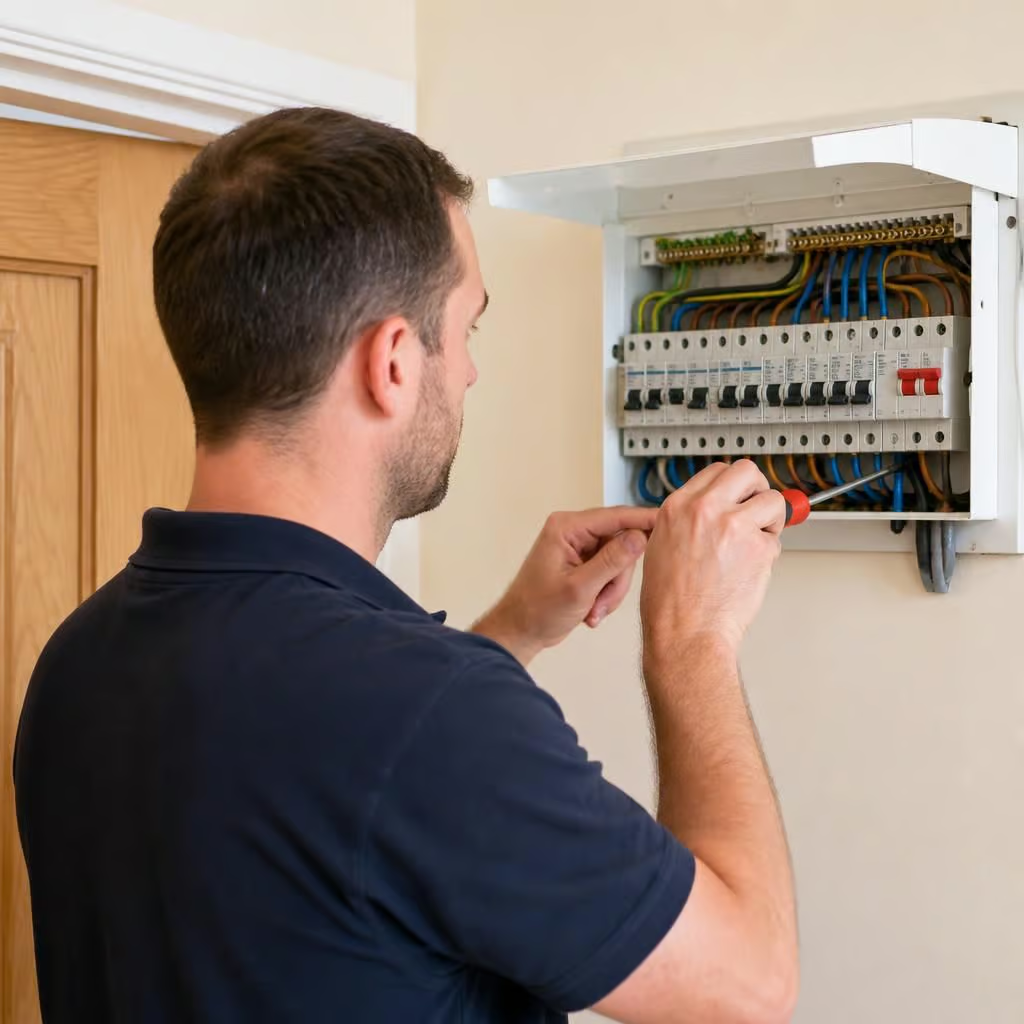
A house doesn’t usually need a full rewire simply because electrical standards have changed. We assess the existing installation for safety and suitability, then make sure the new consumer unit and any altered circuits meet current requirements.
If you’re planning an extension, kitchen renovation or electric vehicle charger, tell us before the board is replaced. We can account for those loads in the design, rather than fitting a board that immediately needs further alteration.