
Can domestic electrical installation be added without rewiring the whole house?
Often, yes. We can add sockets, lighting and new circuits without rewiring the whole house when the existing wiring, earthing and consumer unit are in suitable condition; we’ll inspect these first and explain if any upgrades are needed for safe installation.
In many homes, we can extend the electrical installation without disturbing every existing cable. The deciding factor is not the age of the property alone. It is whether the circuits being retained are safe, correctly protected and suitable for the extra demand.
Your existing wiring may be perfectly adequate for some additions but unsuitable for others. A lighting extension places different demands on a circuit from an electric shower, induction hob, workshop supply or outdoor building. We look at each proposed load rather than treating the whole installation as one unit.
During the assessment, we check:
- the condition and type of the existing cables;
- the consumer unit, protective devices and available capacity;
- earthing and bonding, including the main services into the property;
- the test results from the circuits that will remain in use;
- the route for each new cable and the protection needed where it is concealed;
- whether the proposed sockets, lighting or appliances need a separate circuit.
A sound lighting circuit can often take additional lights, for example, while a new high-load appliance may need its own radial circuit. We may also be able to extend an existing socket circuit if its test results, cable size and protective device support that use. The design has to account for the total load, not just the item being added today.
Older installations sometimes need targeted remedial work before an addition can proceed. That might mean replacing a damaged length of cable, improving earthing, fitting additional protection at the consumer unit or correcting a poorly made connection. We explain why each item is needed. A consumer unit change does not automatically mean that every circuit in the house must be replaced.
Some circuits may be retained and others may need renewal. This is often described as a partial rewire. It can be appropriate where particular circuits have reached the end of their useful life, while newer or satisfactory circuits can remain. We do not recommend retaining a circuit simply to avoid disruption if its condition makes the proposed installation unsafe.
Your walls and floors do not always need to be opened. Where access allows, we can use existing routes, floor voids, loft spaces or surface-mounted containment. In a solid-wall, listed or barn-conversion property, the available route may be limited, so we discuss the least disruptive practical option before work starts. Concealed cables still need to follow the required zones and protection rules.
If the installation cannot safely support the proposed work, we will say so before adding anything. The options might include reducing the load, installing a new circuit, upgrading the consumer unit or carrying out a larger section of rewiring. You receive a written quotation for the agreed work before it begins, with no surprise charges.
Our NICEIC-registered electricians test the new installation and the parts of the system affected by the work. That gives you evidence that the addition has been inspected and tested properly, rather than simply connected and left in service. The certification and other paperwork supplied depend on the type and extent of the installation.
The sensible starting point is a clear list of what you want added and which appliances will use it. We can then assess the existing installation, separate essential remedial work from improvements, and give you a practical route to the finished result without assuming that a whole-house rewire is necessary.
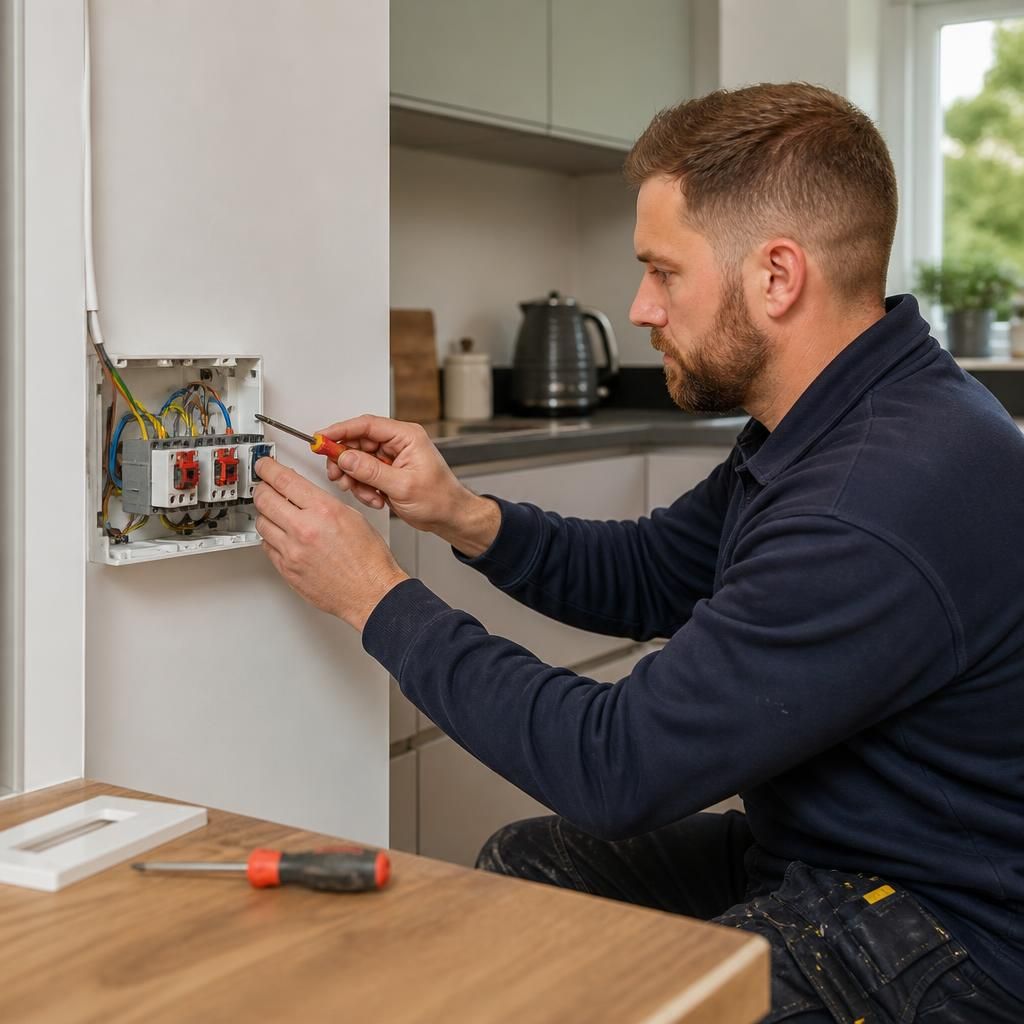
If you’re adding power to an extension, outbuilding or newly fitted kitchen, the work can often be limited to the area being changed. We design the new circuit around its actual use, connect it safely to the existing installation and leave suitable isolation and protection in place.
That means the rest of the house can stay untouched where its wiring is safe to retain. If the new work exposes a fault or limitation elsewhere, we separate that issue from the installation you’ve asked for and explain what needs attention before anything is connected.