Can you repair electrical faults without rewiring my home?
Often, yes. We can repair an isolated fault without rewiring the whole home, but we’ll first check the condition of the wiring and confirm whether a targeted repair is safe or a wider upgrade is needed.
A single electrical fault doesn’t automatically mean the whole house needs rewiring. If the problem is limited to a failed accessory, loose connection, damaged cable or faulty appliance circuit, we can usually locate and repair that section without disturbing the rest of the installation.
The important part is finding the cause rather than simply replacing the item that first showed the fault. A socket that has stopped working may have a loose terminal, a damaged cable or a problem elsewhere on the same circuit. A repeatedly tripping circuit may point to a faulty appliance, insulation damage or a protective device reacting correctly to a deeper problem.
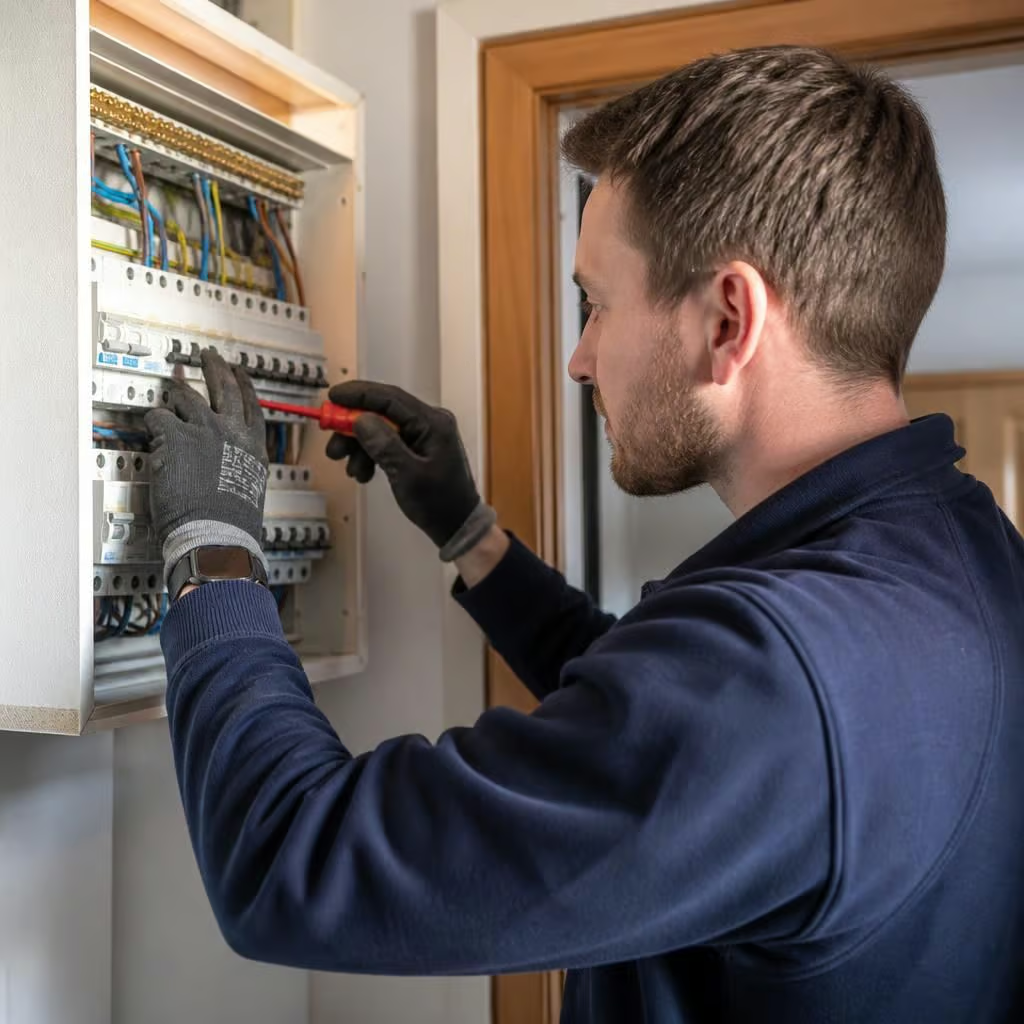
We start by making the affected circuit safe and carrying out electrical tests. Depending on the symptoms, we may check:
- circuit continuity and insulation resistance;
- earth connections and protective bonding;
- the consumer unit and protective devices;
- socket outlets, switches, light fittings and junctions;
- cables for heat damage, crushing, deterioration or loose connections; and
- whether an appliance is causing the fault rather than the fixed wiring.
Once we know where the fault lies, the repair may involve replacing a socket or switch, remaking a connection, renewing a damaged cable or correcting a circuit termination. We test the repair afterwards, so the circuit is not simply put back into service without checking it.
Some faults need more than a local repair. Repeated tripping, flickering lights across several rooms, warm or discoloured accessories, burning smells and unexplained power loss can indicate deterioration elsewhere. In that situation, replacing one socket may remove the immediate symptom while leaving the underlying risk in place.
Older homes need a particularly careful assessment. Previous alterations may have joined circuits incorrectly, cables may have been extended over several years, and older wiring may lack effective earthing or suitable protection. Solid-wall homes, barn conversions and properties with later extensions can also contain sections installed at different times. That does not make a full rewire inevitable, but it does mean we need to assess the installation as a whole before recommending a repair.
A partial rewire can be appropriate when the problem is confined to one room, one circuit or a particular section of cable. We may replace the affected wiring and leave sound existing circuits in place. A full rewire is more likely when several circuits show deterioration, the wiring has no reliable earth, insulation tests produce poor results, or previous alterations have left the installation unsafe or difficult to maintain.
A consumer unit replacement is not the same as a rewire. A new consumer unit may improve the protection available to the circuits, but it cannot correct damaged cables or poor connections elsewhere. We explain which part of the installation needs attention and which parts can safely remain.
The amount of disruption depends on where the fault is and how accessible the wiring is. A local socket or lighting repair may require little more than removing an accessory and accessing the cable behind it. Cables concealed in walls, floors or finished ceilings may require limited lifting or opening-up. We discuss that before work begins and keep any necessary access as small as practical.
For electrical work in a rented property, a repair may also need to sit alongside an inspection or certification requirement. We can explain whether the completed work calls for a Minor Works Certificate or further inspection, based on what we have changed and tested. NICEIC and ECA registration means our electrical work is carried out within the relevant technical and safety requirements, with the paperwork matched to the work completed.
If you notice smoke, sparking, a burning smell, heat at a socket or signs of melting, switch off the affected circuit if it is safe to do so. Don’t keep resetting a tripping breaker or use the damaged fitting. Arrange an electrician’s assessment so the cause can be identified before the circuit is used again.
After testing, we’ll tell you whether a local repair is suitable, whether part of the installation should be renewed, or whether a full rewire is justified. You can then compare the immediate repair with the longer-term work instead of paying for a replacement that the evidence does not support.
If testing shows an isolated fault, we quote for the repair needed rather than adding a full rewire automatically. You can deal with the immediate safety issue without committing to wider work on the same day.
If the installation needs more attention, our written quotation separates essential repairs from planned improvements. You can see what the evidence supports, what can wait and what each part will cost before any further work starts. We don’t add surprise charges to the bill.