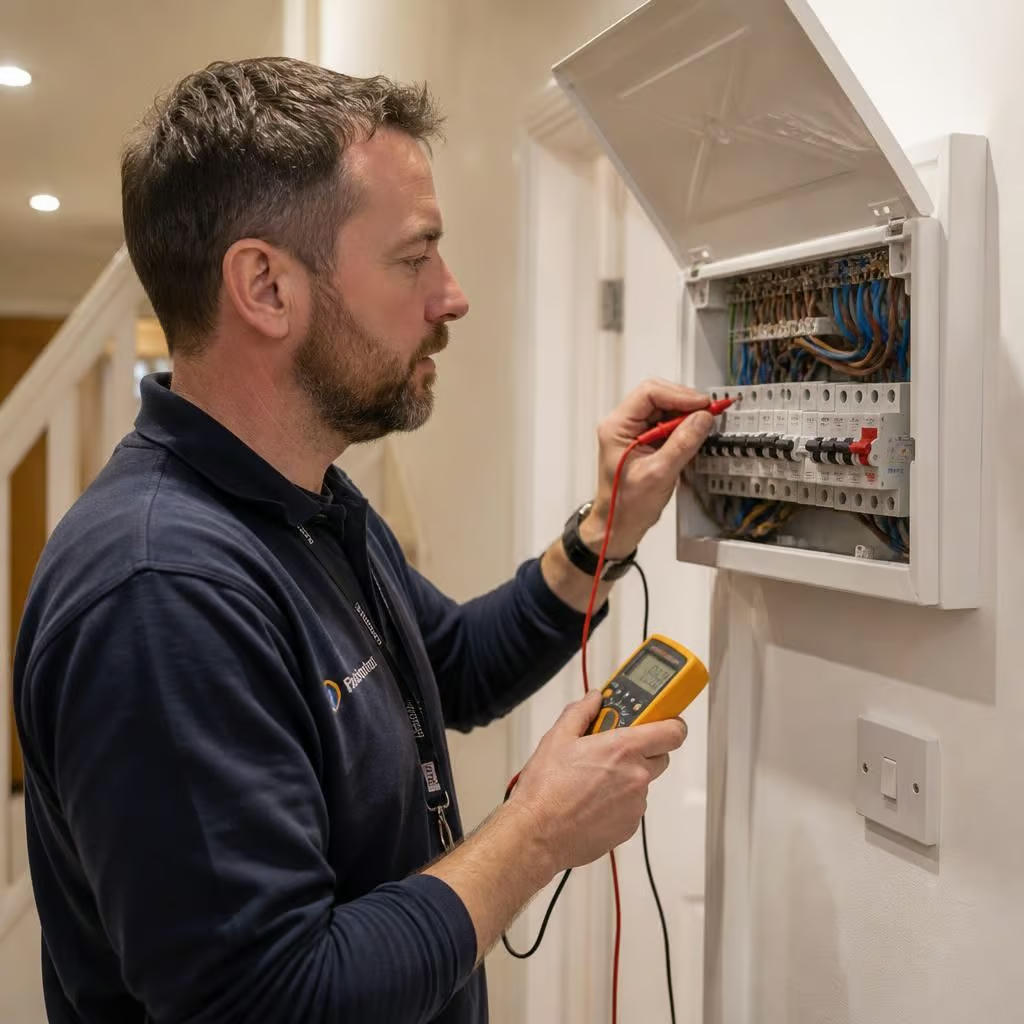
How much does electrical fault finding cost?
Electrical fault finding has no single fixed price: the cost depends on how complex the fault is, how accessible the wiring is and whether repairs are needed. We explain the recommended work and provide a written quotation before work starts, so you can decide how to proceed.
The cost of electrical fault finding depends mainly on the time needed to identify the cause. A straightforward fault on one circuit may need only a short investigation. An intermittent fault, concealed cable damage or several affected circuits can take longer because the electrician must reproduce the problem and test the installation methodically.
The investigation and any repair are usually separate parts of the bill. Fault finding covers the testing needed to locate the problem. Replacing a damaged socket, repairing a cable, changing a protective device or carrying out wider remedial work adds to the cost only if that work is needed and agreed.
What the initial charge may cover
- Travel to the property and the initial assessment.
- A visual inspection of the consumer unit, accessories and accessible wiring.
- Electrical tests to narrow down the affected circuit or component.
- Tracing the fault through switches, sockets, lighting points, appliances or external supplies.
- An explanation of what has caused the fault and what needs to happen next.
The exact arrangement depends on the job. When you contact us, describe the symptoms and the property as clearly as possible. We can then explain what the investigation is likely to involve before an engineer attends.
Why some faults cost more to trace
A fault that remains present is generally easier to locate than one that disappears before testing starts. A circuit that trips every time a particular appliance is used gives us a useful starting point. A light that fails only in damp weather, or a socket that trips the RCD at random, may require more systematic testing.
The layout of the property also affects the work. Older houses, extensions, converted barns and outbuildings can contain several generations of wiring. Cables may run through walls, floors or loft spaces, with junctions and alterations that are not visible from the consumer unit. Finding the fault without unnecessary damage takes care and may involve testing each section of the circuit.
Access matters too. We may need to reach the consumer unit, affected sockets, light fittings, immersion heater, external equipment or fixed appliances. If furniture, stored items or fitted units block those points, the investigation can take longer. We’ll tell you if safe access is not available rather than dismantling something that should be handled by another trade.
Tests used during fault finding
The tests depend on the symptoms and the type of installation. We may isolate circuits, check continuity and insulation resistance, measure earth fault loop impedance, test RCD operation and inspect connections for heat damage or looseness. Live testing is carried out only where necessary and with appropriate precautions.
These tests help distinguish between a faulty appliance, damaged cable, failed accessory, poor connection and a problem with the protective arrangements. That distinction matters because replacing a socket will not solve a cable fault, and replacing an RCD will not cure an appliance that is causing the trip.
When the fault leads to remedial work
A small repair may be possible once the cause is clear. For example, a failed accessory or loose termination may be replaced without changing the rest of the circuit. If testing finds damaged insulation, inadequate earthing, overloaded wiring or alterations that do not meet current safety requirements, more extensive work may be appropriate.
That could mean repairing part of a circuit, replacing damaged cable, improving bonding or upgrading the consumer unit. The correct work depends on the test results and the condition of the installation. We explain the risk and the options rather than treating every fault as a reason for a complete rewire.
A fault-finding visit is not automatically a full electrical installation condition report. If the property needs a complete assessment, such as before letting or after concerns about old wiring, we’ll explain that a separate EICR is the appropriate inspection.
How to keep the investigation focused
- Note which appliance or fitting was being used when the fault appeared.
- Record whether the MCB, RCBO or RCD trips, if you can identify it safely.
- Tell us whether the problem happens repeatedly or only occasionally.
- Explain whether any building, decorating or electrical work was carried out recently.
- Send photographs of the consumer unit or affected fitting if it is safe to do so.
Do not remove covers, reset a device repeatedly or continue using equipment that smells burnt, feels hot or shows signs of damage. If there is visible scorching, exposed wiring or a burning smell, switch off the affected circuit if you can do so safely and arrange qualified assistance.
Our NICEIC-registered electricians and ECA membership provide a relevant check on competence for electrical investigation and repair. You’ll receive a clear explanation of the findings, with any further work set out separately so you can make an informed decision about the cost.
The lowest call-out charge is not always the lowest overall cost. Before booking, check whether the price includes the initial testing, travel and diagnostic time, or only the engineer’s arrival.
Ask how further investigation is charged if the fault takes longer to trace, and whether repairs are priced separately. If the fault cannot be reproduced, we’ll explain which tests were completed and what remains uncertain. If we identify the cause, we’ll set out the repair and its cost before proceeding.